
Our Short List of 3
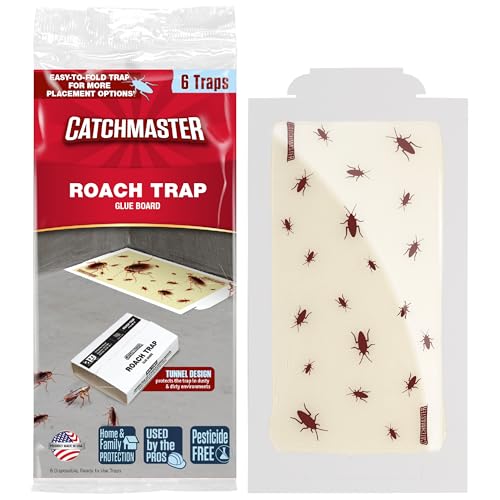
- Type: Flat glue board trap
- Pack count: 6 boards
- Target species: Cockroaches, spiders, crickets, and scorpions
- Placement: Kitchen, bathroom, garage, and basement, tight against walls and behind appliances
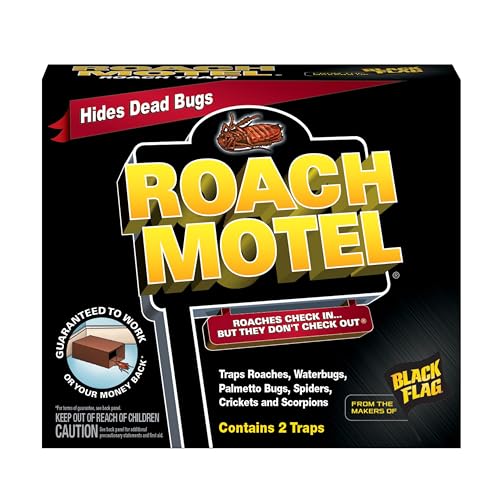
- Type: Motel-style baited glue trap
- Pack count: 2 traps
- Target species: Cockroaches
- Placement: Kitchen, bathroom, and living room, on the floor against a wall or under a sink

- Type: Enclosed bait station
- Pack count: 6 stations
- Target species: Cockroaches, including German and American roaches
- Placement: Kitchen, bathroom, and laundry room, along baseboards, behind appliances, and under sinks
All 5 Picks at a Glance
| Product | Specs | Action |
|---|---|---|
| 1. Catchmaster Roach Trap Glue Boards, 6 Pack |
| Check price on Amazon |
| 2. Black Flag Roach Motel Traps, 2 Count |
| Check price on Amazon |
| 3. Terro T500 Indoor Multi-Surface Roach Bait Stations, 6 Count |
| Check price on Amazon |
 4. Hot Shot Liquid Roach Bait, 6 Count |
| Check price on Amazon |
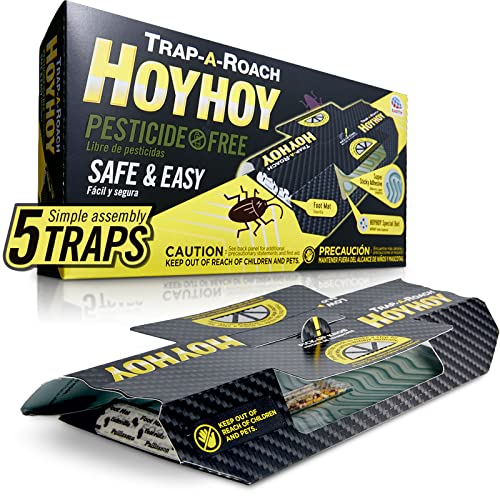 5. Hoy Hoy Trap A Roach Bait Glue Traps, 5 Traps |
| Check price on Amazon |
Key takeaways
- Compare the best roach traps for kitchens, bathrooms, and garages, from glue boards and bait stations to motel-style traps that hide the catch.
If roaches have started showing up in the kitchen after dark, the fastest useful answer is to place enclosed bait stations along the routes they travel and to back those stations up with glue boards that show where the insects are coming from. Bait stations work on the colony because a foraging roach carries bait back to its hiding place, while a glue board works as a monitor because every insect it catches tells a story about where the activity is heaviest. Used together, the two types cover both jobs at once: the bait stations reduce the population over time, and the glue boards reveal whether the plan is working or whether the traps need to move.
For most homes, the best roach trap overall is the Terro T500 Indoor Multi-Surface Roach Bait Stations pack, because the enclosed stations sit flat against walls, fit under appliances, and keep bait away from fingers and paws while roaches feed and carry the effect back to the nest. For a home that needs visible proof of where roaches are traveling, the Catchmaster Roach Trap Glue Boards pack is the best monitoring choice, because the flat adhesive boards slide into tight gaps and catch the insects that cross them. For a discreet, throwaway option that hides what it catches, the Black Flag Roach Motel Traps pack is the best low-effort choice. For a household that wants a liquid bait in a ready-to-place station, the Hot Shot Liquid Roach Bait pack is the best simple bait-station choice. For a home with children or pets where a glue trap still makes sense, the Hoy Hoy Trap A Roach pack is the best baited glue trap, because the baited cards fold into a low, covered shape that keeps the adhesive surface out of easy reach while still drawing roaches inside.
Roaches are not a problem that one trap in one corner will solve. They travel along edges, hide in warm and damp places, and feed at night, so the placement of a trap matters as much as the trap itself. A trap placed in the middle of a room will catch very little, while the same trap placed tight against a baseboard, behind a refrigerator, or under a sink can catch insects night after night.
As an Amazon Associate, we earn from qualifying purchases.
Table of Contents
- Quick Answer
- How Roach Traps Work
- How to Choose a Roach Trap
- The 5 Best Roach Traps
- Roach Trap Placement Guide
- How Long Roach Traps Take to Work
- Safety Around Children and Pets
- Common Mistakes That Waste a Good Trap
- Frequently Asked Questions
- Conclusion
- Product and ASIN Reference
Quick Answer
Buy enclosed bait stations first to reduce the roach population, and add glue boards to find out where the roaches are coming from. Bait stations are the workhorse of home roach control because they keep working after they are placed, they need no spraying, and they reach roaches that never walk across a glue board. Glue boards are the diagnostic tool because a board that stays empty tells a different story from a board that fills up in two nights, and that story decides where the next bait station should go.
A household that has seen one or two roaches in a kitchen should start with one pack of bait stations and one pack of glue boards, place the bait stations along the back edges of counters and behind appliances, and place the glue boards under the sink, behind the refrigerator, and beside the stove. A household that sees roaches every night should use more stations, cover more rooms, and check the glue boards every few days so the pattern of catches can guide the next round of placement.
The five traps in this guide cover those situations without repeating the same design five times: a flat glue board for monitoring, a motel-style trap for discreet disposal, an enclosed bait station for steady colony control, a liquid bait station for a different bait format, and a baited glue trap that suits homes with children and pets.
How Roach Traps Work
A roach trap works in one of two ways. A glue trap catches the insect that walks across it and holds it on an adhesive surface. A bait trap invites the insect to feed and then either holds it inside the trap or lets it leave with bait that it carries back to the nest. The difference matters because a glue trap only affects the insects it touches, while a bait trap can affect insects that never enter the trap at all.
Glue boards are the simplest type. A flat card or board is coated with a strong adhesive, and a roach that walks across it cannot walk off again. Some glue boards carry a food-based lure in the adhesive or in a small bait packet, and some are plain adhesive that relies on placement alone. The board is placed flat on the floor, tight against a wall, or folded into a low tent shape that roaches walk into. Glue boards are useful for monitoring because the number and the location of the insects on the board show where activity is heaviest. They are also useful in places where a bait station cannot fit, such as the narrow gap behind a refrigerator or the space under a low cabinet. Their limit is that they do not reduce a hidden population on their own, because they only catch the insects that happen to cross them.
Bait stations are enclosed boxes or discs with small entry holes and bait inside. A roach enters, feeds on the bait, and leaves. The bait is slow-acting by design, so the insect has time to return to its hiding place and share the bait with other roaches through feeding and grooming before it dies. That sharing effect is what makes bait stations stronger than a spray for a real infestation, because a spray only reaches the insects it touches. Bait stations suit kitchens and bathrooms because the bait stays inside a closed container, out of reach of children and pets, and the station can be tucked behind an appliance or along a baseboard where it stays out of the way. Their limit is patience: a bait station does not show a visible catch, so a household has to trust the process and give it time.
Motel-style traps sit between the two types. A motel trap is a small, box-like container with a baited glue surface inside. A roach is drawn in by the bait, steps onto the glue, and stays inside the box. The box hides the catch from view, which suits a household that does not want to see dead insects on an open board. The trap is disposable, so when it fills up or the bait is spent, the whole unit goes into the trash and a fresh one takes its place. Its limit is capacity: a motel trap holds fewer insects than a large glue board, so it suits light to moderate activity rather than a heavy infestation.
Liquid bait stations use a liquid bait in a small, sealed station with entry points for roaches. The liquid format suits roaches that are seeking moisture as well as food, which is common in kitchens and bathrooms where water is available. The stations are ready to use, with no mixing and no assembly, and they sit flat on a surface or tuck against a wall. Their limit is the same as any bait station: they work slowly and quietly, and they need to be placed where roaches already travel, not where a household wishes they would travel.
Knowing which type is in hand changes how a household should judge it. A glue board that catches five roaches in a week is doing its job as a monitor. A bait station that catches nothing visible may still be working, because its job is to reduce the hidden population, not to display a catch. The best home plans use both, and they judge each type by the job it was designed to do.
How to Choose a Roach Trap
Match the trap to the size of the problem
A single roach seen once in a kitchen is a different problem from roaches seen every night in several rooms. For a single sighting, a small pack of bait stations and a few glue boards for monitoring is enough, and the household should watch the boards for a week before buying more. For nightly sightings, a larger pack makes sense, because stations should go in the kitchen, the bathroom, the laundry area, and any room that shares a wall with the kitchen. For a heavy problem, traps are only part of the answer, and the household should also seal gaps around pipes, fix leaks, store food in sealed containers, and remove cardboard and clutter that give roaches shelter.
Choose the capture method first
Start by deciding whether the priority is monitoring or population control. If the priority is finding out where roaches are coming from, glue boards come first, because they show the routes. If the priority is reducing the number of roaches, bait stations come first, because they reach the nest. Most homes need both, so the practical question is not which type to buy but how many of each type to buy. A good starting mix is one pack of bait stations for control and one pack of glue boards for monitoring, with a motel-style trap added for rooms where a discreet, disposable trap is preferred.
Think about the rooms where traps will go
Kitchens need traps behind the refrigerator, under the sink, beside the stove, and along the back edge of counters. Bathrooms need traps under the sink, behind the toilet, and near the pipe openings where insects enter from wall voids. Basements and garages need traps along the walls, near the water heater, and beside the door that leads into the house. Bedrooms rarely need traps unless roaches have been seen there, and in that case a bait station tucked behind a dresser is a better choice than an open glue board on the floor. A trap that suits a kitchen may not suit a garage, because a garage trap needs to handle dust, temperature swings, and a larger floor area.
Check the pack count and the coverage
Pack count decides how many rooms a purchase can cover. A two-count pack covers one problem area and one spare, while a six-count pack covers a kitchen and a bathroom with stations to spare. A household should count the rooms that need traps before buying, and then buy a pack that covers those rooms with at least one spare station for the spot where catches are heaviest. Buying too few traps and spreading them thin leaves gaps in coverage, while buying a large pack and placing traps in every corner wastes traps in rooms with no activity. The glue boards will show which rooms need more coverage, so a household that starts with a modest pack can add more traps where the boards fill up fastest.
Look at the format and the placement options
Some traps sit flat on a floor, some stick to a wall, and some fold into a low tent. A flat trap suits the gap under a refrigerator or the floor beside a baseboard. A trap that folds into a tent suits an open floor where a flat board might be stepped on or moved. A low, enclosed station suits a home with children or pets because the bait and the adhesive stay inside a container. A household should picture the exact spot where each trap will go and choose a format that fits that spot, rather than buying a trap and then looking for a place to put it.
Consider children, pets, and food areas
Traps used in a kitchen sit near food, so the format matters. Enclosed bait stations keep bait inside a container, which is the safest format for a kitchen with children or pets. Glue boards should go behind appliances and under sinks, where hands and paws do not reach, rather than on open counters or floors where a child or a pet could step on them. Motel-style traps hide the catch and the adhesive inside a box, which suits a living room or a bedroom better than an open board. Every trap should be placed with its label facing out, so a household can read the instructions and the safety notes without moving the trap.
Plan the upkeep before buying
Glue boards need checking every few days, because a board that is full of dust or covered in insects stops catching. Bait stations need checking every few weeks, because bait dries out and stations get moved during cleaning. Motel traps need replacing when they fill up or when the bait no longer draws insects. A household that will not check traps regularly should choose bait stations, which need the least attention, while a household that likes to monitor should choose glue boards, which reward regular checking with clear information about where roaches are traveling.
The 5 Best Roach Traps
The five traps below cover the main formats a home needs: a flat glue board for monitoring, a motel-style trap for discreet disposal, an enclosed bait station for steady control, a liquid bait station for a different bait format, and a baited glue trap for homes with children and pets. Each entry gives the published specifications, the rooms where the trap fits best, and the limits a buyer should know before choosing it.
1. Catchmaster Roach Trap Glue Boards, 6 Pack
- Type: Flat glue board trap
- Pack count: 6 boards
- Target species: Cockroaches, spiders, crickets, and scorpions
- Placement: Kitchen, bathroom, garage, and basement, tight against walls and behind appliances
The Catchmaster Roach Trap Glue Boards pack is the best monitoring trap in this guide, and it earns that place because it does one job with no fuss: it shows where roaches are traveling. The pack holds six flat adhesive boards, each one coated with a strong glue that holds roaches, spiders, crickets, and scorpions that walk across it. The boards are made for indoor use in kitchens, bathrooms, garages, and basements, and they slide into the tight gaps where roaches travel, such as the space behind a refrigerator, the floor under a sink, and the narrow gap between a stove and a wall.
A glue board is at its best when it is placed tight against a wall, with its long edge touching the baseboard, because roaches travel along edges and will walk onto a board that sits in their path. A board placed in the middle of a room will catch very little, while the same board placed against a wall in a dark corner can catch insects night after night. The six-count pack suits a household that wants to monitor several rooms at once, because one board can go behind the refrigerator, one under the kitchen sink, one beside the stove, one under the bathroom sink, one near the water heater, and one in the garage, with the pattern of catches showing which room needs the most attention.
The boards need no bait, no assembly, and no power. A household peels the release paper, places the board flat, and checks it every few days. A board that fills up quickly should be replaced and the spot should get a bait station as well, because a fast fill means a heavy route runs through that spot. A board that stays empty for a week is also useful information, because it suggests that the roaches are traveling a different route, and the board should move to another gap or corner.
The limits of a glue board are the limits of any monitoring tool. It only catches the insects that cross it, so it will not reduce a hidden population on its own. It also loses strength when it collects dust, so a board in a garage or a basement needs replacing more often than a board in a clean kitchen. Used as a monitor beside bait stations, though, the Catchmaster boards are the most informative trap in this guide, and they are the best first purchase for a household that does not yet know where the roaches are coming from.
2. Black Flag Roach Motel Traps, 2 Count
- Type: Motel-style baited glue trap
- Pack count: 2 traps
- Target species: Cockroaches
- Placement: Kitchen, bathroom, and living room, on the floor against a wall or under a sink
The Black Flag Roach Motel Traps pack is the best discreet trap in this guide, and it suits a household that wants a trap that works quietly and hides what it catches. The pack holds two motel-style traps, each one a small box with bait inside and a glue surface that holds the roaches that enter. A roach drawn in by the bait steps onto the glue and stays inside the box, so the catch is hidden from view and the trap can sit in a kitchen, a bathroom, or a living room without looking like a pest control device.
The motel format survives because it solves a real household problem: many people want roaches gone but do not want to see them. A motel trap sits on the floor against a wall, under a sink, or behind a piece of furniture, and it can stay in place for months while it works. When the trap fills up or the bait is spent, the whole unit goes into the trash and a fresh trap takes its place, with no cleaning and no handling of dead insects.
The two-count pack suits a home with one or two problem spots, such as a kitchen corner and a bathroom cabinet, and it is a good companion to a pack of bait stations, because the motel trap can go in the room where a discreet trap matters most while the bait stations cover the rest of the house. The trap needs no power and no assembly, and it starts working as soon as it is placed.
The limits of a motel trap are capacity and coverage. Two traps cover two spots, so a household with roaches in several rooms will need more than one pack, and a trap that fills up needs replacing before it can catch more. A motel trap also works slowly, because it only catches the roaches that enter it, and it does not reach the nest the way a bait station does. A household that uses motel traps alone should add bait stations if the traps keep filling up, because a full trap is a sign that the population behind it is still active.
3. Terro T500 Indoor Multi-Surface Roach Bait Stations, 6 Count
- Type: Enclosed bait station
- Pack count: 6 stations
- Target species: Cockroaches, including German and American roaches
- Placement: Kitchen, bathroom, and laundry room, along baseboards, behind appliances, and under sinks
The Terro T500 Indoor Multi-Surface Roach Bait Stations pack is the best roach trap overall in this guide, and it earns that place because it does the hardest job in home roach control: it reaches the nest. The pack holds six enclosed bait stations, each one a low, flat, black station with entry holes that roaches can enter and with bait inside that they feed on and carry back to their hiding place. The bait is slow-acting by design, so a roach that feeds has time to return to the nest and share the bait with other roaches before it dies, and that sharing effect reduces the hidden population that a glue board can never reach.
The T500 stations are made for indoor use on more than one surface, which means they can sit on a floor, on a counter edge, or tucked against a wall without sliding or tipping. Their low profile lets them slide under a cabinet toe kick, behind a refrigerator, or beside a stove, where roaches travel and where a taller trap would not fit. The enclosed design keeps the bait inside the station, which suits a kitchen with children or pets, because the bait is not sitting open on a surface where hands or paws can reach it. The stations need no assembly, no mixing, and no power, and they start working as soon as they are placed.
The six-count pack covers a kitchen and a bathroom with stations to spare. A household should place stations along the routes roaches travel, not in the middle of a room: behind the refrigerator, under the sink, beside the stove, along the back edge of a counter, and near the pipe openings where insects enter from wall voids. Stations placed on a route will be found quickly, while stations placed in open space may sit untouched for weeks. Leave the stations in place rather than moving them every day, because roaches need time to find the bait, feed, and carry it back, and moving a station resets that process.
The limits of a bait station are patience and visibility. A bait station shows no visible catch, so a household that judges it by the number of dead insects it can see will think it is not working, when the work is happening out of sight in the nest. Pair the stations with glue boards, so the boards show whether activity is falling while the stations do their work in the background. Used that way, the Terro T500 stations are the strongest single purchase in this guide, and they are the best choice for a household that wants to reduce the population rather than simply count it.
4. Hot Shot Liquid Roach Bait, 6 Count
- Type: Liquid bait station
- Pack count: 6 stations
- Target species: Large and small roaches
- Placement: Kitchen and bathroom, flat on surfaces near walls, under sinks, and behind appliances
The Hot Shot Liquid Roach Bait pack is the best liquid bait choice in this guide, and it suits a household that wants a bait station with a liquid format that roaches seek out for moisture as well as food. The pack holds six ready-to-use bait stations, each one filled with a liquid bait that roaches feed on and carry back to the nest. The stations are made to sit flat on a surface in the places where roaches have been seen, and the published guidance is to place up to five stations in the kitchen and one in the bathroom, which gives a clear starting plan for a household that does not want to guess at placement.
A liquid bait suits kitchens and bathrooms because roaches in those rooms are often seeking water as well as food, and a liquid bait meets both needs at once. The stations are sealed, so the liquid stays inside the station and does not spill onto a counter or a floor, and the entry points are sized for roaches while keeping the bait out of easy reach. The stations need no mixing, no assembly, and no power, and they can be placed tonight and left to work for weeks.
The six-count pack covers a kitchen and a bathroom in one purchase, and it is a good companion to a pack of glue boards, because the boards will show whether the liquid bait stations are placed on the right routes. A station that sits on a busy route will be visited quickly, while a station that sits in open space may be ignored. Check the stations every few weeks, replace any station that has been emptied or moved during cleaning, and keep the stations in place long enough for the slow-acting bait to reach the nest.
The limits of a liquid bait station are the same as any bait station: it works slowly, it shows no visible catch, and it needs to be placed where roaches already travel. Roaches hug edges and avoid open space, so stations placed tight against walls, behind appliances, and near pipe openings will get far more visits than stations placed in the middle of a room. A household with a heavy problem should pair them with glue boards for monitoring.
5. Hoy Hoy Trap A Roach Bait Glue Traps, 5 Traps
- Type: Baited glue trap
- Pack count: 5 traps
- Target species: Cockroaches
- Placement: Kitchen, bathroom, and bedroom, flat against walls and under sinks and appliances
The Hoy Hoy Trap A Roach pack is the best baited glue trap for a home with children or pets, and it earns that place because it combines a food-based bait with a covered glue surface in a compact, foldable trap. The pack holds five traps, each one a baited glue trap made in Japan that folds into a low, covered shape. A roach drawn in by the bait steps onto the adhesive surface inside the trap and stays there, while the covered shape keeps the glue out of easy reach of hands and paws and lets the trap sit in a kitchen, a bathroom, or a bedroom without an open adhesive surface on display.
The baited design matters because a plain glue board relies on placement alone, while a baited trap draws roaches toward it from a short distance. That drawing effect helps in a room where the exact route is not known, because the bait gives roaches a reason to enter the trap rather than walk past it. The five-count pack suits a household that wants to cover a kitchen, a bathroom, and a spare room, with one trap behind the refrigerator, one under the kitchen sink, one under the bathroom sink, one beside the stove, and one in the room where roaches have been seen most often.
The traps need no power and no assembly beyond folding them into shape and placing them flat against a wall or under an appliance. They are made for indoor use, and they suit a home with children or pets because the adhesive surface sits inside a covered trap rather than open on the floor. Check the traps every few days, replace any trap that has filled up or collected dust, and move a trap that stays empty to a different gap or corner, because an empty trap is information about where roaches are not traveling.
The limits of a baited glue trap are capacity and reach. Five traps cover a few rooms, so a household with roaches in many rooms will need more than one pack, and a glue trap only catches the insects that enter it, so it will not reduce a hidden population on its own. Pair them with bait stations if the traps keep filling up, because a full trap is a sign that the population behind it is still active. Used as a monitoring trap beside bait stations, the Hoy Hoy traps are the most household-friendly glue trap in this guide.
Roach Trap Placement Guide
Placement decides whether a good trap works or sits ignored. Roaches travel along edges, so every trap in this guide should sit tight against a wall, a cabinet, or an appliance, with its long edge touching the surface the insects follow. A trap placed a hand span away from a wall is a trap placed in open space, and roaches avoid open space because it leaves them exposed. The first rule of placement is therefore simple: push every trap against an edge and leave no gap between the trap and the wall.
In the kitchen, the best spots are behind the refrigerator, under the sink, beside the stove, and along the back edge of counters where pipes and cables enter the wall. The refrigerator gives off warmth, the sink gives off moisture, and the stove gives off food crumbs, so those three appliances draw roaches from across the room. A bait station behind the refrigerator and a glue board under the sink cover the two most useful kitchen spots, and a second bait station beside the stove covers the third. Traps should not go on top of a stove, inside an oven, or on a counter where food is prepared.
In the bathroom, the best spots are under the sink, behind the toilet, and near the pipe opening where the water supply enters the wall. Bathrooms give roaches moisture and darkness, and the gap around a pipe is a highway from a wall void into the room. A bait station under the sink and a glue board behind the toilet cover the two most useful bathroom spots. Traps should not go inside a toilet tank or in a shower where water will soak them, because a soaked glue board stops catching and a soaked bait station loses its bait.
In the basement and the garage, the best spots are along the walls, near the water heater, and beside the door that leads into the house. Roaches come in from outside through gaps around doors, windows, and pipes, and they travel along the wall toward the warmth of the house. A glue board along the wall near the door shows whether insects are entering, and a bait station near the water heater gives them a feeding spot before they reach the kitchen. Traps in a garage need checking more often, because dust settles on glue boards and reduces their hold.
In the laundry room, the best spots are behind the washer and the dryer, where warmth and moisture meet. In a bedroom, traps are rarely needed, and if roaches have been seen there, a single enclosed bait station behind a dresser is a better choice than an open glue board on the floor. In a living room, a motel-style trap behind a bookcase or a television stand is the most discreet choice, because it hides the catch and does not sit in open view.
Draw a simple map of the home before placing traps, mark the spots where roaches have been seen, and place traps on the routes between those spots and the nearest source of warmth, water, or food. After a week, the glue boards will show which routes are busy, and the traps should move to follow the catches, not the guess that placed them.
How Long Roach Traps Take to Work
A glue board works at once, because it catches the first roach that walks across it, and a household can see the result the next morning. A motel trap works at once as well, because it catches the roaches that enter it, and a household can see the catch when it checks the trap. A bait station works slowly, because its job is to reduce the hidden population, and a household may see no visible change for a week or more while the bait reaches the nest. That difference in timing is normal, and it does not mean the bait station has failed.
A realistic timeline starts with the first week, when glue boards show where activity is heaviest and bait stations are found by foraging roaches. In the second week, the number of roaches on the glue boards should start to fall if the bait stations are placed on the right routes. In the third and fourth weeks, sightings at night should become less frequent, and the glue boards should stay empty for longer stretches. A household that sees no change after four weeks should move the bait stations to the routes where the glue boards are filling fastest.
Several factors change the timeline. A home with a heavy infestation will take longer than a home with a light one. A home with easy food and water will take longer, because roaches that can feed on crumbs and leaks have less reason to seek out bait. A home where traps are moved every day will take longer, because roaches need time to learn a route to a station. A home where gaps around pipes are left open will take longer, because new roaches keep entering while the traps work on the ones already inside.
Give bait stations at least a month before judging them, check the glue boards every few days for a falling pattern, and replace traps that fill up or dry out rather than leaving them in place.
Safety Around Children and Pets
Safety starts with format. Enclosed bait stations are the safest format for a home with children or pets, because the bait sits inside a closed container with small entry holes that a child or a pet cannot easily reach into. Glue boards and motel traps are safe when they are placed behind appliances, under sinks, and in other spots where hands and paws do not reach, and they are a poor choice when they are placed on open floors where a child or a pet can step on them.
Placement is the second layer of safety. Traps should go behind the refrigerator, under the sink, behind the toilet, and along the back edge of a cabinet, not on a kitchen counter, a dining table, or a bedroom floor where a child plays. A trap that is out of sight is also out of reach, and a trap that is tucked into a gap is less likely to be knocked over, stepped on, or chewed.
Label reading is the third layer. Every trap in this guide carries a label with instructions, safety notes, and guidance on what to do if a child or a pet contacts the trap. Read the label before placing the trap, keep the packaging until the trap is replaced, and follow the label if a pet steps on a glue board or a child touches a bait station.
Food areas need extra care. Traps should not go on a surface where food is prepared or served, and they should not go inside a pantry where they can touch food packaging. Keep traps in the gaps and corners of a kitchen, where roaches travel, and keep food preparation surfaces clear of traps.
Common Mistakes That Waste a Good Trap
The most common mistake is placing traps in the middle of a room. Roaches hug walls, so a trap in open space is a trap that roaches will walk around rather than onto. The fix is to push every trap tight against a wall, a cabinet, or an appliance, and to check that no gap sits between the trap and the edge the insects follow.
The second most common mistake is using only one type of trap and judging it by the wrong standard. A household that uses only glue boards will catch roaches and think the problem is solved, when the boards have only shown where the problem lives. A household that uses only bait stations will see no visible catch and think the stations have failed, when the work is happening out of sight in the nest. The fix is to use both types, and to judge glue boards by the pattern of catches and bait stations by the fall in sightings over a month.
The third most common mistake is moving traps too often. A bait station needs time to be found, and moving it every day resets the process. The fix is to leave bait stations in place for at least two weeks, move only the glue boards that stay empty, and let the pattern of catches decide where the next station should go.
The fourth most common mistake is leaving food and water out while traps are working. Crumbs on a counter, a leaking pipe, a pet food bowl left out overnight, and a damp sponge in a sink all give roaches an easier meal than bait, and roaches will choose the easy meal. The fix is to store food in sealed containers, fix leaks, wipe counters at night, and remove pet food after feeding, so the bait is the most attractive food in the room.
The fifth most common mistake is forgetting to replace traps. A glue board full of dust or insects stops catching, a bait station with dried bait stops drawing roaches, and a motel trap that has filled up stops holding more. The fix is to check glue boards every few days, check bait stations every few weeks, and replace any trap that has filled, dried out, or been moved during cleaning.
Frequently Asked Questions
How many roach traps do I need for a kitchen?
A kitchen usually needs two or three bait stations and two or three glue boards to start, with one bait station behind the refrigerator, one under the sink, and one beside the stove, plus glue boards under the sink and behind the refrigerator to show which route is busiest. A household should add more traps only where the glue boards fill fastest, rather than covering every corner at once.
Do roach traps work on large roaches as well as small ones?
Glue boards and bait stations in this guide are made for cockroaches of the sizes found in homes, including large roaches that enter from outside and small German roaches that live in kitchens, and the traps work on both when they are placed on the routes the insects travel. Large roaches need a trap with a strong adhesive or a roomy station, so a household that sees large roaches should choose a full-size glue board and a full-size bait station rather than a small, low-capacity trap.
Where should I put a roach trap if I have pets?
Place enclosed bait stations behind appliances and under sinks, where pets cannot reach them, and place covered glue traps in gaps behind furniture and cabinets rather than on open floors. Open glue boards should go only in gaps that a pet cannot reach, such as the narrow space behind a refrigerator, and every trap should be checked after a pet has been in the room to make sure it has not been moved or stepped on.
How often should I replace roach traps?
Replace a glue board when it has filled up, when it has collected dust, or when it has been in place for a few weeks without a catch, and replace a bait station when the bait has dried out or the station has been emptied, which is usually after several weeks. A household should check glue boards every few days and bait stations every few weeks, and it should keep a spare pack on hand so a full trap can be replaced at once rather than left in place.
Conclusion
The best roach trap for a home is not a single product but a plan that pairs the right trap with the right spot. Enclosed bait stations reduce the hidden population, glue boards show where the insects are traveling, and motel-style traps give a discreet, disposable option for rooms where a visible catch is unwelcome. The Terro T500 stations are the best overall choice for population control, the Catchmaster glue boards are the best choice for monitoring, the Black Flag Roach Motel traps are the best choice for discreet disposal, the Hot Shot liquid bait stations are the best choice for a liquid bait format, and the Hoy Hoy baited glue traps are the best choice for a home with children or pets.
A household that starts with bait stations and glue boards, places them tight against walls and behind appliances, removes easy food and water, and gives the bait a month to reach the nest will see the pattern change on the glue boards and the sightings fall at night. A household that places traps in open space, moves them every day, or judges a bait station by the visible catch will waste good traps on a poor plan.
Product and ASIN Reference
| Product | ASIN |
|---|---|
| Catchmaster Roach Trap Glue Boards, 6 Pack | B08PC92KXJ |
| Black Flag Roach Motel Traps, 2 Count | B00AA8X13A |
| Terro T500 Indoor Multi-Surface Roach Bait Stations, 6 Count | B07JYTD3WW |
| Hot Shot Liquid Roach Bait, 6 Count | B001EGMZC0 |
| Hoy Hoy Trap A Roach Bait Glue Traps, 5 Traps | B08R3Z36ZR |
More from Amazon
Programs that pair well with the guide above. Offers and eligibility are set by Amazon and may change.
Set up recurring deliveries of everyday items on eligible products. Terms and savings are set by Amazon.
Explore Subscribe & SaveCollect the home and kitchen items you want in one registry that guests can shop from.
Create a wedding registryFree shipping on eligible items, Prime Video and more. Eligible new members can start with a free trial.
Start a Prime free trialAudiobooks and podcasts to listen to on the go. Eligible new members can start with a free trial.
Try Audible freeAs an Amazon Associate we earn from qualifying purchases.










Write Your Review
No reviews yet. Be the first to share your experience!