
Our Short List of 3
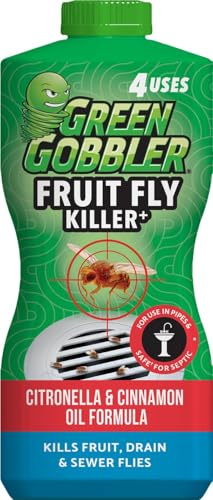
- Product type: Thick gel drain fly treatment
- Volume: 32 fluid ounces
- Target insects: Fruit flies, drain flies, and sewer flies
- Active approach: Citronella oil and cinnamon oil in a clinging gel

- Product type: Concentrated enzyme drain gel
- Volume: 32 fluid ounces
- Target insects: Drain flies and fruit flies that breed in drain film
- Active approach: Enzymes and non-pathogenic microorganisms that digest organic waste

- Product type: Microbe and citrus oil bio drain gel
- Volume: 1 quart, 32 fluid ounces
- Model number: IBDC032
- Brand: Rockwell Labs
All 5 Picks at a Glance
| Product | Specs | Action |
|---|---|---|
| 1. Green Gobbler Fruit Fly Killer Plus |
| Check price on Amazon |
| 2. Kinzua Environmental Fly-Zyme Enzyme Drain Gel |
| Check price on Amazon |
| 3. Rockwell Labs InVade Bio Drain Gel |
| Check price on Amazon |
 4. Terro Drain Insect Killer T590 Foam |
| Check price on Amazon |
 5. Eco Strong Fruit Fly Drain Treatment |
| Check price on Amazon |
Key takeaways
- Find the best drain fly traps for sinks, showers, and floor drains, with gel, enzyme, and foam treatments that target drain flies where they breed.
Quick Answer
The best drain fly traps are treatments that reach the slimy film inside the drain where drain flies breed, rather than traps that only catch the adults flying around the room. For most homes, a thick gel that clings to pipe walls is the most practical starting point, because it coats the breeding surface and stays in place between flushes. A gel such as the Green Gobbler Fruit Fly Killer Plus gives a straightforward nightly routine for a single problem sink, while an enzyme gel such as Kinzua Fly-Zyme suits households that want a microbe-based formula for ongoing drain maintenance. For a heavy or recurring infestation, a professional-style bio drain gel such as Rockwell Labs InVade Bio Drain Gel, a foam treatment such as the Terro Drain Insect Killer T590, or a bulk gallon such as the Eco Strong Fruit Fly Drain Treatment covers more drains and more repeat applications. Adult flies caught on a sticky card or in a light trap tell you the problem is still active, but they do not end it. The breeding film has to go, and that is what the treatments in this guide are built to do.
As an Amazon Associate, we earn from qualifying purchases.
Table of Contents
- Quick Answer
- What Drain Flies Are and Why They Keep Coming Back
- How to Tell Drain Flies From Fruit Flies and Gnats
- How to Choose a Drain Fly Trap
- The Best Drain Fly Traps
- How to Use a Drain Fly Treatment Correctly
- What to Do When the Flies Come Back
- Preventing Drain Flies for Good
- Frequently Asked Questions
- Conclusion
- Product and ASIN Reference
What Drain Flies Are and Why They Keep Coming Back
Drain flies, also called moth flies or sewer flies, are small, fuzzy, moth-like insects that gather around sinks, showers, bathtubs, and floor drains. They are weak fliers and tend to rest on walls near a drain rather than flying long distances across a room. When disturbed, they hop or flutter in short bursts and settle again nearby. That habit is a useful clue. If the insects cluster around one sink or shower and rarely travel far, the drain below them is the likely source.
The reason drain flies return after a quick spray or a wipedown is that the adults are only the visible part of the problem. The larvae live in the thin layer of organic film that builds up on the inside of drain pipes, in the trap bend, and around the drain opening. That film is a mix of grease, soap scum, food residue, hair, and other organic matter that clings to pipe walls. It is exactly the kind of surface a drain fly needs. Females lay eggs in it, larvae feed in it, and new adults emerge from it, often within a week or two in a warm home. Killing the adults in the air leaves the larvae untouched, so a fresh batch appears a few days later and the cycle starts again.
This is also why drain flies often appear in drains that are used rarely. A guest bathroom, a basement floor drain, or a laundry sink that sits idle for weeks can build up a film undisturbed, and the water in the trap can evaporate enough to let odors and insects move more freely. Drains in busy kitchens and bathrooms are not immune either. A garbage disposal, a shower used by several people, or a kitchen sink that handles greasy dishes can grow a thick film quickly, especially where the pipe has bends, rough joints, or a slow spot where water lingers.
A drain fly problem is therefore a drain hygiene problem first and an insect problem second. The most effective products in this guide are designed around that fact. Gels cling to pipe walls instead of washing straight through. Enzyme and microbe formulas digest the organic film that larvae feed on. Foam expands to coat the inside of a pipe that a poured liquid might miss. Each approach attacks the breeding site rather than the air above it, and that is the standard every pick below was judged against. A spray or a sticky card can catch the adults you can see, but neither one touches the film inside the pipe, so neither one ends the cycle on its own.
How to Tell Drain Flies From Fruit Flies and Gnats
Correct identification matters because the treatment changes with the insect. Fruit flies are drawn to ripe fruit, fermenting food, and open containers on counters. They are usually found hovering over a fruit bowl, a trash can, or a recycling bin, and they move quickly from one food source to another. If removing the fruit and cleaning the counter ends the problem, fruit flies were the likely cause, and a drain treatment would have been aimed at the wrong place.
Fungus gnats are tied to houseplants. They are slender, dark, mosquito-like insects that hover over damp potting soil, and their larvae live in the top layer of that soil. If the insects gather around a potted plant rather than a drain, the soil is the breeding site, and the fix is to let the soil dry between waterings and remove dead leaves, not to pour gel down a sink.
Drain flies are rounder and fuzzier than either of those insects, with broad, moth-like wings held flat over the body at rest. They are slow, clumsy fliers that stay close to the drain and rest on nearby walls, tiles, and mirrors. A tape test confirms the diagnosis: place clear tape loosely over the drain opening overnight, sticky side down, and check in the morning whether small fuzzy flies are stuck to it. Repeat on each suspect drain so you know exactly which ones need treatment.
It is common for a home to have more than one kind of small fly at once, especially in summer. Treat each source separately. Clean up the fruit and food sources for fruit flies, check the plants for fungus gnats, and apply a drain treatment to every drain that fails the tape test.
How to Choose a Drain Fly Trap
Choosing a drain fly treatment starts with the drain itself. Count the drains that show activity, note whether they are kitchen sinks, bathroom sinks, showers, tubs, floor drains, or garbage disposals, and think about how often each one is used. A single bathroom sink needs a small bottle and a short routine. A home with three problem drains, a disposal, and a basement floor drain needs a larger volume and a product that can be repeated across all of them without running out after two nights.
Formula type is the next decision. Thick gels are the most common and the most forgiving choice for home use. They pour slowly, cling to the pipe wall, and resist being washed away by the next use of the sink. Enzyme and microbe gels go a step further by digesting the organic film itself, which removes the food and shelter the larvae depend on. Foam treatments expand inside the pipe and coat surfaces that a poured gel might run past, which makes them useful for pipes with bends or for drains where the film sits above the water line. Powders and concentrates that mix with water suit homes that want a made-to-order dose, but they need careful measuring and a clear routine.
Scent and ingredients deserve attention in a kitchen or a bathroom that is used every day. Some drain fly gels use plant oils such as citronella, cinnamon, peppermint, or citrus, which leave a noticeable herbal scent after application. Others are unscented or nearly so, and rely on enzymes or microbes with little odor of their own. If anyone in the home is sensitive to strong scents, or if the drain sits beside a food preparation area, a low-odor or unscented formula is the safer pick. Read the label for use around food areas, garbage disposals, and septic systems, and follow it exactly. A product that is safe for septic systems and safe for pipes is worth choosing over a harsher formula that might damage older plumbing.
Application routine is where many treatments fail in practice. Most drain fly gels work best when poured into the drain at night, when the drain will sit unused for several hours. That quiet period lets the gel cling, coat, and work without being flushed away by running water. A product that asks for a daily application for a week is not a flaw. It is a sign that the formula is meant to break the breeding cycle over several generations of flies, not in a single dose. Before buying, check that the routine fits your household. A treatment that needs eight ounces per drain per night will empty a small bottle fast if you have four drains to cover. A gallon container looks like a large commitment until you count the drains and the nights, and then it often turns out to be the practical size.
Safety and storage round out the choice. Drain fly treatments are pest control products, and they should be stored out of reach of children and pets, used exactly as the label directs, and never mixed with other drain chemicals. Keep the bottle upright, keep the cap on, and keep it away from food storage. Foam and aerosol products need extra care around flames and heat, and they should be used in a ventilated room. If a product label warns against use in a particular state or in a particular type of drain, take that warning seriously and choose another pick.
Finally, set expectations honestly. No drain fly treatment removes a thick film in one night. The first application often disturbs the film and can briefly bring more adults out of the drain, which looks like failure but is a sign the treatment is reaching the breeding site. Real progress shows up as fewer adults each morning over several days, and then as clear tape tests on consecutive nights. Plan on a week of nightly treatment for a moderate infestation, followed by weekly maintenance while the film stays thin.
The Best Drain Fly Traps
1. Green Gobbler Fruit Fly Killer Plus
- Product type: Thick gel drain fly treatment
- Volume: 32 fluid ounces
- Target insects: Fruit flies, drain flies, and sewer flies
- Active approach: Citronella oil and cinnamon oil in a clinging gel
The Green Gobbler Fruit Fly Killer Plus is the most straightforward pick in this guide for a first drain fly problem. It is a thick gel that pours slowly into the drain, clings to the pipe walls, and targets fruit flies, drain flies, and sewer flies where they breed. The formula uses citronella oil and cinnamon oil in a gel carrier, which gives it a herbal scent that many households prefer over a chemical smell. The bottle uses an anti-glug design that reduces splashing as the gel is poured, which matters when you are leaning over an open drain at night.
Application is simple, and that simplicity is part of its value. The directions call for pouring eight ounces into the problem drain, which means a 32-ounce bottle covers four treatments for one drain, or fewer if several drains need attention. Used at night, the gel sits in the pipe while the drain is idle, coating the film and working on the breeding site until morning. The product is described as safe for septic systems, and it is made for homes as well as for restaurants, bars, and hotels, which is a useful sign that the formula is built for drains that see heavy daily use.
What sets this gel apart from a general drain cleaner is its focus. It is not trying to dissolve a solid clog or clear a blocked pipe. It is trying to kill flies at the source by treating the film they breed in. That focus makes it a good match for a drain that runs freely but produces flies, which is the most common drain fly situation. If the drain is also slow or blocked, clear the blockage first with a mechanical method such as a plunger or a drain snake, and then start the gel routine on the clean pipe.
The 32-ounce size suits a household with one or two problem drains and a moderate infestation. It is a budget pick in this guide, and its low commitment makes it easy to start the nightly routine without buying a gallon of a product you have never used. The trade-off is volume. A home with four or five drains, or a severe infestation that needs daily treatment for two weeks, will run through a 32-ounce bottle quickly and need a second bottle or a larger size. Count your drains before you order, and be honest about how many nights of treatment the problem is likely to need.
One detail to watch is the listing itself. Some listings for this product line describe a single 32-ounce bottle and others describe a two-pack, and the treatment count in the directions can read differently between listings. Check the size and count on the listing you order so the number of treatments you expect matches the bottle you receive.
For most homes, this is where to start. It is easy to apply, it targets the right insects in the right place, and it fits a nightly routine that a busy household can actually keep. If the flies persist after a full week of nightly use, the problem may involve a drain you have not treated yet, a floor drain you overlooked, or a film deeper in the pipe that needs a longer routine or a different formula type.
2. Kinzua Environmental Fly-Zyme Enzyme Drain Gel
- Product type: Concentrated enzyme drain gel
- Volume: 32 fluid ounces
- Target insects: Drain flies and fruit flies that breed in drain film
- Active approach: Enzymes and non-pathogenic microorganisms that digest organic waste
Kinzua Environmental Fly-Zyme takes a different route to the same goal. Instead of relying on plant oils, it uses a concentrated blend of enzymes and non-pathogenic microorganisms that digest the organic waste inside the drain. The gel breaks down food residue, grease, soap scum, and other buildup that forms the film where drain flies breed. As the film thins, the larvae lose their food and shelter, and the breeding cycle breaks. That mechanism makes Fly-Zyme as much a drain maintenance product as a fly treatment, and it is a strong choice for households that want to prevent the next infestation as well as end the current one.
The formula is described as salmonella-free and non-corrosive, with a fresh scent, and it is made for household and commercial drains, including kitchen sinks, garbage disposals, restaurants, and bars. The 32-ounce bottle is a manageable size for home use, and the thick gel clings to pipe walls in the same way as other gels in this guide, giving the enzymes extended contact with the film. Application follows the familiar pattern. Remove standing water where possible, pour the gel directly into the drain, let it sit overnight, and flush with warm water in the morning. Repeat nightly until fly activity falls, then continue with weekly maintenance while the drain stays clean.
Fly-Zyme suits a household that is comfortable with a slower, steadier approach. Enzyme action is not instant. The microbes and enzymes need hours of contact to digest the film, and visible results often arrive over several days rather than after a single night. That pace can feel slow when flies are gathering on the bathroom mirror every morning, but it is the pace that actually removes the breeding site. A household that pairs Fly-Zyme with a tape test will see the evidence clearly. Fewer flies stuck to the tape each morning is the sign the film is thinning, even before the drain looks or smells any different.
The mid-range tier reflects the concentrated enzyme formula and the commercial-grade positioning. It costs more per bottle than a basic gel, but a little goes a long way when the dose is measured and the routine is kept. It is also a good pick for a drain that has a history of recurring flies. Once the film is gone, a weekly maintenance dose keeps it from rebuilding, which is cheaper in time and effort than fighting a full infestation again in a month.
One practical note is that enzyme products work best when they are not flushed away immediately and not mixed with harsh chemicals. Do not pour a caustic drain opener into the same drain on the same night, and do not run the tap for long right after application. Give the gel its overnight window. If the drain is heavily clogged with solid matter, clear the blockage mechanically first so the gel can reach the pipe walls instead of sitting on top of a plug of debris.
For households that prefer a microbe-based, low-odor route and are willing to keep a nightly routine for a week, Fly-Zyme is the most balanced pick in this guide. It treats the cause, it doubles as maintenance, and it fits kitchens and bathrooms where a strong scent would be unwelcome.
3. Rockwell Labs InVade Bio Drain Gel
- Product type: Microbe and citrus oil bio drain gel
- Volume: 1 quart, 32 fluid ounces
- Model number: IBDC032
- Brand: Rockwell Labs
Rockwell Labs InVade Bio Drain Gel is the professional-style pick in this guide, and it is the one to choose when a drain fly problem has survived simpler treatments or when the drains serve a busy kitchen. It is a thick gel built from microbes and citrus oil, designed to coat the sides of drains and eat through the scum that supports drain flies, fruit flies, and phorid flies. The formula is used by pest control professionals and in restaurants and commercial buildings, and the quart bottle carries the model number IBDC032, which is a useful check when confirming you have the right product.
The gel is thick enough to cling to vertical pipe walls, which is where much of the breeding film lives. A thin liquid would run down the center of the pipe and miss the film on the sides. InVade Bio Drain Gel coats those sides and stays there, giving the microbes time to break down grease and organic matter. It also helps with odors, since the same film that breeds flies also produces the stale smell that often accompanies a drain fly problem. The citrus scent is noticeable but not harsh, and it reads as clean rather than chemical.
A one-quart bottle is a practical size for a home with several drains. It holds enough for a full nightly routine across a kitchen sink, a disposal, and one or two bathroom drains, with enough left for weekly maintenance afterward. The premium tier reflects the professional formulation and the concentration of the gel. It is not the cheapest bottle in this guide, but for a stubborn infestation it is the bottle most likely to reach the film that cheaper treatments missed.
Application follows the same nightly pattern as the other gels, with one extra step that matters. Remove as much standing water as you can before pouring, so the gel reaches the pipe wall instead of diluting in a pool. Pour the gel slowly around the drain opening so it coats the sides, and then leave the drain alone overnight. In the morning, run warm water briefly to flush the loosened film. Repeat nightly for a week for a moderate infestation, and longer for a severe one. If the drain serves a garbage disposal, run the disposal briefly with cold water before treatment so the gel can reach the chamber walls, and then leave it undisturbed overnight.
InVade Bio Drain Gel also suits drains that are hard to reach or rarely used, such as a basement floor drain or a laundry sink. Those drains often have the thickest film because they sit idle, and a thick gel that clings is exactly what they need. Pour the gel, cover the drain lightly if the label allows, and let it work. Check the tape test each morning to track progress, and keep treating until two consecutive nights come back clear.
The main trade-off is that this is a treatment, not a trap for adults. It will not catch the flies already in the air, and the room may still show adults for a few days while the larvae die off. Pair it with a simple monitoring step, such as a tape test or a sticky card near the drain, so you can see the numbers falling even while a few adults remain. If adult numbers are not falling after a week of nightly use, re-check for an untreated drain, a cracked pipe, or a film deeper in the system that needs a longer routine.
4. Terro Drain Insect Killer T590 Foam
- Product type: Aerosol foam drain insect killer
- Volume: 8 fluid ounces
- Model number: T590
- Brand: Terro
The Terro Drain Insect Killer T590 is the only foam in this guide, and that format is its main advantage. It is an 8-ounce aerosol that delivers a dry foam through an extension tube, and the foam expands inside the pipe to coat surfaces that a poured gel can run past. For drains with bends, for pipes where the film sits above the water line, and for garbage disposals with chambers and baffles, that expansion matters. The foam reaches the film instead of flowing under it.
The formula contains three insect growth regulators, which work by disrupting the development of the insects rather than by killing adults on contact alone. That approach targets the next generation as well as the current one, which fits the breeding-cycle logic of drain fly control. The product is labeled for drain flies, fruit flies, house flies, and cockroaches in drains, and it is made for indoor use. The extension tube is a small detail that makes a real difference. It lets you direct the foam into the drain opening and along the pipe, rather than spraying blindly at the surface.
Application is quick. Shake the can as the label directs, attach the extension tube, insert it into the drain, and dispense the foam so it fills the opening and coats the pipe. Leave the foam in place for the time the label states, and do not flush the drain immediately. The foam needs contact time to coat the film and deliver the growth regulators. Use it at night when the drain will sit idle, just as with the gels, and repeat according to the label for a full treatment cycle. Because it is an aerosol, use it in a ventilated room, keep it away from flames and heat, and store it upright out of reach of children and pets.
The 8-ounce size makes this a budget pick, and it suits a household that wants a fast, targeted treatment for one or two drains, or a household that wants a foam to complement a gel routine. A common pairing is to use the foam first to coat the upper pipe and disposal chamber, and then to follow with a gel on later nights to keep the film thin. That pairing uses each format where it works best, and it avoids relying on a single application method for a pipe with an awkward shape.
The trade-off is capacity. Eight ounces of foam does not cover many drains, and a home with five problem drains will need more than one can for a full routine. The foam is also a pesticide product with a stronger label than the enzyme and microbe gels, so the directions matter more. Read the label for use around food areas, for use in a disposal, and for the waiting period before the drain is used again, and follow it exactly. Do not use the foam in a drain that is completely blocked, since the foam needs an open pipe to expand into.
For a drain where poured liquids seem to run straight through without helping, or for a disposal that keeps producing flies despite gel treatments, the T590 foam is the most useful pick in this guide. Its expansion reaches what gravity-bound liquids miss, and its growth regulators aim at the breeding cycle rather than at the adults you can see.
5. Eco Strong Fruit Fly Drain Treatment
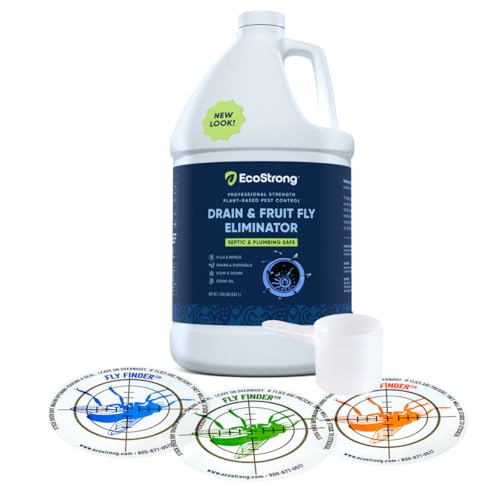
- Product type: All-natural gel drain fly treatment
- Volume: 1 gallon, 128 fluid ounces
- Model number: DFFE-128
- Brand: Eco Strong
The Eco Strong Fruit Fly Drain Treatment is the bulk pick in this guide, and it is the one to buy when the problem covers the whole home. The one-gallon bottle holds 128 fluid ounces of an all-natural gel, which is enough for a nightly routine across many drains and for weeks of maintenance afterward. The formula is described as non-toxic and safe around food, and it works by breaking down and digesting the scum buildup in pipes that drain flies, sewer flies, gnats, and fruit flies breed in. The peppermint scent leaves a fresh smell after application, which suits a kitchen where the drain sits near food preparation.
The gel is thick enough to cling to pipe walls, and the directions call for pouring it into the drain daily until the flies disappear. That daily routine is the key to this product. A gallon only helps if it is used steadily, one drain at a time, night after night, until the tape test comes back clear. The large size removes the excuse to stop early because the bottle ran out. It also makes the per-treatment cost low for a home with many drains, since a single bottle covers a kitchen sink, a disposal, two bathrooms, and a floor drain with room to spare.
Eco Strong is sold by Beyond Environmental LLC, and the gallon carries the model number DFFE-128. The bottle measures 6 x 6 x 12 inches and weighs about 8.69 pounds when full, which is worth knowing before you order, since a gallon of gel is heavy and needs a steady shelf where it will not tip. Store it upright, keep the cap tight, and keep it out of reach of children and pets, just as with any pest control product. Pour slowly to avoid splashing, and use a measuring cup if the label dose is hard to judge from the bottle alone.
This pick suits a large home, a home with a history of recurring drain flies, and a household that wants a single product for both treatment and maintenance. Once the flies are gone, a weekly dose keeps the film thin and prevents the next infestation from taking hold. It also suits a home where several drains failed the tape test at once, since the gallon can treat all of them in the same week without a second order.
The trade-offs are size and patience. A gallon is a large commitment for a single-sink problem, and a household with one drain and a light infestation will do better with a 32-ounce bottle. The formula also needs the same nightly routine as the other gels, and the first days can bring more adults out of the drain as the film is disturbed. Keep the routine going, keep testing with tape, and do not stop the day the flies seem gone. Two clear nights in a row is a better stopping point than one quiet morning.
For whole-home coverage, for a severe infestation, and for households that want to buy once and treat thoroughly, the Eco Strong gallon is the most practical pick in this guide. It pairs a gentle, food-safe positioning with the volume a real routine demands.
How to Use a Drain Fly Treatment Correctly
A drain fly treatment works when it reaches the film, stays there long enough to act, and is repeated until the breeding cycle breaks. The steps below apply to the gels, the foam, and the enzyme products in this guide, with small changes for each format.
Start by finding every problem drain. Test each suspect drain with tape overnight, one drain at a time, and write down which ones fail. Treat every drain that fails. Treating only the worst drain while leaving a second one alone is the most common reason a routine seems to fail, because the untreated drain keeps producing adults that gather at the treated one.
Clean the drain opening before treatment. Remove the drain cover or stopper where possible, pull out visible hair and debris, and wipe the opening and the first few inches of pipe. Do not pour a treatment on top of a solid clog. If the drain is slow, clear it mechanically first with a plunger or a drain snake, and then start the treatment on the open pipe.
Apply at night. Pour the gel slowly around the drain opening so it coats the sides, or dispense the foam through the extension tube so it fills the opening. Then leave the drain alone. Do not run the tap, do not flush the toilet on the same line if you can avoid it, and do not pour anything else down the drain that night. The quiet hours are when the treatment works. In the morning, run warm water briefly to flush the loosened film, and then use the drain normally during the day.
Repeat nightly for at least a week for a moderate infestation, and longer for a severe one. The first few nights may bring more adults out of the drain as the film is disturbed. That is expected. Keep going. Track progress with the tape test each morning, and look for a falling count rather than a single clear night. When two consecutive nights come back clear, move to a weekly maintenance dose to keep the film from rebuilding.
Do not mix treatments. Do not combine a gel with a caustic drain opener, a bleach-based cleaner, or another pesticide on the same night. Mixing can neutralize an enzyme or microbe formula, create fumes, or damage the pipe. If you want to switch from one product to another, flush the drain with warm water, wait a day, and then start the new product on its own routine.
Keep a simple log while you treat. Note the date, the drain, the product, and the tape test result each morning. A log turns a vague feeling that the flies are getting better into a record you can trust, and it shows clearly when a drain needs a longer routine or a different format. It also helps you see the pattern if the flies return a month later, since you will know which drains were treated and which ones were not.
What to Do When the Flies Come Back
If the flies return after a treatment that seemed to work, the cause is usually one of a few things, and each one has a fix. The first is an untreated drain. A floor drain in the basement, a laundry sink, a rarely used guest bathroom, or a drain behind a washing machine can keep producing flies while the treated drains stay clear. Test every drain in the home with tape, including the ones you assumed were fine, and treat every one that fails.
The second is a film deeper in the pipe than the treatment reached. A gel that coats the first bend may not reach a film further down, especially in a long horizontal run or a pipe with a rough joint. A foam treatment can help here, since it expands further into the pipe, and a longer nightly routine can help too, since each dose loosens a little more film. If the problem persists after two full weeks of nightly treatment, the film may be behind a partial blockage or a damaged pipe, and a plumber can inspect the line with a camera to find it.
The third is a new source of organic matter. A garbage disposal that is not cleaned regularly, a sink that handles greasy dishes without a strainer, or a shower that collects hair can rebuild a film in weeks. Clean the disposal with cold water and a brush, use a strainer in the kitchen sink, and pull hair from shower drains weekly. Prevention is cheaper than another full treatment cycle.
The fourth is a seasonal return. Warm weather and humidity favor drain flies, and a home that was clear in winter can see them again in summer. A weekly maintenance dose through the warm months keeps the film thin and prevents a new infestation from taking hold. Think of it as drain care, like cleaning a filter, rather than as a one-time fix.
If none of these steps helps, check for a plumbing fault. A dry trap, a cracked pipe, or a missing drain cover can let flies in from the sewer line itself, and no gel will fix a trap that has no water in it. Run water into rarely used drains weekly to keep the trap full, and ask a plumber to check any drain that smells of sewer gas or that produces flies even after the film is gone.
Preventing Drain Flies for Good
Prevention is mostly a matter of keeping the film thin and the traps full. Run water into every drain at least once a week, including guest bathrooms, basement floor drains, and laundry sinks. That keeps the trap full of water, which blocks odors and insects from the sewer line, and it flushes away the early film before it thickens.
Use a strainer in the kitchen sink and empty it daily. Food scraps, grease, and coffee grounds are the raw material for drain film, and a strainer keeps most of them out of the pipe. Wipe greasy pans with a paper towel before washing them, and avoid pouring cooking oil down the drain. In the shower, pull hair from the drain weekly and wipe the drain opening with a brush. Small habits like these do more for prevention than any single product.
Clean the garbage disposal regularly. Run it with cold water and a handful of ice, and brush the splash guard and the chamber walls where film collects. A disposal that smells stale is a disposal with a film, and a film is a breeding site. Keep the disposal clean and the flies have nowhere to start.
Keep a maintenance routine through the warm months. A weekly dose of an enzyme or microbe gel in each drain that has had a problem before will keep the film thin without much effort. Pick one night a week, treat the drains, and leave them alone overnight. That single habit prevents most repeat infestations.
Finally, keep the area around the drain clean and dry. Wipe up standing water, fix a dripping tap, and keep the floor under the sink dry. Drain flies need moisture and organic matter, and a dry, clean area around the drain gives them neither. Combined with a weekly maintenance dose, these habits keep a home clear long after the first treatment ends.
Frequently Asked Questions
How long does it take to get rid of drain flies?
Most moderate infestations improve within a week of nightly treatment, with fewer adults each morning and clear tape tests after several nights. Severe infestations, or homes with several untreated drains, can need two weeks or more. The key is to treat every drain that fails the tape test, apply at night when the drain will sit idle, and keep going until two consecutive nights come back clear. Stopping on the first quiet morning is the most common reason the flies return.
Are drain fly gels safe for septic systems?
The gels in this guide are described by their makers as safe for septic systems when used as directed, including the Green Gobbler gel, the Kinzua enzyme gel, and the Eco Strong gel. That said, always read the label on the bottle you buy, since formulations change and some products carry limits on use in septic systems or in certain states. Use the directed dose, do not mix products, and do not pour more than the label calls for in the hope of faster results. More product does not work faster, and it can disturb the balance of a septic system.
Can I use a drain fly treatment in a garbage disposal?
Yes, most gel treatments in this guide are made for use in sinks with garbage disposals, including the InVade Bio Drain Gel and the Kinzua enzyme gel. Run the disposal briefly with cold water before treatment to clear loose debris, then pour the gel into the drain and leave it undisturbed overnight. For the foam treatment, read the label for disposal use and follow the contact time it states. Never put your hand into a disposal, and never pour a treatment into a disposal that is jammed or blocked.
Why do I see more flies right after the first treatment?
A first treatment often disturbs the film inside the pipe, which can bring more adults out of the drain for a day or two. That looks like failure, but it is a sign the treatment is reaching the breeding site. Keep applying nightly, keep testing with tape, and look for the count to fall over several days. If the count is still rising after a week of nightly treatment, re-test every drain for an untreated source, check for a dry trap or a plumbing fault, and consider switching to a foam treatment that expands further into the pipe.
Conclusion
Drain flies are a drain problem before they are an insect problem, and the best drain fly traps are the treatments that reach the film where the flies breed. A thick gel that clings to pipe walls, an enzyme gel that digests the film, a professional bio drain gel for stubborn cases, a foam that expands into bends and disposal chambers, and a bulk gallon for whole-home coverage each have a place, and the five picks in this guide cover that full range. Start with the tape test so you know which drains need treatment, apply at night when the drain will sit idle, repeat nightly for at least a week, and keep a weekly maintenance dose while the film stays thin. The flies will not vanish in a single night, but a steady routine aimed at the breeding site will clear them, and the habits that keep the film thin will keep them from coming back.
Product and ASIN Reference
| Product | ASIN |
|---|---|
| Green Gobbler Fruit Fly Killer Plus | B07CVMMDNQ |
| Kinzua Environmental Fly-Zyme Enzyme Drain Gel | B07DFSGMY2 |
| Rockwell Labs InVade Bio Drain Gel | B005G4STX0 |
| Terro Drain Insect Killer T590 Foam | B0F2VX1PRC |
| Eco Strong Fruit Fly Drain Treatment | B0C6J8YL3P |
More from Amazon
Programs that pair well with the guide above. Offers and eligibility are set by Amazon and may change.
Set up recurring deliveries of everyday items on eligible products. Terms and savings are set by Amazon.
Explore Subscribe & SaveCollect the home and kitchen items you want in one registry that guests can shop from.
Create a wedding registryFree shipping on eligible items, Prime Video and more. Eligible new members can start with a free trial.
Start a Prime free trialAudiobooks and podcasts to listen to on the go. Eligible new members can start with a free trial.
Try Audible freeAs an Amazon Associate we earn from qualifying purchases.










Write Your Review
No reviews yet. Be the first to share your experience!