
Our Short List of 3
All 4 Picks at a Glance
| Product | Specs | Action |
|---|---|---|
 TACTACAM Reveal Pro 3.0 Cellular Trail Camera | Check price on Amazon | |
 Moultrie Edge Cellular Trail Camera | Check price on Amazon | |
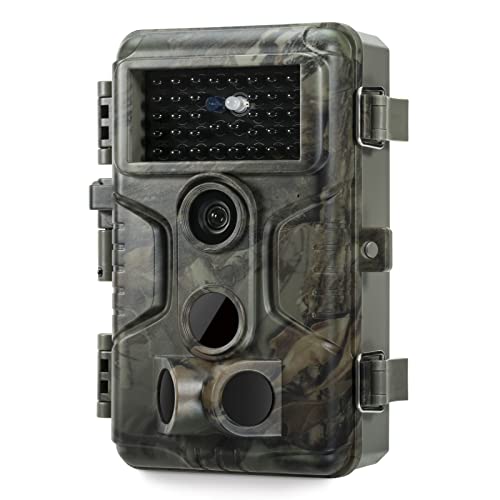 GardePro A3S Trail Camera | Check price on Amazon | |
 REOLINK Go Ranger PT Cellular Trail Camera with Solar Panel | Check price on Amazon |
Key takeaways
- Compare the best trail cameras for wildlife and property scouting, from cellular models with app alerts to simple SD-card cameras with no-glow flash.
A trail camera does the watching you cannot do yourself. Strapped to a tree at a game trail, a feeder, or a gate, it records who and what passes, day and night, for weeks at a time. The best trail cameras trigger fast, stay invisible after dark, and deliver pictures in a way that fits how often you can visit the site.
The five cameras below split into two camps. Cellular models send photos to an app, so you can scout without disturbing the area. Standard SD-card models skip the data plan and are simpler to run. One pick adds a rotating lens and solar power for wide ground.
As an Amazon Associate, we earn from qualifying purchases.
Quick Answer
For most buyers, the TACTACAM Reveal Pro 3.0 is the strongest all-round trail camera here, pairing cellular alerts, no-glow flash, built-in GPS, and on-demand video. The Moultrie Edge removes SD cards with built-in memory and cloud storage. The SPYPOINT Flex-M covers two networks at once, the GardePro A3S is the simple SD-card pick, and the REOLINK Go Ranger PT watches wide ground on solar power.
How to Choose
Start with the delivery question. A cellular camera sends thumbnails to your phone shortly after each trigger, ideal for patterning deer, checking a gate, or monitoring land you visit rarely. The trade-off is a data plan and dependence on cell coverage at the exact tree you choose. A standard camera records to an SD card you collect in person: no plan, no signal worries, but you learn what happened only when you return, and every visit leaves scent behind.
Check coverage before buying cellular. Cameras that auto-connect across networks, or carry dual SIM cards, reduce the risk of a dead camera where one carrier is weak. In a known dead zone, a standard SD camera serves you better than any cellular unit.
Trigger speed decides what you capture. A fast trigger catches an animal crossing a narrow trail rather than its tail or empty woods. On wide plots, detection range and field of view matter more. Burst mode helps everywhere, since a sequence shows whether one deer passed or a group did.
Night flash comes in three flavours. No-glow infrared is effectively invisible and suits wary game and discreet watching. Low-glow reaches a little further but shows a faint red shimmer. White flash gives colour night photos yet announces the camera, so it rarely suits scouting.
Power is the quiet deciding factor. AA batteries are simple, and lithium cells handle cold best. Solar panels stretch service intervals on cellular models, which drain batteries faster. Built-in memory removes card failures, and GPS helps you account for every camera.
TACTACAM Reveal Pro 3.0 Cellular Trail Camera
The Reveal Pro 3.0 is the pick when you want cellular convenience without giving up discretion. Its no-glow infrared flash captures night activity without a visible glow. The listing puts night vision reach at 96 feet in its product details, while the brand comparison chart lists the no-glow flash range a little shorter, so treat the longer figure as optimistic. Photos are described at 4K definition, video records in 1080p, and on-demand video lets you request a clip rather than waiting for the next trigger.
Built-in GPS is a practical extra: with several cameras across a property, app locations stop you mixing up which camera produced which picture. The 2-inch LCD screen and live Wi-Fi aiming make setup easier at the tree. Burst mode, built-in memory, and optional SD support round out the package, and TACTACAM sells solar panels for longer deployments.
Moultrie Edge Cellular Trail Camera
The Edge takes a different approach to storage: there is no SD card to buy, fill, or lose. Built-in memory holds captures and automatically clears space for new shots, while cloud storage in the Moultrie Mobile app keeps photos viewable from anywhere. For buyers who dislike managing cards across several cameras, that alone can justify the choice.
Auto Connect is the other headline. The camera links to the strongest signal across multiple networks on nationwide 4G LTE, reducing guesswork when you do not know which carrier covers a lease best. The listing describes 33MP photos and HD 720p video with audio, although its own comparison chart lists the Edge at 32 megapixels, a small self-contradiction worth knowing about. An 80-foot low-glow flash and detection range handles most trail and feeder setups. The app adds activity charting, mapping, and species tagging, activation is a QR code scan, and the camera runs on 8 to 16 AA batteries.
SPYPOINT Flex-M Cellular Trail Camera
The Flex-M is the value entry into cellular scouting, built around one smart idea: two SIM cards. Its dual-SIM LTE connection works across carriers, so the camera can use whichever network is stronger at your tree. On marginal land where a single-carrier camera drops in and out, that flexibility matters more than a small gap in photo resolution.
Captures are 28MP photos and 720p video with sound, delivered through the SPYPOINT app, and GPS helps you track camera locations. Photo, video, time-lapse, and time-lapse-plus modes let you watch a plot develop over a season. The housing is rated IP65. SPYPOINT also offers a free photo transmission tier with a modest monthly allowance, with paid tiers when activity rises. The Flex-M needs a microSD card, not included. Choose it for a first cellular camera or any site where coverage is uncertain.
Specs
| Spec | Detail |
|---|---|
| Connectivity | Dual-SIM LTE cellular |
| Photo | 28MP |
| Video | 720p with sound |
| Modes | Photo, video, time-lapse, time-lapse plus |
| Detection range | 90 feet |
| Weather rating | IP65 water-resistant |
| Location | GPS enabled |
| Storage | MicroSD card required, not included |
| Power | AA batteries |
GardePro A3S Trail Camera
The A3S is the reminder that a trail camera does not need a signal to be excellent. This non-cellular, non-Wi-Fi model records 64MP photos and 1296p video to a full-size SD card, with H.264 compression keeping file sizes manageable. A Sony Starvis sensor, large-aperture lens, and smart illumination aim at the weakness of many budget cameras: washed-out or murky night images.
Its no-glow infrared reaches 100 feet, and the trigger fires in 0.1 seconds, fast enough for crossings on narrow trails. A built-in colour screen of about 2.4 inches and remote-style buttons make settings and playback straightforward, with no app account and no pairing. The body is rated IP66 in the product description; the listing’s technical table also shows a higher IP69K figure, so plan around the conservative IP66 rating. It runs on eight AA batteries and supports cards up to 512GB, neither included. Pick it for off-grid land and gardens where you visit regularly.
REOLINK Go Ranger PT Cellular Trail Camera with Solar Panel
The Go Ranger PT solves a different problem: one camera covering a wide area. Instead of a fixed lens, it pans 355 degrees and tilts 140 degrees, giving a full 360-degree view of a field, yard, or clearing. Resolution is true 4K at 8MP, and animal recognition can distinguish species including buck, doe, and turkey, saving you from scrolling through wind-triggered clips.
It connects over 3G and 4G LTE with the included Reolink SIM card, and a 32GB SD card is in the box. The included solar panel keeps the rechargeable battery topped up, a strong fit for sunny sites where battery swaps are a chore. No-glow infrared handles night work. The listing rates the housing at IP64 and gives an oddly short night-range figure in one technical field, so plan on it as a wide-area daytime and close-range night watcher. This version is for the United States, Canada, and Mexico only, and it is not a Wi-Fi camera.
Who Should Skip It
Skip trail cameras if your site has reliable Wi-Fi and mains power within range of a security camera, because a powered camera records continuously instead of relying on motion triggers and batteries. Skip cellular models if your land has no dependable signal from any carrier, since a camera that cannot transmit is just an expensive SD camera with a plan attached.
Also skip these picks if you need live viewing all day or evidence-grade footage of a busy entrance; trail cameras are motion-triggered stills and short clips by design. Hunters in jurisdictions that restrict cellular cameras during season should choose a standard model like the A3S instead.
FAQ
Do cellular trail cameras need a subscription?
Yes, after any included trial or free allowance, cellular delivery runs on a paid data plan tied to how many photos and videos the camera sends. SPYPOINT offers a small free monthly photo allowance, while other brands sell tiered plans through their apps. Standard SD-card cameras such as the GardePro A3S need no plan at all.
How long do trail camera batteries last?
It depends on trigger volume, night activity, and whether the camera transmits. A quiet SD camera on lithium AA batteries can run for months, while a busy cellular camera sending daily batches may need fresh power far sooner. Solar panels, like the one bundled with the REOLINK Go Ranger PT, extend intervals at sunny sites.
Will a trail camera scare deer or other wildlife?
No-glow infrared flash is effectively invisible to animals and people, so cameras using it, such as the Reveal Pro 3.0 and the A3S, rarely disturb game. Low-glow flash shows a faint red shimmer that most animals ignore but wary deer may notice. Human scent and repeated visits usually matter more than the flash itself.
Can I use a trail camera for home or property security?
Yes, and cellular models suit it well because photos reach your phone even if the camera is later found or taken. Mount the camera high, angle it along likely approach paths rather than straight at them, and remember that motion-triggered clips are snapshots of activity, not continuous surveillance footage.
Final Verdict
Match the camera to the site, not the spec sheet. The TACTACAM Reveal Pro 3.0 is the best overall pick for serious scouting, combining no-glow discretion, GPS, and on-demand cellular video. The Moultrie Edge is the easiest cellular system to live with, thanks to built-in memory and cloud storage, while the SPYPOINT Flex-M brings dual-network coverage to tighter budgets. Off-grid and plan-free, the GardePro A3S delivers fast triggers and strong night images to a simple SD card. For wide, sunny ground, the REOLINK Go Ranger PT watches in every direction on solar power.
Product and ASIN Reference
| Product | ASIN |
|---|---|
| TACTACAM Reveal Pro 3.0 Cellular Trail Camera | B0D7HZKFCQ |
| Moultrie Edge Cellular Trail Camera | B0B6WSWZPW |
| SPYPOINT Flex-M Cellular Trail Camera | B0D1TTDBST |
| GardePro A3S Trail Camera | B087G8W2PY |
| REOLINK Go Ranger PT Cellular Trail Camera with Solar Panel | B0DQN8SM8H |
More from Amazon
Programs that pair well with the guide above. Offers and eligibility are set by Amazon and may change.
Set up recurring deliveries of everyday items on eligible products. Terms and savings are set by Amazon.
Explore Subscribe & SaveCollect the home and kitchen items you want in one registry that guests can shop from.
Create a wedding registryFree shipping on eligible items, Prime Video and more. Eligible new members can start with a free trial.
Start a Prime free trialAudiobooks and podcasts to listen to on the go. Eligible new members can start with a free trial.
Try Audible freeAs an Amazon Associate we earn from qualifying purchases.










Write Your Review
No reviews yet. Be the first to share your experience!