Disdik Picks is reader-supported. When you buy through links on our site, we may earn a commission at no extra cost to you. As an Amazon Associate, we earn from qualifying purchases. Learn more ›
Best Foot Soaks: Epsom Salt Blends for Tired, Achy Feet
Compare the best foot soaks with Epsom salt and tea tree oil for sore feet, foot odor and calluses, with full specs, bag sizes and soak times.
Nov 19, 2026
Updated Nov 20, 2026
11 min read
4 views
The best foot soaks combine Epsom salt with tea tree oil and a short list of supporting essential oils, and they come in bags sized for repeated use rather than a single session. For most people, the Daily Remedy Tea Tree Oil Foot Soak is the safest all-round choice: a 16 ounce bag of Epsom salt, Dead Sea salt and MSM with nine essential oils, made in the USA. If you soak several times a week, the 2 pound Kerasal Foot Therapy Soak gives you roughly sixteen soaks per bag from a short, five-ingredient formula. The other three picks below cover a sea salt blend from Purely Northwest, a spa-style formula from FOOT CURE, and a coconut oil blend from M3 Naturals.
Every product in this guide is a dedicated foot soak product, sold as loose salt or granules that dissolve in a basin of warm water. None of them is a heated foot spa device, and none is a general bath salt repackaged for feet, so the sizes, ingredients and directions quoted here all come from each maker listing for foot use specifically.
As an Amazon Associate, we earn from qualifying purchases.
Table of Contents
What to look for in a foot soak
Daily Remedy Tea Tree Oil Foot Soak with Epsom Salt
Kerasal Foot Therapy Soak
Purely Northwest Tea Tree Oil Foot Soak
FOOT CURE Tea Tree Oil Foot Soak with Epsom Salt
M3 Naturals Tea Tree Oil Foot Soak
How to use a foot soak
Frequently asked questions
Conclusion
Product and ASIN Reference
What to look for in a foot soak
Salt base. Epsom salt, which is magnesium sulfate, is the base of nearly every foot soak on the market, and most blends add a second salt for texture and mineral variety. Dead Sea salt and Australian sea salt are the two most common additions. A pure Epsom formula such as the Kerasal bag below keeps the ingredient list shortest, which suits buyers who want to know exactly what is in the water.
Essential oils. Tea tree oil appears in all five picks because it is the oil most closely tied to odor control and nail care in published product claims. Peppermint and menthol add a cooling feel, eucalyptus and spearmint sharpen the scent, and lavender or chamomile soften it. If you dislike strong scents, note that tea tree has a medicinal smell that mint oils only partly cover.
Bag size and soak count. Foot soak bags run from 14 ounces to 2 pounds. A 16 ounce bag typically covers a few weeks of occasional soaking, while the 2 pound Kerasal bag is published as enough for about sixteen soaks. Heavy users who soak daily should favor the larger bags, because the cost per soak drops and the resealable pouch lasts longer between orders.
Extras in the formula. MSM, a sulfur compound, shows up in four of the five blends here and is marketed for skin softening. Baking soda appears in some rival formulas for odor, coconut oil and aloe appear in others for moisture, and apple fruit cell culture extract appears in the M3 Naturals blend as a premium cosmetic extra. None of these extras changes the basic routine: dissolve, soak, dry, moisturize.
Form. All five picks are loose salts or granules. Single-use foot soak bombs and jellies exist, but loose salt gives you control over strength, since you can add a smaller amount for a mild soak or more for a stronger one.
Daily Remedy Tea Tree Oil Foot Soak with Epsom Salt
Top Pick
Daily Remedy Tea Tree Oil Foot Soak with Epsom Salt
Daily Remedy builds its soak on three mineral ingredients, Epsom salt, Dead Sea salt and MSM, then layers nine essential oils over the top: tea tree, lavender, chamomile, rosemary, eucalyptus, spearmint, peppermint, cajuput and camphor. That is the widest oil blend in this roundup, and it gives the soak a layered scent that opens medicinal and settles into mint and lavender. The maker positions it for toenail irritation, stubborn foot odor, callus softening and sore, tired feet after long days on hard floors.
The 16 ounce bag is the standard size in this category, and the formula is made in the USA. Because the blend carries both cajuput and camphor, it has a warmer, more penetrating aroma than mint-only rivals, which some buyers will love and others will find strong in a small bathroom. Choose this one if you want a single bag that covers odor, calluses and everyday soreness without buying separate products for each job. It sits in the mid-range tier.
Kerasal Foot Therapy Soak
Runner-Up
Kerasal Foot Therapy Soak
Size: 2 pounds
Salt base: magnesium sulfate (Epsom salt)
Other ingredients: eucalyptus globulus leaf oil, aloe barbadensis leaf juice, tea tree leaf oil, limonene
Kerasal is a foot care brand sold in pharmacies, and its Foot Therapy Soak is the plainest formula in this guide: five ingredients, led by magnesium sulfate, with eucalyptus leaf oil, aloe barbadensis leaf juice, tea tree leaf oil and limonene. There is no long oil list and no fragrance blend beyond what those oils provide, so the scent stays light and clean. The maker describes it as a soothing soak for achy, tired and dry feet, and the aloe is there for skin comfort while the salts do the softening.
The bag is the big difference. At 2 pounds, it holds twice the salt of the 16 ounce bags, and Kerasal publishes that one bag covers about sixteen soaks when resealed between uses. That makes it the natural pick for anyone soaking three or more times a week, for couples sharing one bag, or for a household that keeps a basin routine through the winter. It is made in the USA and sits in the budget tier, which is unusual for the largest bag in a roundup and worth noting.
Purely Northwest Tea Tree Oil Foot Soak
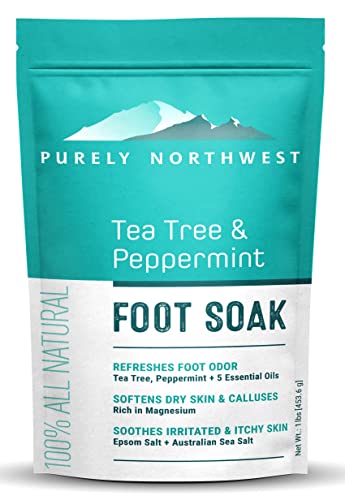
Purely Northwest pairs US pure Epsom salt with optically clean Australian sea salt, a pairing no other pick here uses, and adds MSM plus seven oils: tea tree, peppermint, cajuput, camphor, rosemary, eucalyptus and lavender. The published scent is Australian tea tree and peppermint, and the granule form pours and dissolves like coarse bath salt. The maker aims the soak at thick calluses and corns, stubborn odor, burning and itching, and damaged or discolored nails.
At 16 ounces it matches the standard bag size, and the sea salt gives the dissolved soak a slightly different mineral profile from Dead Sea salt blends. Buyers who have tried the common Dead Sea formulas and want a change, or who prefer a shorter brand story from a US foot care specialist, will land here. It sits in the premium tier, reflecting the imported sea salt and the specialist positioning rather than bag size.
Specs
Size: 16 ounces (1 pound)
Salt base: US pure Epsom salt and Australian sea salt, with MSM
FOOT CURE markets its soak as the same style of salt blend used in spas, built on Dead Sea salt, Epsom salt, magnesium and MSM with tea tree, eucalyptus, rosemary, peppermint, spearmint and chamomile oils. The pitch leans toward the full pedicure routine: toenail care, callus softening, odor control and relief for sore feet after standing shifts. The blend is close in spirit to the Daily Remedy formula, with chamomile calming the scent and no cajuput or camphor, so the aroma reads softer and less medicinal.
The 16 ounce package measures about 8 by 4.9 by 2 inches, a flat pouch that stores easily in a bathroom cabinet. It is made in the USA and sits in the budget tier, which makes it a sensible first bag if you are new to soaking and want to build the habit before committing to a larger or pricier blend. If you already know you like a strong camphor note, the Daily Remedy bag above is the better match.
M3 Naturals Tea Tree Oil Foot Soak
M3 Naturals Tea Tree Oil Foot Soak
Size: 16 ounces (454 grams)
Salt base: Dead Sea salt and Epsom salt, with sodium bicarbonate and MSM
M3 Naturals takes the familiar salt base and adds two ingredients none of the other picks carry: coconut oil and Malus domestica fruit cell culture extract, an apple-derived cosmetic ingredient more often seen in face creams. The full published list runs Dead Sea salt, Epsom salt, sodium bicarbonate, tea tree, chamomile, rosemary, eucalyptus, spearmint and peppermint oils, MSM, coconut oil, lavender oil and the apple extract. The baking soda supports the odor-control side of the formula, and the coconut oil is there for buyers whose feet feel tight and dry after soaking.
The bag is 16 ounces, listed as 454 grams, and the scent profile combines tea tree, coconut and lavender, the softest-smelling blend in this roundup. Pick it if dry, cracked heels are your main complaint and plain salt soaks leave your skin feeling stripped. It sits in the premium tier, which the added cosmetic ingredients explain.
How to use a foot soak
Fill a basin with warm water deep enough to cover your ankles, add the amount of salt the bag directs, and stir until the crystals dissolve. Soak for fifteen to twenty minutes, then pat your feet dry rather than rubbing, and follow with a foot cream while the skin is still slightly damp. Warm water matters more than hot water: very hot water dries skin out and can leave feet more cracked than before. If you soak before bed, the mint and lavender blends double as a wind-down routine. Rinse the basin after each use, since salt residue builds up on plastic and can turn gritty.
Frequently asked questions
How often should you use a foot soak?
Two to three soaks a week suits most routines, and the makers of these blends describe them as gentle enough for regular use. Daily soaking is fine for short sessions in warm rather than hot water, but cut back if your skin feels dry or tight, and always moisturize afterward.
Do tea tree oil foot soaks help with foot odor?
Tea tree oil is included in foot soaks largely for odor control, and every blend in this guide pairs it with mint oils that leave feet smelling fresher after a soak. The effect is cosmetic and temporary, so washing feet daily and rotating shoes does more for odor over time than any single soak.
Can you use a foot soak in a heated foot spa tub?
Yes, loose salt soaks are made for plain basins and work in heated foot spa tubs as well, as long as the tub maker allows salts. Add the salt after filling, let it dissolve fully before switching on any bubble or jet feature, and rinse the tub afterward to keep residue off the parts.
How long does a bag of foot soak last?
A 16 ounce bag covers a few weeks of occasional soaking, while the 2 pound Kerasal bag is published as enough for about sixteen soaks. How long a bag lasts depends on how much salt you add per basin, so measuring instead of pouring freely stretches any bag further.
Conclusion
For a single bag that handles odor, calluses and sore feet, choose the Daily Remedy soak and its nine-oil blend. For the best value across a long routine, choose the 2 pound Kerasal bag with its short ingredient list and published sixteen-soak yield. Purely Northwest suits buyers who want an Australian sea salt base, FOOT CURE is the gentle budget entry point, and M3 Naturals is the pick for dry heels that need coconut oil in the water. Whichever you choose, warm water, a twenty minute ceiling and moisturizer afterward matter more than the brand on the bag.
Find the best razors for women for legs, underarms and sensitive skin. Compare five cartridge, disposable and shave-kit options and choose a smooth shave.
We compared the best comforters for every sleeper, from light all-season inserts to plush king-size picks, so you can find the right warmth for your bed.
We compared the best calculators for students, professionals, and home offices, covering scientific, graphing, financial, printing, and desktop models.


 M3 Naturals Tea Tree Oil Foot Soak










Write Your Review
No reviews yet. Be the first to share your experience!