Disdik Picks is reader-supported. When you buy through links on our site, we may earn a commission at no extra cost to you. As an Amazon Associate, we earn from qualifying purchases. Learn more ›
Best Balance Boards for Core Strength and Stability
Compare the best balance boards for home training, from roller boards and wobble boards to dome trainers, with full specs, weight limits, and buying tips.
Nov 19, 2026
Updated Nov 20, 2026
12 min read
0 views
Compare the best balance boards for home training, from roller boards and wobble boards to dome trainers, with full specs, weight limits, and buying tips.
⭐ Key Takeaways
Quick answer: Our top pick is Revbalance 101 v2 Balance Board Sports Trainer — Premium, with BOSU Home Balance Trainer — Premium as a strong alternative.
The best balance board for most home users is a wooden wobble board with a round base, because it trains ankles, knees, and core muscles in every direction while staying compact enough for a living room or a standing desk. Anyone who wants a bigger challenge can step up to a roller board, where the deck rides on a separate cylinder, while people who prefer a softer, lower platform can pick an inflatable dome trainer instead. The five boards below cover each of those designs, with published dimensions, weight limits, and materials so the right match is easy to spot.
Balance boards earn their place in a home routine because a few minutes of standing, squatting, or rocking on an unstable surface recruits the small stabilizing muscles that flat floors never ask to work. They show up in physical therapy settings, in surf and snowboard training, and under standing desks, and the differences between models come down to the base design, the deck size, and how much movement the board allows. This guide explains those differences first, then walks through five boards that suit different goals and budgets, from a budget wooden wobble board to a premium roller board with adjustable stops.
As an Amazon Associate, we earn from qualifying purchases.
Table of Contents
How Balance Boards Differ
The 5 Best Balance Boards
Revbalance 101 v2 Balance Board Sports Trainer
BOSU Home Balance Trainer
StrongTek Professional Wooden Balance Board
Yes4All Wooden Wobble Balance Board
Amazon Basics Wood Wobble Balance Trainer Board
What to Check Before Buying
Frequently Asked Questions
Conclusion
Product and ASIN Reference
How Balance Boards Differ
The base decides how a board moves. A wobble board has a dome or ball fixed under the deck, so the board tilts in a full circle and the rider controls the angle with ankle movement. A rocker board has a curved or cross-shaped base that mostly tips side to side, which feels more predictable and suits desk use and early rehab work. A roller board separates the deck from a loose cylinder, adding travel across the floor and the highest difficulty of the three. A dome trainer flips the idea around: the rider stands on an inflatable half ball with a flat platform on the other side, so both surfaces can be used for different drills.
Deck size matters as well. Round wobble boards usually measure about 15 to 16 inches across, which fits one or two feet with a narrow stance. Rectangular decks run longer, around 30 inches for roller boards, giving room for a shoulder-width stance and for the lateral movement the roller creates. Weight limits range from about 250 pounds on light wooden boards to 400 pounds on the strongest roller decks, so checking the published limit against the rider’s weight is a simple but essential step. Surface grip, board height, and floor protection round out the practical differences: taller boards tilt further, textured tops grip bare feet and shoes, and a mat underneath protects hard floors from the base.
The Revbalance 101 v2 is the pick for riders who want the full roller board challenge with a way to dial it down while learning. The deck rides on a separate roller, and the MagSwitch system uses magnetic stoppers that slide along the underside of the deck to limit how far the board can travel. Moving the stops inward shortens the rolling distance for new riders, and removing them opens the full range for advanced drills, tricks, and sport-specific training for surfing, skating, and snowboarding.
The deck measures 30 by 12 inches, giving enough length for a natural stance, and the published weight limit is 400 pounds, the highest figure in this roundup. The board itself weighs 6.8 pounds, so it moves between rooms without effort, and the Durasoft grip surface is designed for bare feet as well as shoes. Revolution Balance Boards builds the 101 v2 in the USA, and the package includes the board, the roller, and a digital guide for first sessions. Because the deck travels, this board needs open floor space and a soft landing area nearby while skills build.
2. BOSU Home Balance Trainer — Premium
Runner-Up
2. BOSU Home Balance Trainer — Premium
Type: Inflatable dome trainer, usable on both sides
The BOSU Home Balance Trainer replaces the rigid deck with an inflatable dome on a flat platform, which makes it the most versatile option here. Stand on the dome for balance and core work, flip it over and stand on the platform while the dome wobbles underneath, or use the dome side for push-ups, planks, and step drills. That two-sided design is why the BOSU shows up in so many gym and therapy settings, and the home version keeps the same 26-inch diameter as the original.
The dome inflates with the included pump, and firmness controls difficulty: more air makes the surface firmer and steadier, while less air makes it softer and harder to control. The published weight limit is 300 pounds, and the unit weighs about 4 kilograms, light enough to carry between rooms or lean against a wall for storage. The listing includes guided workout material, which helps new owners build a routine around the dome. Riders who want a board that feels like wood underfoot should look at the other picks, since the BOSU surface is rubber and gives underfoot by design.
3. StrongTek Professional Wooden Balance Board — Mid-Range
3. StrongTek Professional Wooden Balance Board — Mid-Range
The StrongTek Professional Wooden Balance Board suits standing desk users and anyone who wants controlled movement in every direction without the travel of a roller board. Its crossed hardwood base touches the floor along two axes, so the deck tilts a full 360 degrees while the cross shape keeps the motion feeling planted rather than wild. The deck is large for this style at 17.5 by 13.5 inches, leaving room for a comfortable shoulder-width stance during long desk sessions or focused ankle work.
The board is built from Lauan hardwood plywood with an anti-slip surface on top, and the published weight limit is 350 pounds. At 4.65 pounds it is easy to slide under a desk or carry to another room, and the 3-inch height keeps the tilt angle moderate, which suits rehab routines and older users who want gentle mobility work. StrongTek lists the model under part number 4336341200, with Slantek as the manufacturer. The cross base works on hard floors and low-pile carpet, though a mat underneath adds protection on delicate surfaces.
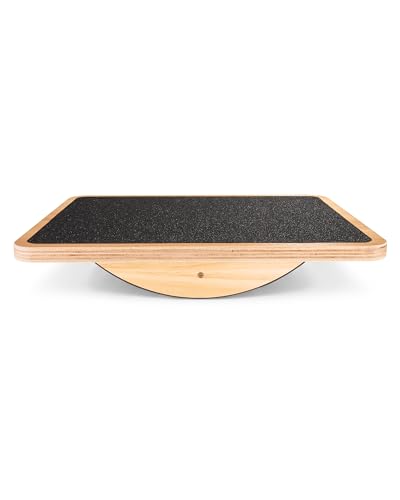
The Yes4All Wooden Wobble Balance Board is the classic round wobble design at a budget tier, and it covers the fundamentals well. The 15.75-inch wooden deck sits on a fixed dome base, so it rotates and tilts a full 360 degrees, asking the ankles and core to react in every direction. That makes it a flexible tool for balance drills, bodyweight exercises like squats and planks with hands on the deck, and standing desk sessions where a compact footprint matters.
The published weight limit is 300 pounds, and the wooden construction keeps the board feeling firm and direct compared with plastic models. The top surface carries a non-slip finish for grip with shoes or bare feet. Yes4All sells this board under model DB6F, and the round shape stores easily in a closet corner or under a sofa. New riders should keep a wall or sturdy chair within reach for the first sessions, because a full-circle wobble board moves more than a rocker board and takes a few days of practice to feel natural.
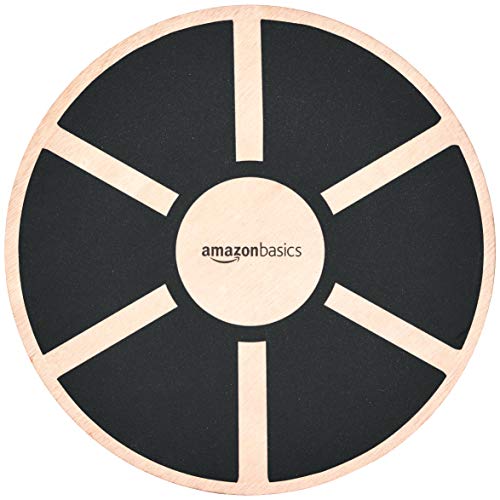
The Amazon Basics Wood Wobble Balance Trainer Board is a straightforward wooden wobble board for buyers who want the simplest version of the design. The deck measures 16.2 inches across with a 3.6-inch height, a touch larger and taller than many round boards, which gives the ankles a wider tilt range to work against. The non-slip surface supports standing drills, core work, and desk use, and the wooden build keeps the board rigid underfoot.
The published weight limit is 265 pounds, the lowest in this group, so heavier riders should pick one of the higher-rated boards above. The board weighs about 3.4 pounds, making it easy to move and store, and Amazon lists it under model IR97339-BK. For light users building a first balance routine at home, or for a second board kept at the office, it covers the basics without extra features. Pairing it with a floor mat is a sensible step on hardwood, since the wooden base can mark delicate finishes over time.
What to Check Before Buying
Match the base to the goal first. Rocker boards and cross-base boards give controlled, predictable movement for desk work and rehab. Round wobble boards add full-circle tilt for general balance training. Roller boards deliver the biggest challenge and suit sport training, while dome trainers cover the widest range of exercises beyond standing, including planks and step work.
Check the published weight limit next, and leave a margin rather than riding exactly at the cap. Deck size follows: round decks around 15 to 16 inches fit most adults, while longer decks suit wide stances and roller movement. Think about the floor as well. Wooden and plastic bases can scuff hardwood, so a mat underneath is cheap protection, and roller boards need several feet of open space in the direction of travel. Finally, consider who will use the board. A household sharing one board across a wide weight range should pick the highest limit available, and anyone recovering from an ankle or knee injury should follow the guidance of their clinician on which movement style fits their stage of recovery.
Frequently Asked Questions
How often should a beginner use a balance board?
Short daily sessions work well for new riders, since balance improves through frequent practice in small doses. Five to ten minutes of standing and gentle rocking gives the ankles and core useful work without heavy fatigue. As control improves, sessions can grow longer and drills can add movement, such as squats or weight shifts, at a pace that still feels steady.
Can a balance board be used at a standing desk?
Yes, and rocker boards and cross-base boards suit desk use best because their movement stays controlled and mostly side to side. A moderate height, around 3 inches, keeps the tilt gentle enough for typing and reading. Many desk users alternate between the board and flat floor through the day rather than standing on the board for hours at a time.
What is the difference between a wobble board and a roller board?
A wobble board has its base fixed under the deck, so it tilts and rotates in place without travelling across the floor. A roller board rests its deck on a loose cylinder, so the deck also slides side to side as it tilts, which demands faster reactions. Wobble boards fit smaller spaces and new riders, while roller boards reward experienced riders with a harder, sport-like challenge.
Do balance boards help with ankle rehabilitation?
Balance boards are common tools in ankle rehabilitation because controlled tilting asks the ankle stabilizers and the muscles around them to work through a gentle range of motion. Published guidance from clinicians usually places board work after basic strength and mobility return. Anyone recovering from an injury should confirm the right board style and difficulty with their own clinician before adding one to a routine.
Conclusion
Each design in this roundup serves a different rider. The Revbalance 101 v2 gives experienced users a premium roller board with adjustable stops and the highest weight limit here. The BOSU Home Balance Trainer covers the widest exercise range with its two-sided dome. The StrongTek brings controlled 360-degree movement in a hardwood deck that fits desk and rehab routines. The Yes4All and Amazon Basics boards keep the classic wooden wobble design at budget tiers, with the Yes4All carrying the higher weight limit of the two. Matching the base style and the published limit to the rider and the room leads to the right pick.
D
Disdik Picks Editorial Team
We compare specs, materials and verified owner reviews before a product earns a spot. Rankings are never paid.
Affiliate disclosure. As an Amazon Associate we earn from qualifying purchases at no extra cost to you. Prices accurate as of the date shown.
Find the best razors for women for legs, underarms and sensitive skin. Compare five cartridge, disposable and shave-kit options and choose a smooth shave.
We compared the best comforters for every sleeper, from light all-season inserts to plush king-size picks, so you can find the right warmth for your bed.
We compared the best calculators for students, professionals, and home offices, covering scientific, graphing, financial, printing, and desktop models.


 4. Yes4All Wooden Wobble Balance Board — Budget
 5. Amazon Basics Wood Wobble Balance Trainer Board — Budget










Write Your Review
No reviews yet. Be the first to share your experience!