Disdik Picks is reader-supported. When you buy through links on our site, we may earn a commission at no extra cost to you. As an Amazon Associate, we earn from qualifying purchases. Learn more ›
Best Yoga Blocks for Support, Balance and Deeper Stretches
Compare the best yoga blocks in foam and cork, with sizes, materials and pack counts to help you choose steady support for home and studio practice.
Nov 19, 2026
Updated Nov 20, 2026
10 min read
0 views
The best yoga blocks for most home practitioners are the Manduka Recycled Foam Yoga Block for dense, even support in a single full-size brick, the Manduka Cork Yoga Block for the firmest and most grounded feel, and the Amazon Basics Foam Yoga Blocks set for a matching pair on a budget tier. Foam blocks are light and forgiving under the body, cork blocks are heavier and stay planted on the floor, and the standard nine by six by four inch size gives three working heights from one prop. The five picks below cover both materials, single blocks and pairs, and budget, mid-range and premium tiers, so you can match a block to the way you practice.
As an Amazon Associate, we earn from qualifying purchases.
Table of Contents
What to Look for in a Yoga Block
Manduka Recycled Foam Yoga Block
Gaiam Yoga Block
Manduka Cork Yoga Block
Trideer Cork Yoga Blocks, 2 Pack
Amazon Basics Foam Yoga Blocks, Set of 2
Frequently Asked Questions
Conclusion
Product and ASIN Reference
What to Look for in a Yoga Block
Material. Foam blocks, usually EVA, are the lightest option and feel soft under a hip, knee or forearm. That softness makes them a friendly choice for restorative poses and for anyone who rests body weight on the block for long holds. Cork blocks are denser and much heavier, which keeps them from sliding or tipping when you press down hard in standing poses. Neither material is better in absolute terms; foam favors comfort, cork favors stability.
Size. The standard block measures nine by six by four inches. Turned on its sides, that one brick offers four inch, six inch and nine inch heights, which is why it suits everything from a low seat in meditation to a tall support under one hand in a standing twist. Slimmer three inch blocks, like the Trideer pair below, give a lower lift and pack flatter, which some people prefer for travel or for poses that need only a small raise.
Pack count. Many sequences use two blocks at once, one under each hand, so a matched pair keeps both sides level. If you buy a single block now, choosing a common size and material makes it easier to add a matching second block later.
Edges and surface. Beveled or contoured edges are kinder to palms and wrists during long holds, and a lightly textured or non-slip surface helps the block grip both your hand and the floor. Cork gains grip as palms warm up, while foam relies on its surface texture.
Weight and care. A foam block weighs only a few ounces, so it adds almost nothing to a gym bag. A cork block can weigh over two pounds, which is a real consideration if you carry your props to a studio. Both materials clean up with a damp cloth and mild soap, then air dry away from direct heat.
1. Manduka Recycled Foam Yoga Block
Top Pick
1. Manduka Recycled Foam Yoga Block
Material: EVA foam with fifty to seventy-five percent recycled content
Manduka builds this block from EVA foam with a high recycled content, and the published listing data puts that share at fifty to seventy-five percent of the material. For buyers who want a foam block with a smaller footprint in production, that figure sets it apart from plain foam bricks, and the foam itself is dense enough to hold its shape under a leaning hand or a seated hip.
The block follows the standard nine by six by four inch footprint, so it rotates through the three usual support heights. Contoured edges soften the contact points for palms and forearms, and the closed-cell surface wipes clean with a damp cloth and mild detergent, which Manduka recommends over soaking or machine washing. The listing tied to this ASIN is the Midnight colorway in a two pack, so both blocks in a pair arrive matched in size and density. It sits in the premium tier, and it is the pick for practitioners who want one dependable foam design for daily home practice.
The Gaiam block is the classic single foam brick found in studios everywhere, and its appeal is simplicity. It is made from latex-free EVA foam, which matters for anyone who avoids latex in their gear, and the surface is finished to be non-slip without feeling abrasive against the skin.
Beveled edges run around the block, easing the pressure on wrists when you lean into it during standing poses and making it more comfortable to grip from any side. At nine by six by four inches it matches the standard studio size, so it pairs cleanly with blocks you may already own, and Gaiam sells it as a single block so you can buy one or two as your practice demands. It lands in the mid-range tier and suits beginners building a first prop kit as well as experienced practitioners replacing a worn studio block.
3. Manduka Cork Yoga Block
3. Manduka Cork Yoga Block
Material: Fine-grain cork, solid cork construction
Where the foam picks give a little under pressure, this cork block barely gives at all. Manduka mills it from fine-grain cork and publishes a weight of two point two pounds, and that heft is the point: the block stays exactly where you place it, even when you load it with most of your weight in a balance pose or use it as a firm seat.
The dimensions match the standard nine by six by four inch format, and the edges are contoured so the firm surface does not dig into palms or the backs of the knees. Cork is naturally textured, and its grip improves as your hands warm and press in, which helps in flowing sequences where foam can feel slick. Manduka positions the cork block as an extra firm accessory, and it is sold as a single block in the premium tier. Choose it if stability matters more to you than a light bag or a soft landing for restorative work.
Trideer offers cork in a slimmer profile and a ready-made pair. Each block in the set measures nine by six by three inches, so the tallest setting is lower than a standard four inch brick. That lower lift works well for practitioners who find a full-size block too tall under one hand, and the thinner shape stacks and stores neatly in a small space.
The blocks are made from natural cork oak with a high-density build and a non-slip surface, and the listing puts the pair at three point five pounds combined, so each block still carries enough weight to feel planted without matching the heft of a full-size cork brick. Because the set includes two matched blocks, it supports two-handed poses and symmetrical setups right out of the box. It sits in the mid-range tier and is a sensible pick if you want cork grip and pair convenience with a lower maximum height.
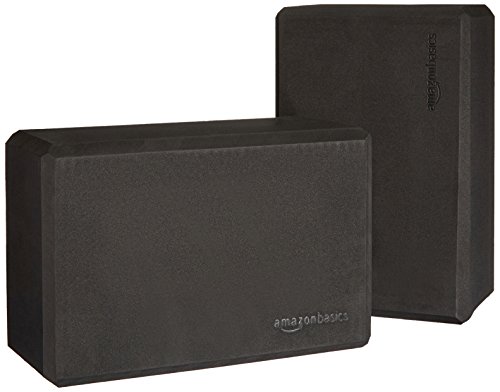
Amazon Basics keeps this set plain and practical: two matching blocks in black, each in the standard nine by six by four inch size, made from high-density foam. For anyone setting up a home practice corner, a matched pair removes the guesswork from two-block poses, since both sides rise to exactly the same height in every orientation.
The foam build keeps the set light to move around the room, and the squared, simple shape stacks flat for storage in a closet or under a bench. There are no extras in the box and no unusual sizing to adapt to, which is exactly what many beginners need from a first set of props. It is the budget tier pick in this guide and a reasonable way to cover the two-block basics before deciding whether you want to invest in cork or a premium foam design later.
Frequently Asked Questions
How many yoga blocks do I need for a home practice?
One block covers seated support, meditation height and single-hand poses, but two blocks open up symmetrical work with a block under each hand, which many standing and restorative sequences assume. If you are building a kit from nothing, a matched pair in the standard size is the most flexible foundation, and single-block picks above let you add a second matching block later.
Which material is better for support, cork or foam?
Cork gives firmer, steadier support because it is denser and heavier, so it resists tipping and sliding when you press your weight into it. Foam feels softer and more forgiving under hips, knees and forearms, which many people prefer for restorative poses and long holds. The better choice depends on whether your practice leans toward standing balance work or floor-based comfort.
What size yoga block should I choose?
The nine by six by four inch block is the standard for a reason: it offers three support heights from one prop and matches what most studios stock. A three inch block, like the Trideer pair, gives a gentler lift and suits people who find the standard height too tall, while taller or wider specialty bricks serve narrow uses outside a general home kit.
How do I clean and care for a yoga block?
Wipe foam and cork blocks with a damp cloth and a small amount of mild soap, then let them air dry fully before storing. Avoid soaking either material, since foam can take on water through cuts and cork can crack if it dries too fast near heat. Store blocks out of direct sunlight to keep the surface from fading or breaking down.
Conclusion
For most people, the Manduka Recycled Foam block is the easiest recommendation: standard size, dense support, contoured edges and a high recycled content in the foam. The Gaiam block remains a dependable mid-range single for anyone who wants the familiar studio brick, while the Manduka Cork block serves practitioners who prize a firm, planted feel above all else. The Trideer pair brings cork grip in a slimmer three inch profile, and the Amazon Basics set covers the two-block basics on a budget tier. Match the material to your style of practice, keep the size standard unless you know you want a lower lift, and any of these five will earn its place beside your mat.
D
Disdik Picks Editorial Team
We compare specs, materials and verified owner reviews before a product earns a spot. Rankings are never paid.
Affiliate disclosure. As an Amazon Associate we earn from qualifying purchases at no extra cost to you. Prices accurate as of the date shown.
Find the best razors for women for legs, underarms and sensitive skin. Compare five cartridge, disposable and shave-kit options and choose a smooth shave.
We compared the best comforters for every sleeper, from light all-season inserts to plush king-size picks, so you can find the right warmth for your bed.
We compared the best calculators for students, professionals, and home offices, covering scientific, graphing, financial, printing, and desktop models.


 4. Trideer Cork Yoga Blocks, 2 Pack
 5. Amazon Basics Foam Yoga Blocks, Set of 2










Write Your Review
No reviews yet. Be the first to share your experience!