
Our Short List of 3

- Type: Boric acid bait paks in paper packets
- Pack size: Pack of 2, with 24 individual bait traps in each pak, 48 in total
- Active ingredient: Boric acid at twenty percent strength
- Target pests: Silverfish and firebrats

- Type: Sticky glue board traps for indoor use
- Pack size: 20 traps
- Active ingredient: None, adhesive trapping only
- Target pests: Silverfish and other crawling insects
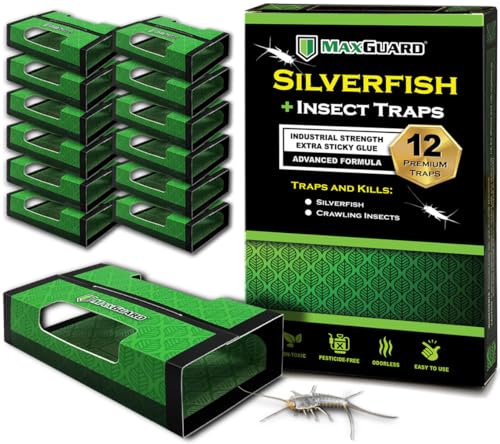
- Type: Enclosed box glue traps with extra-sticky adhesive
- Pack size: 12 traps
- Active ingredient: None, adhesive trapping only, non-toxic formula
- Target pests: Silverfish, centipedes, spiders, ants, roaches, and other crawling insects
All 5 Picks at a Glance
| Product | Specs | Action |
|---|---|---|
| 1. Dekko Silverfish Paks, Pack of 2 |
| Check price on Amazon |
| 2. ECOPEST Silverfish Trap, 20 Pack |
| Check price on Amazon |
| 3. MaxGuard Silverfish Plus Insect Traps, 12 Pieces |
| Check price on Amazon |
 4. Qualirey Silverfish Traps, 24 Traps |
| Check price on Amazon |
 5. Terro T3206SR Spider and Insect Traps, 12 Traps |
| Check price on Amazon |
Key takeaways
- Find the best silverfish traps for bathrooms, closets, and kitchens, with bait paks, glue boards, and box traps compared for placement and safety.
The best silverfish trap for most homes is the Dekko Silverfish Paks set in a pack of two, because each pak holds twenty-four small bait traps that fit into the cracks, drawers, and shelf edges where silverfish actually travel, and the boric acid bait works slowly enough that insects carry it back to hiding places instead of dying in the open. If you would rather see what you catch, the Terro T3206SR twelve-trap set is the best glue trap for monitoring, because its flat boards fold into low tents that sit neatly along baseboards and under appliances. For whole-room coverage on a modest outlay, the Qualirey twenty-four trap set is the best value pick, because its sheets split into small or large traps to fit tight corners and wide runs alike. The ECOPEST twenty-pack suits larger homes and shared storage areas, while the MaxGuard twelve-piece box trap suits households that want a discreet, enclosed glue trap for kitchens and bathrooms. Each of these five traps suits a different room and a different level of activity, and the sections below explain how they differ, where to place them, and how to use them safely around children and pets.
As an Amazon Associate, we earn from qualifying purchases.
Table of Contents
- What Silverfish Are and Why Traps Work
- The Five Types of Silverfish Trap in This Guide
- How to Choose the Best Silverfish Trap for Your Home
- Where to Place Silverfish Traps for the Best Results
- 1. Dekko Silverfish Paks, Pack of 2
- 2. ECOPEST Silverfish Trap, 20 Pack
- 3. MaxGuard Silverfish Plus Insect Traps, 12 Pieces
- 4. Qualirey Silverfish Traps, 24 Traps
- 5. Terro T3206SR Spider and Insect Traps, 12 Traps
- Silverfish Traps Compared at a Glance
- Moisture, Storage, and Prevention That Make Traps Work Better
- Safety Around Children and Pets
- Frequently Asked Questions
- Conclusion
- Product and ASIN Reference
What Silverfish Are and Why Traps Work
Silverfish are small, wingless insects with a silvery grey body, long antennae, and three tail bristles that give them a fish-like shape. They move quickly, avoid light, and prefer damp, cool places such as bathrooms, basements, laundry rooms, kitchens, attics, and the backs of closets. They feed on starches and cellulose, which means they can damage books, paper, wallpaper paste, photographs, fabric, pantry goods, and the glue in book bindings. A single silverfish in a bathroom is often a sign of moisture rather than a full infestation, but repeated sightings in the same room, damaged paper edges, yellow stains on fabric, or tiny scales left behind on shelves all point to a settled population that needs a plan rather than a single spray.
Traps work well against silverfish because these insects follow the same routes night after night. They travel along baseboards, under sinks, behind appliances, and through gaps around pipes, and they return to the same damp harborage areas to rest during the day. A trap placed on a known route intercepts the insect at the moment it is moving, while a bait pak placed inside a crack or drawer works where the insect feeds and rests. Neither approach needs a wide chemical treatment of a whole room, and both approaches give you visible evidence of what is happening. A glue trap that stays empty for several weeks tells you the room is clear, while a glue trap that fills quickly tells you where the main route runs and where to add more traps or fix a moisture problem.
The best trap strategy combines monitoring and control. Glue traps show you where silverfish travel and how many are present, while bait paks reduce the population at its source. Many households start with glue traps in several rooms, note which traps catch insects and which stay empty, and then add bait paks to the rooms with the most activity. This approach keeps the number of traps in use low, keeps bait out of open living areas, and makes it easy to tell whether the problem is shrinking over time. It also avoids the guesswork of treating rooms that never had a problem in the first place.
The Five Types of Silverfish Trap in This Guide
This guide covers five distinct trap designs, and each one earns its place for a different reason. Bait paks use a boric acid formula inside a small paper packet that silverfish enter, feed on, and carry back to hiding places. They are discreet, long lasting, and well suited to closets, bookshelves, drawers, attics, and storage areas where a flat glue board would look out of place or collect dust. Glue boards use a strong adhesive surface to hold any insect that walks across it, and they double as monitors that show you exactly where activity is highest. Box traps fold into a low tent or box shape that hides the catch from view, protects the glue from dust, and fits neatly under furniture and along baseboards. Detachable sheet traps split into small or large sections, so one pack can cover both narrow gaps and wide runs without waste. Multi-insect glue traps catch silverfish alongside spiders, ants, roaches, centipedes, and other crawling insects, which makes them useful in rooms where more than one pest is active.
No single design is best for every room. A bathroom with a damp corner needs a glue trap that can sit flat under a sink and a bait pak tucked behind a pipe. A closet full of books needs small bait paks on shelves and in drawers, where a glue board would stick to fabric or paper. A basement with a long baseboard run needs a bulk pack of glue boards spaced along the wall. A kitchen needs an enclosed box trap that keeps the adhesive away from food preparation areas and out of sight. A laundry room needs a trap that tolerates humidity and stays effective for weeks. The five products below cover all of these situations, and the comparison section near the end of this guide matches each trap to the rooms where it performs best.
How to Choose the Best Silverfish Trap for Your Home
Start by deciding whether you need monitoring, control, or both. If you have seen one silverfish and want to know whether there are more, choose a glue trap first. Glue traps give you a count, a location, and a clear picture of the route, and they work without any active ingredient at all. If you already know where silverfish are active and want to reduce their numbers, choose a bait pak first. Bait paks work quietly inside cracks and drawers, and they reach insects that never cross an open floor. If you want both, buy one of each and use the glue traps to find the routes and the bait paks to treat the harborage areas behind them.
Next, count the rooms that need coverage. A single bathroom needs only a small pack, while a whole house with a basement, an attic, and several closets needs a bulk pack of twenty or more traps. Buying a small pack for a large house means running out before the routes are covered, while buying a bulk pack for one room means storing traps that dry out before they are used. Match the pack size to the number of rooms, and remember that each room usually needs two or three traps rather than one, because silverfish travel along more than one wall.
Consider who uses the room. Households with small children or pets should favour enclosed box traps and bait paks placed inside drawers, behind appliances, and inside closed storage, where little hands and paws cannot reach them. Flat glue boards work well in locked storage rooms, basements, and attics, but they need care in living areas, because a curious pet can step on an open board. Non-toxic glue traps are the right choice for kitchens and food storage areas, while boric acid bait paks belong in cracks and closed spaces, out of reach, and used exactly as the label directs. Keep every trap, whatever its type, away from food, drinking water, and pet bowls.
Think about the surfaces in the room. Glue traps work best on hard, flat floors and along smooth baseboards, where the board sits level and the insect walks straight onto it. They work less well on thick carpet, where the board sinks into the pile and the insect walks around it, and on dusty floors, where dust coats the adhesive and reduces its hold. Bait paks work best in dry, enclosed spaces such as drawers, closets, and bookshelves, where the packet stays dry and the bait stays attractive. In a very damp bathroom, a glue trap placed under a sink may need replacing sooner than one placed in a dry closet, because moisture and dust shorten its working life.
Where to Place Silverfish Traps for the Best Results
Placement matters more than brand. Silverfish travel along edges, so place traps flush against walls, under sinks, behind toilets, along the back of a bookshelf, and under appliances, rather than in the middle of a room. Look for the signs they leave behind: tiny holes in paper, yellowed edges on books, damaged wallpaper seams, and fine scales on shelves. Place a trap within a short distance of each sign, and place a second trap on the opposite side of the room, because silverfish often use two routes to reach the same damp corner.
In bathrooms, place traps under the sink, behind the toilet, and along the baseboard nearest the shower or bath. Check the seal around pipes and the grout between tiles, because a small leak or a gap in the seal creates the damp pocket that silverfish prefer. In kitchens, place traps under the sink, behind the refrigerator, and along the baseboard behind the stove, and keep them away from food preparation surfaces. In closets, place small bait paks on shelves, inside drawers, and behind stored boxes, and place a glue trap on the floor along the back wall. In basements and attics, space glue traps every few feet along the baseboard, and add bait paks near stored paper, cardboard boxes, and fabric.
Avoid placing traps where they will be stepped on, vacuumed up, or soaked. A trap under a door swing will be kicked aside, a trap in front of a washing machine will be splashed, and a trap on a dusty garage floor will lose its tack within days. Fold a glue trap into its tent shape when the instructions allow it, because the tent protects the adhesive from dust while still letting insects enter from the open ends. In a room with heavy dust, check glue traps more often and replace them sooner. In a room with high humidity, favour bait paks in enclosed spaces and check glue traps weekly, because moisture softens paper boards and weakens adhesive over time.
1. Dekko Silverfish Paks, Pack of 2
- Type: Boric acid bait paks in paper packets
- Pack size: Pack of 2, with 24 individual bait traps in each pak, 48 in total
- Active ingredient: Boric acid at twenty percent strength
- Target pests: Silverfish and firebrats
Dekko Silverfish Paks are the classic bait trap for silverfish, and they remain the best starting point for most homes because they treat the problem where silverfish live rather than where they happen to walk. Each pak is a small paper packet filled with a boric acid bait that silverfish find attractive, and each pack of two contains forty-eight individual bait traps in total, with twenty-four in each pak. That count matters, because a single pak can supply a whole closet, a bookshelf, a drawer unit, and a bathroom cabinet at once, and the second pak can cover the next room or serve as a refill when the first set has been in place for several weeks.
The bait inside each pak uses boric acid at twenty percent strength, which is a slow-acting formula by design. Silverfish feed on the bait and carry it back to the cracks and voids where they rest, and the slow action gives the bait time to reach more of the population before any single insect dies. This is the key difference between a bait pak and a spray. A spray kills only the insects it touches, while a bait pak reaches insects that never leave their hiding place. Households that have tried sprays and seen silverfish return a week later often find that bait paks give a longer-lasting result, because the treatment keeps working inside the harborage area for weeks after placement.
Placement is simple and discreet. Tuck a pak into the back of a drawer, behind books on a shelf, under a bathroom cabinet, inside a closet corner, or along the edge of an attic storage area. The paper packet is small enough to sit out of sight, and it does not leave a sticky surface on shelves or fabric. Because the bait is contained inside the packet, there is no loose powder to spill and no open glue to catch dust, pet hair, or a curious hand. Keep paks out of reach of children and pets, use them exactly as the label directs, and place them in cracks and closed spaces rather than on open floors where they can be kicked aside.
Dekko paks suit books, paper, photographs, and fabric storage especially well, because those are the very materials silverfish damage and the very places where a glue board would be awkward. A glue board on a bookshelf takes up shelf space and can stick to a book cover, while a small bait pak slips behind the books and works unnoticed. In a drawer full of linens, a bait pak sits in the corner without touching the fabric, while a glue board would need a flat, clear area that a full drawer rarely offers. For attics and basements with stored boxes, paks fit between boxes and along the wall, where glue boards would be buried under the next box placed on top of them.
The main limitation of bait paks is that they do not show you what they catch. A glue trap gives you a visible count, while a bait pak works out of sight, so you judge its effect by whether sightings fall over several weeks rather than by a daily count. Households that want visible proof should pair the paks with one or two glue traps in the same room, using the glue traps as monitors and the paks as the treatment. The paks also need dry conditions to stay effective, so they are not the best choice for a soaking wet corner under a leaking sink. Fix the leak first, let the area dry, and then place the paks.
This is the premium pick in this guide, and its value comes from the number of individual traps in the set and the length of time each one keeps working. Two paks covering forty-eight bait points is enough for a whole floor of a house, and the discreet paper format means the traps can stay in place for weeks without getting in the way of daily life. For a household that has found silverfish in books, closets, or stored paper, this is the trap to buy first.
2. ECOPEST Silverfish Trap, 20 Pack
- Type: Sticky glue board traps for indoor use
- Pack size: 20 traps
- Active ingredient: None, adhesive trapping only
- Target pests: Silverfish and other crawling insects
ECOPEST Silverfish Traps are glue boards made for whole-house coverage, and they earn their place in this guide as the best bulk option for a home with several rooms to protect. The twenty-pack format means you can place two or three traps in each of six or seven rooms and still have spares for the rooms that show the most activity. That matters, because silverfish rarely confine themselves to one room, and a household that buys a small pack often discovers the second bathroom and the laundry room need traps too, after the first pack has already run out.
Each trap is a sticky board that catches silverfish and other crawling insects on contact, and the adhesive holds the insect in place so you can see exactly what is moving through the room. The boards are designed for indoor use, and they work best placed flat along baseboards, under sinks, behind appliances, and in the corners of closets and storage rooms. Because the trap uses adhesive rather than a chemical bait, it is a straightforward choice for households that prefer a physical trapping method and want to avoid sprays in living areas.
The twenty-pack size also makes this trap a good monitoring tool. Place traps in every room for two weeks, then read the results like a map. Rooms with empty traps need no further treatment, rooms with one or two insects need a few more traps and a check for damp, and rooms with several insects need bait paks added alongside the glue boards, plus a look at moisture and storage. Without that map, a household can spend months treating the wrong room, so the bulk pack pays for itself in information as much as in catches.
ECOPEST boards suit basements, garages, laundry rooms, and attics well, because those rooms have long baseboard runs and plenty of floor space for flat boards. They also suit kitchens and bathrooms when placed under sinks and behind appliances, where the board sits out of the way and out of sight. In a closet, place a board flat on the floor along the back wall, and add a bait pak on the shelf above, so the two trap types cover the floor route and the shelf harborage at the same time.
The boards need a clean, dry, flat surface to work at their best. Dust, moisture, and uneven floors all reduce the hold of the adhesive, so sweep the placement area first, avoid placing boards where water splashes, and check them weekly in damp rooms. Replace a board when it fills up, when it gathers a layer of dust, or when its edges curl, because a board that has lost its tack will let insects walk across it and away. Keep spare boards on hand, and replace them promptly, because a gap in coverage is exactly when a new route forms.
This is a mid-range pick, and its strength is scale. Twenty traps in one pack covers a whole house, and the simple glue-board design means there is nothing to mix, spray, or assemble. For a household that has seen silverfish in more than one room, or for a home with a basement and an attic to protect, this is the pack that covers the ground.
3. MaxGuard Silverfish Plus Insect Traps, 12 Pieces
- Type: Enclosed box glue traps with extra-sticky adhesive
- Pack size: 12 traps
- Active ingredient: None, adhesive trapping only, non-toxic formula
- Target pests: Silverfish, centipedes, spiders, ants, roaches, and other crawling insects
MaxGuard Silverfish Plus Insect Traps are box traps, and they suit households that want a glue trap that looks tidy and stays out of sight. Each trap folds into a low box shape with open ends, so silverfish walk in from either side and stick to the adhesive inside, while the catch itself stays hidden from view. That enclosed shape has two practical benefits. It protects the adhesive from dust, which keeps the trap working longer in rooms that are not dusted every day, and it keeps the trap looking like a small box rather than an open sticky board, which matters in kitchens, bathrooms, and living areas where an open board would be an eyesore.
The twelve-piece box format covers several rooms at once. Place two traps in the bathroom, two in the kitchen, two in the laundry room, and the rest along basement baseboards or in closets, and you have a complete first round of monitoring and control with spares left over. The traps are non-toxic and use an extra-sticky adhesive rather than a chemical spray, so they are a good fit for households that want a physical trap in food preparation and bathing areas, where sprays are unwelcome. Follow the label, keep traps away from food and drinking water, and keep them out of reach of children and pets, as with any pest control product.
MaxGuard traps catch more than silverfish. The same adhesive that holds a silverfish will hold centipedes, spiders, ants, roaches, and other crawling insects that travel along the same baseboard routes, which makes the box trap a useful all-round monitor in a home with more than one pest. A trap that catches a centipede in the basement and a silverfish in the bathroom tells you more about the house than a trap that catches only one species, because it shows you the routes that all crawling insects share. That shared-route information helps you place the next round of traps in the right places, and it helps you decide where a bait pak or a moisture fix will do the most good.
The box shape also suits tight spaces. Slide a trap under a low cabinet, behind a toilet, under a bed, or along the back of a wardrobe, and the low profile fits where a flat board would stick out or a tall trap would not fit at all. The folded sides keep the adhesive off the floor and off fabric, so the trap can sit against a wall in a closet without sticking to stored clothes or linens. In a kitchen, the box shape keeps the adhesive away from the floor where crumbs and spills gather, and the enclosed design means a pet is less likely to step on an open sticky surface.
Check box traps weekly, and replace them when they fill up or when the adhesive gathers dust. A box trap that has been in place for months without a check can look fine from the outside while its adhesive has already lost its hold, so open the box, look inside, and replace it on a regular schedule. Mark the placement date on the outside of the box, and keep a spare box or two in storage so a full trap can be swapped out at once rather than leaving the room uncovered while a new order arrives.
This is a mid-range pick, and its value lies in its discreet, enclosed design. Twelve box traps cover the main rooms of a house, and the tent shape keeps them working longer and looking tidier than an open board. For a household that wants glue traps in kitchens and bathrooms without an open sticky board on display, this is the trap to choose.
4. Qualirey Silverfish Traps, 24 Traps
- Type: Detachable sticky glue traps with dual-colour and pattern lure
- Pack size: 24 small traps or 12 large traps from detachable sheets
- Active ingredient: None, adhesive trapping with a printed lure, non-toxic formula
- Target pests: Silverfish, centipedes, and other crawling insects
Qualirey Silverfish Traps are detachable sheet traps, and they are the best value pick in this guide because one pack adapts to almost any space. Each sheet splits into small or large traps, giving twenty-four small traps or twelve large traps from a single pack, so you can use small sections in narrow gaps and large sections along wide baseboard runs without buying two different products. That flexibility matters in a real house, where a drawer gap needs a small trap, a basement wall needs a large one, and a closet shelf needs something in between.
The traps use a dual-colour and pattern lure printed on the adhesive surface, which is designed to attract crawling insects toward the sticky area. The lure is part of the trap itself, so there is nothing extra to add, mix, or bait, and the trap is ready to use straight from the pack. Peel the release paper, split the sheet to the size you need, fold it if the space calls for a tent shape, and place it along the route. The non-toxic design suits households that want a physical trap without a chemical spray, and the label states that the traps are safe for use around children and pets when placed as directed, out of reach and away from food and sleeping areas.
The twenty-four trap count makes this set a strong choice for a first round of monitoring across a whole house. Place small traps in drawers, closets, and bathroom cabinets, and place large traps along basement and laundry room baseboards, and you will have a clear picture of activity within two weeks. Rooms that stay empty can be left alone, while rooms that catch insects can be given more traps and a bait pak for longer-term control. Because the sheets split, you can also cut your use to fit the room, using a small section where a full board would be wasteful and saving the rest of the pack for the next round.
Qualirey traps suit renters and small households especially well, because the pack is affordable, the traps are easy to store, and the detachable design means you only use what you need. They also suit households that are still learning where silverfish travel, because the low outlay makes it easy to place traps generously in the first round and then narrow down to the rooms that actually need them. A trap that costs little and can be placed in many spots is the right tool for mapping a problem before spending more on bait paks or bulk packs.
The main care point is the same as for any glue trap. Place the trap on a clean, dry, flat surface, keep it away from water and heavy dust, and check it weekly. A small trap fills faster than a large one, so check small traps in busy rooms more often, and replace any trap that has filled up, gathered dust, or lost its tack. Keep the unused sheets in their packaging, in a dry place, so the adhesive stays fresh until you need it.
This is the budget pick in this guide, and its strength is flexibility. Twenty-four small traps or twelve large traps from one pack covers a whole house, and the detachable design means no trap is wasted on a space it does not fit. For a household buying its first silverfish traps, or for a home that needs coverage in many small spaces at once, this is the set to start with.
5. Terro T3206SR Spider and Insect Traps, 12 Traps
- Type: Non-toxic glue board traps, usable flat or folded into a tent
- Pack size: 12 traps in 3 inner packages of 4
- Active ingredient: None, adhesive trapping only, non-toxic formula
- Target pests: Silverfish, spiders, ants, roaches, centipedes, and other crawling insects
Terro T3206SR traps are the best-known glue traps in this guide, and they earn their place as the monitoring standard against which the other glue traps can be judged. The set contains twelve traps in three inner packages of four, so you can open one package for the rooms that need traps now and keep the other two sealed and fresh for later rounds. That packaging matters, because glue traps lose tack once they are exposed to air and dust, and a sealed inner package keeps the spare traps ready until you need them.
Each trap is a non-toxic glue board that can be used flat for the largest catch area or folded into a tent shape that hides the catch and protects the adhesive from dust. The flat form suits open floor runs along baseboards and under appliances, where the widest possible sticky surface catches the most insects. The tent form suits visible rooms and dusty corners, where the folded sides keep the adhesive clean and the catch out of sight while still letting insects enter from the open ends. Few traps in this guide offer both forms in one board, and that versatility is why this set has stayed popular for so long.
The T3206SR is labelled for the capture of black widow, brown recluse, and hobo spiders alongside ants, roaches, centipedes, silverfish, and other crawling insects, which makes it a useful all-round trap in a home where silverfish share routes with spiders. A single trap in a basement corner can catch a silverfish on one night and a spider on the next, and that shared catch tells you that the route is active even when silverfish numbers are low. For households that want one trap type for the whole house rather than a different product for each pest, this set covers the ground.
Place the traps along baseboards, under furniture and appliances, in kitchens, pantries, bathrooms, and basements, and check them weekly. In clean, dry conditions, each trap can stay effective for up to three months, which is a long working life for a glue trap, and it means a twelve-pack can cover a house for a full season when the traps are rotated sensibly. Replace a trap sooner if it fills up, gathers dust, or sits in a damp spot, and keep the spare inner packages sealed until the next round.
The main limitation is pack size. Twelve traps cover the main rooms of a house, but a large house with a basement, an attic, and several closets will need a second set or a bulk pack alongside it. That is not a flaw in the trap itself, but a reminder to count rooms before buying. For a small to medium home, twelve traps is the right number for a first round, and the three inner packages make it easy to stage the placement over several weeks.
This is a budget pick, and its strength is reliability. The non-toxic glue, the flat-or-tent design, the sealed inner packages, and the long working life make it the trap to choose when you want a proven monitor that you can place and trust. For a household that wants to see what is moving through the house before committing to bait paks, this is the set to buy first.
Silverfish Traps Compared at a Glance
The five traps in this guide fall into three clear groups. Bait paks, represented by Dekko, treat the harborage area and reach insects that never cross an open floor. Open glue boards, represented by ECOPEST and Terro, monitor routes and give you a visible count of what is moving through each room. Enclosed and detachable glue traps, represented by MaxGuard and Qualirey, adapt the glue-board idea to kitchens, bathrooms, and small spaces where an open board would be awkward or unsightly. Most households will get the best result from one trap in each group, rather than from five traps of the same type.
For a single bathroom with occasional sightings, start with the Terro twelve-pack and place two traps under the sink and behind the toilet, then add a Dekko pak inside the bathroom cabinet if sightings continue. For a closet full of books, start with Dekko paks on the shelves and in the drawers, and add a Qualirey small trap on the closet floor as a monitor. For a basement with a long baseboard run, start with the ECOPEST twenty-pack spaced along the wall, and add MaxGuard box traps near the stairs and the laundry area where the traps need to stay tidy. For a kitchen, start with MaxGuard box traps under the sink and behind the refrigerator, and keep glue boards out of food preparation areas. For a whole house, start with Qualirey sheets to map the activity, then add Dekko paks to the rooms with the most activity and Terro traps to the rooms you want to keep monitoring.
Moisture, Storage, and Prevention That Make Traps Work Better
Traps catch silverfish, but they do not fix the conditions that brought silverfish into the house. Silverfish need moisture, and the most effective long-term step is to reduce damp in the rooms where they appear. Fix leaking pipes, taps, and toilet seals, and check the grout and sealant around baths, showers, and sinks. Improve ventilation in bathrooms and laundry rooms by opening a window or running a fan after bathing and washing, and leave the bathroom door open after a shower so damp air can escape. In a basement, use a dehumidifier in the damp months, keep stored items off the floor on shelves or pallets, and avoid stacking cardboard boxes directly against a damp wall.
Storage habits matter as much as moisture. Silverfish feed on paper, cardboard, fabric, and the glue in book bindings, so store books, photographs, and important papers in sealed plastic containers rather than in open cardboard boxes on a basement floor. Move seasonal clothes into sealed containers, and keep pantry goods in sealed jars and containers with tight lids. Vacuum closets, shelves, and baseboards regularly, and dust bookshelves, because dust and crumbs give silverfish both food and cover. Seal gaps around pipes, windows, and doors with caulk, and repair torn window screens, because silverfish enter through small gaps and then settle in the nearest damp corner.
Safety Around Children and Pets
Every trap in this guide should be used exactly as its label directs, and every trap should be kept out of reach of children and pets. Glue traps are non-toxic, but a child or a pet that steps on an open board will find the adhesive difficult and unpleasant to remove, so place flat boards in locked storage rooms, basements, and attics, or fold them into tent shapes and place them behind appliances and under furniture where little hands and paws cannot reach them. Enclosed box traps reduce this risk, because the adhesive sits inside the box, but they still belong behind furniture and under cabinets rather than on open floors where a child plays.
Boric acid bait paks need extra care. The bait is contained inside a paper packet, but the packet itself must stay out of reach of children and pets, and it must never be placed near food, drinking water, or pet bowls. Place paks inside closed drawers, behind books, inside closets, and in cracks and voids, and never open a pak to spread the bait, because the contained format is part of its safety design. If a child or a pet eats a bait pak or gets glue on skin or fur, follow the label instructions at once and seek medical or veterinary advice, and keep the product packaging to hand so you can show exactly what was involved.
Store spare traps in their original packaging, in a dry place, out of reach of children and pets, and keep them away from food storage. Dispose of used traps in a sealed bag in the household waste, and wash your hands after handling any trap, whether it has caught insects or not. Do not reuse a glue trap that has filled up or lost its tack, and do not move a trap from a damp room to a food preparation area. These simple habits keep trapping effective and keep the household safe at the same time.
Frequently Asked Questions
Do silverfish traps work on their own, or do I need to fix moisture too?
Silverfish traps work on their own to catch and reduce silverfish, but they work far better alongside moisture control. Fix leaks, improve ventilation, and move stored paper off damp floors, and the traps will catch more insects because the insects have to travel further for damp. A trap in a wet room can stay empty while silverfish thrive nearby, so treat the damp source and keep the traps in place to confirm that numbers are falling.
How long should I leave a silverfish trap in place before judging it?
Leave a glue trap in place for at least two weeks before judging it, and leave a bait pak in place for several weeks, because silverfish are nocturnal and follow the same routes night after night. A trap that is moved every day never sits on a stable route, and a bait pak needs time for its slow-acting boric acid to reach the insects hiding in cracks and voids. Check traps weekly, note what you find, and replace any trap that fills up, gathers dust, or loses its tack.
Are silverfish traps safe around children and pets?
Glue traps in this guide use a non-toxic adhesive, and bait paks keep their boric acid bait contained inside a paper packet, but every trap should still be kept out of reach of children and pets and used exactly as the label directs. Place flat boards behind appliances and in locked storage, favour enclosed box traps in kitchens and living areas, and place bait paks inside closed drawers and closets rather than on open floors. Keep traps away from food, drinking water, and pet bowls at all times.
Where is the best place to put a silverfish trap?
Place traps flush against walls, under sinks, behind toilets, along the back of bookshelves, and under appliances, because silverfish travel along edges rather than across open floors. Put a trap near each sign of activity, such as damaged paper, yellow stains on fabric, or fine scales on a shelf, and put a second trap on the opposite side of the room. In closets, use small bait paks on shelves and in drawers, and in basements, space glue traps along the baseboard every few feet.
Conclusion
The best silverfish trap is the one that fits the room, the route, and the household using it. Dekko Silverfish Paks are the best choice for closets, bookshelves, and stored paper, because their small bait packets fit where glue boards cannot and their slow boric acid bait reaches insects hiding in cracks. ECOPEST twenty-pack glue boards are the best choice for whole-house coverage, because twenty traps cover every room at once and give you a clear map of where activity is highest. MaxGuard twelve-piece box traps are the best choice for kitchens and bathrooms, because their enclosed shape hides the catch, protects the adhesive from dust, and keeps the trap tidy in living areas. Qualirey twenty-four detachable traps are the best choice for a first round of trapping, because their sheets split into small or large traps to fit any space at a modest outlay. Terro T3206SR twelve-pack traps are the best choice for monitoring, because their flat-or-tent design, sealed inner packages, and long working life make them a reliable standard for any home.
Start with the trap that matches your most active room, place two or three traps on the routes silverfish actually use, and check them weekly. Add bait paks to the rooms with the most activity, fix leaks and damp corners, move stored paper off the floor, and keep the traps in place until sightings fall and stay low. A patient, room-by-room approach will do more than a single hurried treatment, and the five traps in this guide give you every tool you need to carry it out.
Product and ASIN Reference
| Product | ASIN |
|---|---|
| Dekko Silverfish Paks, Pack of 2 | B075S9NZJL |
| ECOPEST Silverfish Trap, 20 Pack | B09TG36MKC |
| MaxGuard Silverfish Plus Insect Traps, 12 Pieces | B0D7M9YPBW |
| Qualirey Silverfish Traps, 24 Traps | B0FL6VSLLZ |
| Terro T3206SR Spider and Insect Traps, 12 Traps | B07Q697VZK |
More from Amazon
Programs that pair well with the guide above. Offers and eligibility are set by Amazon and may change.
Set up recurring deliveries of everyday items on eligible products. Terms and savings are set by Amazon.
Explore Subscribe & SaveCollect the home and kitchen items you want in one registry that guests can shop from.
Create a wedding registryFree shipping on eligible items, Prime Video and more. Eligible new members can start with a free trial.
Start a Prime free trialAudiobooks and podcasts to listen to on the go. Eligible new members can start with a free trial.
Try Audible freeAs an Amazon Associate we earn from qualifying purchases.










Write Your Review
No reviews yet. Be the first to share your experience!