
Our Short List of 3

- Type: Handheld garment steamer
- Power: 1875 watts
- Water tank capacity: 7.3 ounces
- Heat-up time: 40 seconds
- Type: Handheld garment steamer
- Power: 700 watts
- Water tank capacity: 240 milliliters
- Heat-up time: About 2 minutes

- Type: Handheld garment steamer
- Power: 1200 watts
- Water tank capacity: 260 milliliters
- Heat-up time: About 30 seconds
All 4 Picks at a Glance
| Product | Specs | Action |
|---|---|---|
| 1. Conair Turbo ExtremeSteam Handheld Garment Steamer |
| Check price on Amazon |
| 2. HiLIFE Portable Handheld Clothes Steamer |
| Check price on Amazon |
| 3. Beautural Portable Handheld Garment Steamer |
| Check price on Amazon |
 5. Jiffy J-2000 Garment Steamer with Plastic Steam Head |
| Check price on Amazon |
Key takeaways
- Find the best clothes steamers for crisp, wrinkle-free outfits at home. Compare five handheld and standing steamers for every fabric and closet.
The best clothes steamers remove wrinkles fast without an ironing board, and the Conair Turbo ExtremeSteam Handheld Garment Steamer is the strongest all-around pick for most homes because it pairs high heat with five steam settings, a built-in creaser, and a long cord that reaches from a closet rod to a full-length garment. If you want a standing steamer for heavy weekly use, the PurSteam PS-937 and the Jiffy J-2000 are the two full-size options worth considering, while the HiLIFE handheld and the Beautural handheld cover travel and quick touch-ups at a smaller size. This guide compares five steamers across handheld and standing designs so you can match the tool to your wardrobe, your storage space, and how often you steam.
As an Amazon Associate, we earn from qualifying purchases.
Table of Contents
- Quick Answer: Which Clothes Steamer Should You Buy?
- How We Compare Clothes Steamers
- 1. Conair Turbo ExtremeSteam Handheld Garment Steamer
- 2. HiLIFE Portable Handheld Clothes Steamer
- 3. Beautural Portable Handheld Garment Steamer
- 4. PurSteam PS-937 Standing Garment Steamer
- 5. Jiffy J-2000 Garment Steamer with Plastic Steam Head
- Handheld Versus Standing Steamers
- How to Choose a Clothes Steamer
- How to Steam Clothes Well
- Care, Safety, and Storage
- Common Clothes Steamer Mistakes to Avoid
- Which Fabrics Steam Best
- Steaming Beyond Clothes
- Frequently Asked Questions
- Conclusion
- Product and ASIN Reference
Quick Answer: Which Clothes Steamer Should You Buy?
Buy the Conair Turbo ExtremeSteam Handheld Garment Steamer if you want one steamer that handles most wardrobes. Its 1875-watt heater, five steam settings, and three-in-one attachment make it flexible enough for delicate blouses, structured blazers, and everyday cotton shirts, and it heats in about forty seconds. Buy the HiLIFE Portable Handheld Clothes Steamer if you want a light, simple handheld for travel bags and quick morning touch-ups. Buy the Beautural Portable Handheld Garment Steamer if you want a compact handheld with a detachable tank and automatic shut-off for home and travel. Buy the PurSteam PS-937 Standing Garment Steamer if you steam several garments in one session and want a rolling full-size unit with four steam levels. Buy the Jiffy J-2000 Garment Steamer if you want a durable standing steamer built for frequent, heavy use and long steaming sessions.
How We Compare Clothes Steamers
A clothes steamer earns its place in a home when it heats quickly, produces steady steam, reaches wrinkles on hanging garments without dripping, and stores easily between uses. We compare steamers on heater power, water tank capacity, heat-up time, continuous steam time, steam settings, cord length, included attachments, weight, and whether the design is handheld or standing. Heater power matters because stronger heaters sustain steam on thick fabrics such as denim and wool, while lower-power handhelds suit light fabrics and travel. Tank capacity matters because a larger tank means fewer refills during a session. Steam settings matter because delicate fabrics need gentle steam and heavy fabrics need a stronger flow. Attachments matter because a fabric brush lifts fibers, a creaser shapes pleats and cuffs, and a delicate spacer protects sheer material.
We also weigh everyday practicalities. A handheld steamer should feel balanced in one hand and fit in a drawer or a suitcase. A standing steamer should roll smoothly, hold a garment on its pole or hanger hook, and stay stable while you pull fabric taut. Every steamer in this guide uses ordinary tap water or distilled water according to its maker instructions, and every one is designed for hanging garments, which is the fastest way to steam. None of these picks requires an ironing board, which is the main reason many households switch from ironing to steaming in the first place.
1. Conair Turbo ExtremeSteam Handheld Garment Steamer
- Type: Handheld garment steamer
- Power: 1875 watts
- Water tank capacity: 7.3 ounces
- Heat-up time: 40 seconds
The Conair Turbo ExtremeSteam Handheld Garment Steamer is the most versatile pick in this guide, and it is the one we recommend first for households that want a single steamer for a varied wardrobe. Conair built this handheld around an 1875-watt steam generator, which is strong power for a handheld unit, and the result is penetrating steam that relaxes wrinkles in cotton shirts, linen trousers, wool blazers, and rayon dresses without pressing the fabric flat. Five steam settings run from delicate to a supercharged turbo mode, so you can match the steam output to the fabric in your hand instead of guessing with a single setting.
Heat-up takes about forty seconds, and a full tank supports up to twenty minutes of steaming, which is enough to refresh several garments in one session. The tank holds about seven and three-tenths ounces of water, and the nine-foot cord gives you room to work around a closet door, a garment rack, or a bathroom hook without hunting for a closer outlet. The three-in-one attachment combines a silicone band that pulls fabric taut, a delicate fabric spacer for sheer and fine material, and a bristle brush that loosens fibers so steam reaches deeper into the weave. A built-in creaser helps shape pleats, cuffs, and collars, which is a detail many handheld steamers leave out.
In daily use, the Conair Turbo ExtremeSteam suits the morning routine well. Hang a shirt, hold the steamer head lightly against the fabric, and move it in slow downward passes while the other hand keeps the hem taut. The turbo setting handles stubborn creases left by a folded suitcase or a tightly packed drawer, while the lower settings refresh silk blouses and lightweight dresses without soaking them. The white and champagne finish looks neat on a shelf, and the handheld shape stores in a drawer or a closet cubby when the session ends. For households that steam a few garments several times a week, this is the right balance of power, size, and control.
The Conair Turbo ExtremeSteam also works beyond clothing. It refreshes curtains, upholstery, and table linens, which makes it useful for households that want one tool for garments and light home fabrics. The wide steam head covers a broad path on each pass, so large panels take less time than they would with a narrow travel steamer. If your wardrobe includes a mix of office wear, casual cotton, and delicate fabrics, and you want one handheld that covers all of it, choose this one first.
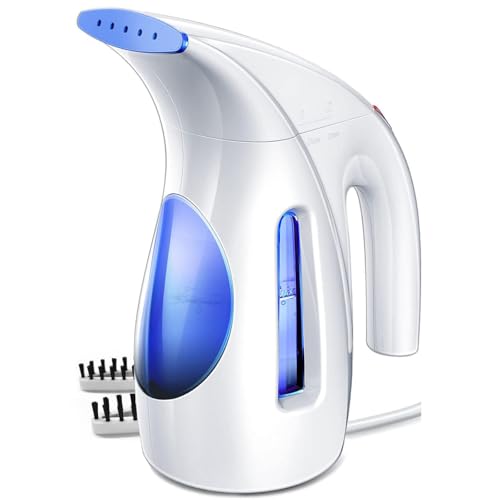
2. HiLIFE Portable Handheld Clothes Steamer
- Type: Handheld garment steamer
- Power: 700 watts
- Water tank capacity: 240 milliliters
- Heat-up time: About 2 minutes
The HiLIFE Portable Handheld Clothes Steamer is the lightest and simplest pick in this guide, and it is the best choice for travel and for quick touch-ups before leaving the house. It runs on 700 watts with a 240-milliliter tank, which keeps the unit compact and easy to pack, and it produces continuous steam for about fifteen minutes on a full tank. That is enough to smooth a shirt, a dress, and a pair of trousers before a meeting or a dinner, and the nine-foot cord keeps you from standing close to the outlet while you work.
The HiLIFE steamer heats in about two minutes, which is slower than the fastest handhelds here, so it suits unhurried mornings and hotel rooms better than a last-minute rush. What it gives up in speed it returns in simplicity. There is one clear job, one brush attachment, and a straightforward fill-and-steam routine. The brush helps steam reach into woven fabrics, and the compact body fits in a suitcase side pocket or a desk drawer. It works on chiffon, silk, wool, cotton, linen, and nylon, which covers most travel wardrobes, and it runs on 120 volts, so it is built for use at home and on domestic trips.
For households that already own a standing steamer, the HiLIFE makes a good second steamer for the bedroom or the travel bag. For smaller households and renters, it can serve as the only steamer, provided the wardrobe leans toward light and medium fabrics rather than heavy wool coats and thick denim. It is also a sensible pick for anyone who dislikes ironing boards and wants the smallest possible tool that still removes wrinkles reliably. Fill the tank, wait for steam, and work downward in slow passes while holding the hem taut for the smoothest finish.
3. Beautural Portable Handheld Garment Steamer
- Type: Handheld garment steamer
- Power: 1200 watts
- Water tank capacity: 260 milliliters
- Heat-up time: About 30 seconds
The Beautural Portable Handheld Garment Steamer is a compact handheld that balances portability with home-friendly features, and it is a strong pick for anyone who wants a travel-ready steamer with a detachable tank and automatic shut-off. It heats in about thirty seconds, which is fast for a handheld, and its 1200-watt heater produces steady steam for everyday fabrics. The large detachable water tank removes for filling at the sink, which is easier than carrying the whole unit to a tap, and the tank size supports a useful steaming session without constant refills.
Automatic shut-off adds a layer of reassurance for busy households. If the steamer is left on or the tank runs dry, the unit powers down instead of running hot and empty. That feature matters in homes with children, shared bathrooms, and hurried mornings. The handheld shape works vertically on hanging garments and horizontally on fabrics laid flat, so it covers curtains, bedding edges, and table linens as well as shirts and dresses. The compact body stores in a drawer, and the light weight keeps your arm comfortable through a full session.
In use, the Beautural suits delicate and medium fabrics especially well. Hold the steamer head close to the fabric without pressing hard, and let the steam do the work. Slow passes smooth wrinkles more effectively than fast scrubbing motions, and a gentle pull on the hem keeps the fabric taut. For travelers, the dual-voltage-friendly design family and compact footprint make it easy to pack, and for home users it is a tidy second steamer for the bedroom closet. If you want a handheld that is quick to heat, easy to fill, and forgiving when life interrupts a steaming session, the Beautural is a solid choice.
4. PurSteam PS-937 Standing Garment Steamer
The PurSteam PS-937 Standing Garment Steamer is the full-size pick for households that steam often and in volume. It stands on wheels with a telescopic pole and a garment hanger, so you can roll it to a closet, hang several garments in sequence, and steam through a whole week of outfits in one session. A 1500-watt heater drives four steam levels, which gives you a gentle setting for delicate fabrics and a stronger flow for heavy cotton, linen, and wool. The large water tank supports long sessions without frequent refills, and the rolling base means you move the steamer to the clothes instead of carrying clothes to the steamer.
Standing steamers suit a different routine from handhelds. You set the unit beside a garment rack, hang a shirt on the pole hook, and work with both hands free to hold fabric taut. The fabric brush attachment helps steam penetrate woven material, and the height adjustment lets you match the pole to the garment length. Because the tank and heater sit in the base, the steam head stays light in your hand, which reduces arm fatigue during longer sessions. That matters when you steam curtains, bedding, or a full set of work clothes in one go.
The PurSteam PS-937 fits households with large wardrobes, families that steam school and work clothes daily, and anyone who prefers to steam in a dedicated spot rather than carrying a handheld from room to room. It needs floor space for storage, so measure a closet corner or a laundry area before choosing a standing model. If you steam several garments at a time and want steady steam, a large tank, and a rolling base, this is the standing steamer to choose first.
Specs
- Type: Standing garment steamer with wheels
- Power: 1500 watts
- Steam levels: 4
- Pole: Adjustable telescopic pole with garment hanger
- Attachments: Fabric brush
- Best for: Frequent steaming, large wardrobes, and long sessions
- Tier: Premium
5. Jiffy J-2000 Garment Steamer with Plastic Steam Head
- Type: Standing garment steamer with plastic steam head
- Power: 1300 watts
- Voltage: 120 volts
- Continuous steam time: About 90 minutes per fill
The Jiffy J-2000 Garment Steamer is the workhorse of this guide, and it is the pick for households that want a standing steamer built for heavy, frequent use. Jiffy has made garment steamers for professional settings for decades, and the J-2000 carries that heritage into the home. A 1300-watt heater produces steady steam, and a full tank supports about ninety minutes of continuous steaming, which is far longer than any handheld in this guide and longer than most standing steamers in its class. That endurance suits large steaming sessions, curtain panels, and households that refresh many garments at once.
The J-2000 uses a plastic steam head on a hose, with a telescopic pole and a garment hanger that hold clothes at a comfortable working height. The steam head is light and easy to guide, and the long hose lets you reach around a garment without moving the base. The unit runs on 120 volts and heats in about two minutes. Its beige finish and simple controls suit a laundry room or a dedicated garment care corner, and the sturdy base stays stable while you work. There is nothing fussy about the design, which is part of its appeal: fill the tank, switch it on, wait for steam, and work through the pile.
For durability, the J-2000 stands apart. Its heating element and tank are built for repeated daily use, and replacement parts and accessories have long been available for the Jiffy line. If you steam every day, run a small home business that needs presentable garments, or simply want to buy one standing steamer and keep it for years, the J-2000 is the strongest long-term choice here. It takes more floor space than a handheld and costs more than the compact picks, but its steam endurance and build quality justify that trade for heavy users.
Handheld Versus Standing Steamers
Handheld steamers and standing steamers solve the same problem in different ways, and the right choice depends on how you steam. Handheld steamers are compact, light, and easy to store, and they suit quick touch-ups, travel, and small wardrobes. They heat fast, fit in a drawer, and cost less than most standing models. Their limits are tank size and steam endurance: a handheld tank supports one garment or a few garments before a refill, and the unit itself must be held up through the session.
Standing steamers trade portability for endurance and comfort. A large tank supports long sessions, the steam head stays light because the heater sits in the base, and the pole holds garments at working height. They suit households that steam many garments at once, refresh curtains and bedding, or steam daily. Their limits are floor space and storage: a standing steamer needs a corner to live in, and it is not a travel tool.
A useful rule is to count garments per session. If you steam one or two items at a time, a handheld is enough. If you steam five or more items in a session, a standing steamer saves time and refills. Households with both needs often keep a handheld for the bedroom and a standing unit in the laundry room, and that combination covers travel, quick touch-ups, and heavy sessions without compromise.
How to Choose a Clothes Steamer
Begin with your wardrobe. Light fabrics such as silk, chiffon, and rayon need gentle steam and a delicate setting or a spacer attachment. Medium fabrics such as cotton shirts, linen trousers, and jersey dresses need steady steam and a mid-range heater. Heavy fabrics such as wool blazers, denim, and lined coats need strong sustained steam, which favors higher wattage and a standing steamer with a large tank. If your closet leans delicate, prioritize settings and attachments. If it leans heavy, prioritize wattage and tank capacity.
Next, consider heat-up time and steam time. A fast heat-up suits rushed mornings, while a long continuous steam time suits batch sessions. A handheld with twenty minutes of steam covers several garments, while a standing steamer with ninety minutes covers a full wardrobe refresh. Check cord length as well, because a short cord limits where you can steam, and a long cord lets you work at a closet door or a garment rack without an extension lead.
Then think about storage and handling. Measure the drawer or shelf where a handheld will live, and measure the floor corner where a standing steamer will stand. Hold the weight in mind too: a heavy handheld tires your arm during long sessions, while a light steam head on a standing unit stays comfortable. Attachments should match your habits. A fabric brush helps woven fabrics, a creaser shapes pleats, and a delicate spacer protects sheer material. Automatic shut-off is worth having in busy households, and a detachable tank makes filling simpler.
Finally, think about water. Most steamers work with tap water, but hard water leaves mineral deposits over time. Using distilled water where the maker recommends it extends the life of the heating element and keeps steam output steady. Empty the tank after each session, let the unit cool before storing, and follow the maker descaling guidance for your model. A steamer that is easy to fill, easy to empty, and easy to store is a steamer you will actually use.
How to Steam Clothes Well
Good steaming technique matters as much as the steamer itself. Hang the garment on a sturdy hanger or a garment rack, and let it fall straight so gravity helps pull wrinkles out. Hold the steamer head lightly against the fabric or just off it, and move in slow downward passes. Pull the hem gently taut with your free hand, and keep your fingers away from the steam outlet. Work from the top of the garment downward, and steam both sides of thick fabrics for the best result.
For collars, cuffs, and pleats, use the creaser or hold the fabric flat against a hard surface with a heat-resistant glove or a pressing cloth. For delicate fabrics, keep the steamer head slightly away from the material and use a lower setting. For stubborn creases, hold the steamer head in place for a few seconds and let the steam soak in before moving on. Avoid over-wetting the fabric: slow passes with steady steam smooth wrinkles better than fast passes that leave damp spots.
Steam in a ventilated room, and let garments hang for a few minutes after steaming so the fabric cools and sets. That short wait keeps wrinkles from returning as the garment settles. For curtains and upholstery, work in sections from top to bottom, and keep the steamer head moving so no area stays damp. With a little practice, a full outfit takes only a few minutes, and the result looks pressed without the setup of an ironing board.
Care, Safety, and Storage
Steam is hot, so treat every steamer with respect. Keep the steam head away from skin, faces, and hands, and never point it at yourself or anyone else while it is running. Let the unit cool before refilling, emptying, or storing it, and keep the cord away from hot surfaces. Store handheld steamers upright or as the maker directs, and keep standing steamers in a stable spot where they cannot tip.
Water care extends the life of any steamer. Empty the tank after each use so standing water does not leave deposits or odors. If your tap water is hard, use distilled water or follow the maker guidance on descaling. Wipe the steam head and the exterior with a dry cloth, and check the cord and plug for wear. Keep attachments together in a small bag or a drawer so the brush, spacer, and creaser are ready when you need them.
Check the maker instructions for your model before first use, and follow the guidance on voltage, water type, and cleaning. A steamer that is cleaned and stored properly keeps producing strong, even steam for years, while a neglected one loses output and leaves spots on fabric. A few minutes of care after each session protects both the steamer and the clothes it smooths.
Common Clothes Steamer Mistakes to Avoid
The most common steamer mistake is moving too fast. Steam needs a moment of contact to relax fibers, and quick scrubbing passes leave wrinkles behind while wetting the fabric. Slow downward passes work better, and holding the steamer head still for a few seconds on a stubborn crease beats five rushed sweeps over the same spot. Patience is the cheapest upgrade any steamer owner can make, and it costs nothing but a little extra time per garment.
A second mistake is steaming a garment that is bunched or folded. Wrinkles hide in folds, and steam cannot reach fabric that is pressed against itself. Hang the garment straight on a sturdy hanger, smooth it with your free hand, and let gravity help. A garment rack or a closet door hook gives better results than a bed or a chair back, because the fabric hangs free and the steam passes through it evenly. If the garment swings while you steam, steady it at the hem and work in short sections from the shoulder down.
A third mistake is using the wrong steam level for the fabric. Delicate silk and chiffon need gentle steam and a little distance, while heavy wool and denim need sustained heat and a closer pass. Running a high setting on a sheer blouse can leave damp marks, and running a low setting on a thick blazer wastes time. Match the setting to the fabric, and when in doubt, use a lower setting first and raise it only if the wrinkles remain. The five settings on the Conair and the four levels on the PurSteam exist precisely so you can make that adjustment.
A fourth mistake is overfilling the tank or using the wrong water. Overfilling can cause spitting and dripping, especially on handheld models, so fill to the marked line and no further. Hard tap water leaves mineral scale inside the heater, which weakens steam output over months of use. Distilled water avoids that buildup, and regular descaling keeps the steam path clear. Read the maker guidance for your model, because water advice varies between brands and tank designs.
A fifth mistake is putting the steamer away wet. A tank left full between sessions can develop odors and deposits, and a damp steam head stored in a closed drawer can grow musty. Empty the tank after each use, let the unit cool fully, and store it in a dry spot with air around it. For standing steamers, drain the tank and wipe the pole and base before rolling the unit into its corner. These small habits keep the steamer ready and keep your clothes smelling fresh.
A sixth mistake is expecting a steamer to press sharp creases. Steam relaxes fabric and removes wrinkles, but it does not create the crisp edge an iron makes on a dress shirt collar or a pleated skirt. Use the built-in creaser where one is included, and accept that a few garments still benefit from an iron. Knowing the limit of the tool keeps expectations realistic and avoids frustration when a pleat needs more than steam alone.
A final mistake is buying the wrong size for the household routine. A frequent steamer who buys a tiny travel unit will spend more time refilling than steaming, while an occasional steamer who buys a large standing unit will lose a corner of the laundry room to a tool that runs once a month. Count your garments per session honestly, measure your storage, and choose the size that matches real use rather than imagined use. The right steamer is the one that fits the routine you actually have.
Which Fabrics Steam Best
Cotton and linen respond well to steam because their fibers relax readily with heat and moisture. A cotton shirt that looks slept-in smooths in a couple of minutes, and linen trousers lose their travel creases with slow passes. Jersey and rayon also steam well, though rayon needs a gentle touch and a little distance so the fabric does not spot. Wool blazers and coats benefit from steam because it refreshes the fibers and releases odors without the shine that direct ironing can leave on wool.
Silk and chiffon steam beautifully when handled with care. Use a low setting, keep the head slightly away from the surface, and let the steam drift through the fabric rather than pressing the head into it. Velvet and corduroy need a light touch as well, because pressing the head hard into the pile can flatten the texture. Hold the steamer a short distance away and brush gently with the fabric brush if one is included.
Some fabrics need caution. Leather and suede should not be steamed, because heat and moisture can mark or stiffen them. Heavily beaded or sequined garments can be steamed from the reverse side with care, but direct steam on embellishments risks loosening glue or dulling finishes. Waxed cotton and coated fabrics resist steam by design, and steaming them rarely helps. When a care label says not to steam, follow the label rather than the habit. A steamer is a versatile tool, but it is not the right tool for every material in the closet.
Steaming Beyond Clothes
A clothes steamer earns its shelf space faster when it works beyond the wardrobe. Curtains are the most popular second use: hang them in place, work from top to bottom in slow passes, and the panels lose their fold lines without taking them down. Table linens, napkins, and bedding edges also refresh well with steam, which is handy before guests arrive. Upholstery and throw pillows benefit from a light pass that relaxes the fabric and freshens the surface, provided the material is steam-safe and the care label allows it.
Steam also helps with garments that cannot be ironed easily. Wedding dresses, costumes, and delicate evening wear often carry labels that warn against direct ironing, and steam offers a gentler way to release storage creases. Work in a ventilated room, keep the steamer head moving, and let each section cool before moving to the next. For long gowns, work from the top down and let gravity help the skirt fall straight.
Travel is another place where a handheld steamer pays for itself. A compact steamer in a suitcase turns a wrinkled arrival outfit into a presentable one in minutes, without hunting for a hotel iron or an ironing board. Pack the steamer with the tank empty, fill it on arrival, and steam the outfit while it hangs on the bathroom door. The HiLIFE and Beautural handhelds in this guide are sized for exactly that routine, and their light weight keeps luggage manageable.
Frequently Asked Questions
Can a clothes steamer replace an iron completely?
A clothes steamer replaces an iron for most everyday garments, including shirts, dresses, trousers, and blouses, because steam relaxes wrinkles without a board. An iron still suits crisp creases in dress shirts, sharp pleats, and heavy cotton that needs firm pressing, so households that want razor-sharp creases often keep both tools.
Is steaming safe for delicate fabrics such as silk and chiffon?
Steaming is generally gentle on delicate fabrics because it uses steam rather than direct heat and pressure. Use a low steam setting, hold the steamer head slightly away from the fabric, and use a delicate spacer when one is included. Always check the garment care label first, and avoid steaming fabrics the label marks as unsuitable for steam.
Should I use tap water or distilled water in a clothes steamer?
Most steamers accept tap water, but hard tap water leaves mineral deposits that reduce steam output over time. Distilled water helps prevent buildup and extends the life of the heating element. Follow the maker guidance for your model, empty the tank after each use, and descale when the instructions recommend it.
How long does it take to steam a shirt?
A single shirt usually takes two to four minutes once the steamer is heated, depending on the fabric and how creased it is. Light cotton and jersey smooth quickly, while linen and heavy cotton take longer. Hanging the shirt straight, pulling the hem taut, and using slow downward passes gives the fastest and smoothest result.
Conclusion
The best clothes steamer for most homes is the Conair Turbo ExtremeSteam Handheld Garment Steamer, because it combines strong heat, five steam settings, a useful three-in-one attachment, and a long cord in a compact handheld body. Travelers and small households will be well served by the HiLIFE Portable Handheld Clothes Steamer or the Beautural Portable Handheld Garment Steamer, both of which pack easily and heat quickly. Households that steam in volume should choose a standing model: the PurSteam PS-937 for rolling convenience and four steam levels, or the Jiffy J-2000 for long sessions and durable build quality. Match the steamer to your wardrobe, your session size, and your storage space, and steaming becomes a quick daily habit instead of a chore.
Product and ASIN Reference
| Product | ASIN |
|---|---|
| Conair Turbo ExtremeSteam Handheld Garment Steamer | B07V91437Y |
| HiLIFE Portable Handheld Clothes Steamer | B07HF3X6Y4 |
| Beautural Portable Handheld Garment Steamer | B01N1QE5ME |
| PurSteam PS-937 Standing Garment Steamer | B077F9V7G6 |
| Jiffy J-2000 Garment Steamer with Plastic Steam Head | B0000665TD |
More from Amazon
Programs that pair well with the guide above. Offers and eligibility are set by Amazon and may change.
Set up recurring deliveries of everyday items on eligible products. Terms and savings are set by Amazon.
Explore Subscribe & SaveCollect the home and kitchen items you want in one registry that guests can shop from.
Create a wedding registryFree shipping on eligible items, Prime Video and more. Eligible new members can start with a free trial.
Start a Prime free trialAudiobooks and podcasts to listen to on the go. Eligible new members can start with a free trial.
Try Audible freeAs an Amazon Associate we earn from qualifying purchases.










Write Your Review
No reviews yet. Be the first to share your experience!