
Key takeaways
- Compare the best hearing aid batteries in sizes 10, 13, 312 and 675, with zinc-air specs, pack counts, tab colors and shelf life for every pick.
- Top Pick: How Hearing Aid Battery Sizes Work
- Runner-up: How Hearing Aid Battery Sizes Work
- Also consider: How Hearing Aid Battery Sizes Work
The best hearing aid battery is simply the one that matches the size your device was built for, in a pack count that suits how often you change cells. Every disposable hearing aid battery sold today is a zinc-air cell, and the four standard sizes are 10, 312, 13 and 675, each with its own tab color. For the most common size, 312, the Duracell Activair 80-count pack and the Amazon Basics 60-pack are the easiest picks to recommend. Size 13 wearers get the Rayovac Extra Advanced 60-count box, size 10 wearers the Duracell Activair 80-count pack, and power behind-the-ear users the VARTA Power One 675P, a premium German-made cell.
As an Amazon Associate, we earn from qualifying purchases.
Table of Contents
- How Hearing Aid Battery Sizes Work
-
- Duracell Activair Size 312, 80 Batteries
-
- Amazon Basics Size 312, 60-Pack
-
- Rayovac Extra Advanced Size 13, 60 Batteries
-
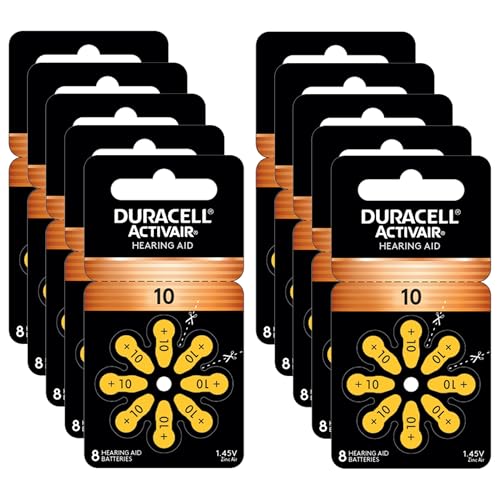
- Duracell Activair Size 10, 80 Batteries
-
- VARTA Power One 675P, Size 675
- How to Choose the Right Hearing Aid Batteries
- Frequently Asked Questions
- Conclusion
- Product and ASIN Reference
How Hearing Aid Battery Sizes Work
Hearing aid batteries are not interchangeable. A size 312 cell will not power a device built for size 13, even though the two look alike on a counter. The industry solves the identification problem with a universal tab color code that every major maker follows, so the color of the tab on your current battery tells you exactly what to reorder.
| Size | Tab color | IEC code | Common device fit |
|---|---|---|---|
| 10 | Yellow | PR70 | Mini in-the-ear and completely-in-canal aids |
| 312 | Brown | PR41 | Behind-the-ear and receiver-in-canal aids |
| 13 | Orange | PR48 | Behind-the-ear and full-shell in-the-ear aids |
| 675 | Blue | PR44 | Power and super-power behind-the-ear aids |



All four sizes are zinc-air cells with a nominal voltage of 1.45 volts. A zinc-air battery stays dormant while its tab seals the air holes on the flat side of the cell. Once you peel the tab away, air enters, the chemistry activates, and the cell begins to drain whether the hearing aid is switched on or not. Putting the tab back on does not pause the process in any meaningful way, which is why makers advise removing the tab only when you are ready to fit the battery, then letting the cell breathe for about a minute before closing the battery door.
Capacity grows with physical size. Published maker ratings commonly put a size 10 cell at roughly three to seven days of wear, a size 312 at three to ten days, a size 13 at six to fourteen days, and a size 675 at nine to twenty days, assuming a typical day of wear. Wireless streaming, high amplification settings and noisy environments all pull those figures down. Shelf life matters too, because a bulk box only helps if the last cards are still fresh when you reach them; the picks below span two to four years.
1. Duracell Activair Size 312, 80 Batteries
Size 312 is the most widely used hearing aid battery size, and this 80-count Activair pack is the straightforward bulk choice for it. Duracell sells the Activair line with its EasyTab format, where each cell carries an extra-long tab that is easier to grip than the short tabs on standard cards. That detail matters with stiff fingers, because the tab is both the seal you peel and the handle you hold while seating the cell in the battery door. The listing data for this pack gives a capacity of 185 milliamp hours per cell, the highest figure published among the size 312 picks in this guide, and the 80-count format suits two-aid households that go through a pair of cells every week or so. It sits in the mid-range tier: a branded cell with a handling advantage, bought in a quantity that keeps reordering rare.
Specs
- Battery size: 312 (brown tab)
- IEC code: PR41
- Chemistry: Zinc-air
- Voltage: 1.45 V
- Capacity: 185 mAh per cell, per the listing data
- Count per pack: 80 batteries
- Tab format: EasyTab extra-long tabs
2. Amazon Basics Size 312, 60-Pack
The Amazon Basics 60-pack covers the same size 312 fit as the Duracell above, and it earns its place on two published points: a four-year shelf life and a mercury-free zinc-air cell. Four years of shelf life is at the long end of what makers publish for this category, and it makes the 60-count box a sensible buy even for a single-aid wearer who changes cells slowly. The packaging is a child-safe design that needs scissors to open: less convenient at the moment of a battery change, but safer in a household with small children. Amazon publishes a capacity figure for the pack as a whole rather than a per-cell rating, so no per-cell milliamp hour figure is listed here. This is the budget tier pick of the guide: the plainest presentation of the five, with the longest published storage window.
Specs
- Battery size: 312 (brown tab)
- Chemistry: Zinc-air, mercury free
- Voltage: 1.45 V
- Count per pack: 60 batteries
- Shelf life: 4 years
- Packaging: Child-safe package, opens with scissors
3. Rayovac Extra Advanced Size 13, 60 Batteries
Rayovac is the name most hearing clinics hand out with a new fitting, and the Extra Advanced line is its mainstream consumer range. This box holds 60 size 13 cells arranged as ten cards of six, in the orange-tab format used by standard behind-the-ear and full-shell in-the-ear aids, including many models fitted with a telecoil. The cells are mercury-free zinc-air at 1.45 volts, and Rayovac publishes a shelf life of two to three years for the line, shorter than the Amazon Basics figure above, so this box suits wearers who move through cells at a steady pace rather than deep storage. Size 13 is a physically larger cell than 312, with a diameter of about 7.9 millimeters and a taller body, and published ratings give it a longer running life per cell. This is a mid-range tier pick, and the card-of-six format makes it easy to keep one card in a bag or coat pocket as a spare supply.
Specs
- Battery size: 13 (orange tab)
- IEC code: PR48
- Model: 13AE-60
- Chemistry: Zinc air, mercury free
- Voltage: 1.45 V
- Count per pack: 60 batteries (10 cards of 6)
- Shelf life: 2 to 3 years
4. Duracell Activair Size 10, 80 Batteries
Size 10 is the smallest of the four standard sizes, fitted to mini in-the-ear and completely-in-canal aids where the battery door is tiny and every millimeter counts. This Activair pack holds 80 yellow-tab cells, the largest count in this guide, which suits size 10 wearers because the small cells have the shortest running life of the four sizes and need changing most often. The pack carries model number BD13933 in Duracell’s data, runs at the standard 1.45 volts, and uses the same zinc-air chemistry as every other pick here. Because size 10 cells are small and light, the handling point made for the size 312 Activair pack applies even more strongly here: a longer tab gives you something to hold. This is a mid-range tier pick aimed at stocking up, and the high count only makes sense once you have confirmed that your aids really do take size 10, since no other device can use them.
Specs
- Battery size: 10 (yellow tab)
- IEC code: PR70
- Model: BD13933
- Chemistry: Zinc-air
- Voltage: 1.45 V
- Count per pack: 80 batteries
5. VARTA Power One 675P, Size 675
Power One is the hearing aid battery brand of VARTA, and its cells are made in Ellwangen, Germany, in a plant dedicated to hearing aid batteries. The 675P is the premium tier pick of this guide and the only size 675 entry, built for power and super-power behind-the-ear aids that drive high amplification all day. The maker publishes a capacity of approximately 540 milliamp hours for this cell, by far the largest figure in the guide, which matches the size 675 role: it is the biggest cell of the four, at about 11.6 millimeters across, and it carries the longest published running life. The 675P is mercury free, uses a stainless steel housing for corrosion protection, and is fitted with extra-long tabs for easier handling. One caution applies to this size only: a near-identical size 675 cell is sold for cochlear implant processors, and its maker says that implant version is not intended for hearing aids, so check the pack before you buy.
Specs
- Battery size: 675 (blue tab)
- IEC code: PR44
- Model: 675P
- Chemistry: Zinc-air, mercury free
- Voltage: 1.45 V typical
- Capacity: Approximately 540 mAh per cell, per the maker manual
- Housing: Stainless steel
- Origin: Made in Ellwangen, Germany
How to Choose the Right Hearing Aid Batteries
Match the size before anything else. Pull a used battery from your aid and read the number on the pack it came from, or match the tab color: yellow is 10, brown is 312, orange is 13 and blue is 675. If the packaging is gone, the device manual and the inside of the battery door both carry the size. Guessing between 312 and 13 is the most common ordering mistake, because the two share a similar diameter while the 13 is thicker and will not seat correctly in a 312 door.
Balance pack count against shelf life. A two-aid wearer using size 312 might fit fresh cells twice a week, so an 80-count box lasts a few months; a single size 10 aid works through the same count far more slowly. Compare the count in the box with the shelf life its maker publishes, four years for the Amazon Basics pack and two to three years for the Rayovac line, and pick the combination you will finish while the cells are still in date.
Think about handling. Every cell in this guide is small, and the tab is the only grip you get. Extra-long tab formats, such as the EasyTab design on the Duracell Activair packs and the long tabs on the Power One 675P, are easier to manage with limited dexterity. Child-safe packaging cuts the other way: it protects children, and it also means keeping scissors near the place where you change batteries.
Store spares correctly. Keep unopened cells at room temperature in their cards, away from heat and damp. Loose cells carried in a pocket or purse can touch coins or keys and drain or short, so carry a spare card rather than loose batteries. Once a tab is off, use the cell rather than saving it, because an activated zinc-air cell keeps draining even outside the aid.
Mind the expiry date. Every pack carries a best-before date. A cell near the end of its shelf life may still work, but it will not deliver its full published running life, so rotate stock and use the oldest cards first.
Frequently Asked Questions
How do I know which hearing aid battery size to buy?
Read the number on the packaging your current batteries came in, or check the tab color, since the code is the same across brands: yellow means size 10, brown means size 312, orange means size 13 and blue means size 675. Your device manual and the inside of the battery door also state the size. A battery from one size group cannot substitute for another, even when the cells look similar.
How long does a hearing aid battery last once the tab is removed?
Published maker ratings commonly run from about three to seven days for size 10, three to ten days for size 312, six to fourteen days for size 13 and nine to twenty days for size 675, based on a typical day of wear. Streaming audio, higher volume settings and long days shorten those figures. Once the tab is off, the cell keeps draining even if the aid is switched off, so a removed tab means the life clock is already running.
Can I put the tab back on to make a battery last longer?
No. Makers state plainly that reapplying the tab does not stop a zinc-air cell from draining once it has been activated by air. The useful habit is the opposite one: leave the tab on until the moment you need the battery, then give the cell about a minute of air exposure before you close the battery door, so it reaches full voltage before use.
How should I store spare hearing aid batteries?
Keep them sealed in their original cards at room temperature, in a dry place away from direct heat. Do not refrigerate them, and do not carry loose cells in a pocket or bag where metal objects can touch them. Check the best-before date on each card and use the oldest stock first, so no pack sits past the shelf life its maker publishes.
Conclusion
Choosing hearing aid batteries comes down to three checks: the size printed on your current pack, a count you will realistically use inside the published shelf life, and a tab format your fingers can manage. For the most common fit, the Duracell Activair size 312 pack pairs an 80-count supply with the highest published per-cell capacity in its size, while the Amazon Basics size 312 box answers with a four-year shelf life at the budget tier. Rayovac Extra Advanced covers size 13 in a clinic-trusted name, Duracell Activair covers size 10 in the same 80-count format, and the VARTA Power One 675P gives power behind-the-ear wearers a premium, high-capacity cell made in Germany. Match the tab color to your aid, and any of the five will do its job.
More from Amazon
Programs that pair well with the guide above. Offers and eligibility are set by Amazon and may change.
Set up recurring deliveries of everyday items on eligible products. Terms and savings are set by Amazon.
Explore Subscribe & SaveCollect the home and kitchen items you want in one registry that guests can shop from.
Create a wedding registryFree shipping on eligible items, Prime Video and more. Eligible new members can start with a free trial.
Start a Prime free trialAudiobooks and podcasts to listen to on the go. Eligible new members can start with a free trial.
Try Audible freeAs an Amazon Associate we earn from qualifying purchases.










Write Your Review
No reviews yet. Be the first to share your experience!