Disdik Picks is reader-supported. When you buy through links on our site, we may earn a commission at no extra cost to you. As an Amazon Associate, we earn from qualifying purchases. Learn more ›
Best Medical Alert Systems With Fall Detection for Seniors
Compare the best medical alert systems with fall detection, GPS pendants, wristbands and landline options, with specs on range, battery and monitoring.
Nov 19, 2026
Updated Nov 20, 2026
10 min read
1 views
Compare the best medical alert systems with fall detection, GPS pendants, wristbands and landline options, with specs on range, battery and monitoring.
⭐ Key Takeaways
Quick answer: Our top pick is Medical Guardian MGMini Medical Alert Device, with LogicMark Guardian Alert 911 Plus as a strong alternative.
The best medical alert system for most households is a wearable pendant or wristband that reaches help in one of two ways: a monitored service that connects the wearer to a response center around the clock, or a direct-alert device that calls 911 or family contacts on its own. Automatic fall detection is the feature that matters most for anyone who lives alone, because it can place the call when the wearer cannot press a button. This guide compares five systems sold on Amazon, covering a premium monitored GPS pendant, two fall-detection wearables that alert family directly, a wristband option, and a landline system with no monthly fees at all.
As an Amazon Associate, we earn from qualifying purchases.
Table of Contents
Medical Guardian MGMini Medical Alert Device
LogicMark Guardian Alert 911 Plus
SecuLife Medical Alert Pendant
SecuLife SOS Wristband
LogicMark Freedom Alert
How to Choose a Medical Alert System
FAQ
Conclusion
Product and ASIN Reference
Medical Guardian MGMini Medical Alert Device
Top Pick
Medical Guardian MGMini Medical Alert Device
Form factor: necklace pendant with clip and lanyard included
Fall detection: available as an optional add-on, per the manufacturer’s published materials
Connection: cellular with GPS tracking and step counter
Battery: up to 5 days per charge, with a 4-hour recharge, per the manufacturer
The MGMini is a compact necklace-style pendant built for people who want professional monitoring that works both at home and away. It connects over cellular service with GPS tracking, so a response agent can see where the wearer is when the emergency call button is pressed. The listing states that a monthly subscription is required, and the box contents published for this device include a charging cradle and power cord, a clip and lanyard, an EMT card, an owner’s manual, and a service agreement. Medical Guardian publishes fall detection as an optional add-on for this device line rather than a built-in feature, so households that need automatic fall calling should confirm that option is active on the plan they choose.
This is the premium pick of the group. It suits active seniors who leave the house often and families who want a staffed response center, location tracking, and a discreet pendant in one device. The published step counter is a small extra that helps caregivers see whether a parent is moving around normally during the day, and the included EMT card gives responders quick access to medical details at the scene. Because the pendant carries its own cellular connection and speaker, there is no base station to install and no landline to keep.
LogicMark Guardian Alert 911 Plus
Runner-Up
LogicMark Guardian Alert 911 Plus
Form factor: wearable pendant with lanyard
Fall detection: built in, per the product title and brand materials
Connection: 4G LTE, direct two-way connection to 911, no landline required
The Guardian Alert 911 Plus takes the opposite approach to monitoring: there is no response center and no monthly fee. Pressing the pendant button, or a detected fall, connects the wearer directly to a 911 operator over 4G LTE, and two-way voice runs through the pendant itself. LogicMark’s published comparison for this model lists the plan type as no monthly fees, the help button range as anywhere within cellular range, and the battery as a rechargeable lithium-ion cell. Fall detection is built in rather than sold as an add-on, which makes this model unusual at its tier.
This is the mid-range pick for households that want automatic fall detection without an ongoing monitoring bill. The trade-off is that every alert becomes a 911 call, with no agent in between to speak with family first.
SecuLife routes alerts to people rather than to a call center. When the SOS button is pressed or a fall is detected, the pendant calls and sends alerts by SMS, app, and email to the contacts set up in the SecuPro app. The published feature list includes GPS tracking with geo-fence zones, two-way calling through the pendant, and nationwide 4G LTE coverage. The box contents printed on the listing are a charging cable, a SIM card, and a user manual, and the listing describes the housing as waterproof.
Specs
Form factor: pendant worn as an emergency necklace
Fall detection: built in, with alerts sent by call, SMS, app, and email
Connection: 4G LTE cellular with GPS tracking and geo-fence alerts
Battery: rechargeable, charging cable included in the box
Water resistance: waterproof, per the listing title
Monitoring: alerts go to family and caregiver contacts through the SecuPro app
Dimensions: 3 x 1 x 1 inches
This mid-range pick suits families who would rather receive the alert themselves than rely on a monitoring center, and who want location history and geo-fence notifications for a parent who still drives or walks alone.
The SOS Wristband puts the same SecuLife alert platform on the wrist for people who will not wear a necklace. Its published feature list covers fall alerts, GPS tracking, geo-fencing, SOS calling, and two-way calling with caregiver tracking through the app. For many seniors, a wristband is simply the form factor that stays on all day, and a device that is worn consistently protects better than a pendant left on a dresser.
Specs
Form factor: wristband
Fall detection: built in, with automatic alerts to caregiver contacts
Connection: cellular with GPS tracking and geo-fence zones
Battery: rechargeable
Water resistance: not stated on the listing
Monitoring: caregiver tracking and alerts through the companion app
This is a budget-tier route into fall detection and GPS location sharing. It fits seniors who refuse necklaces, and families who want the wearer located quickly when a call goes unanswered.
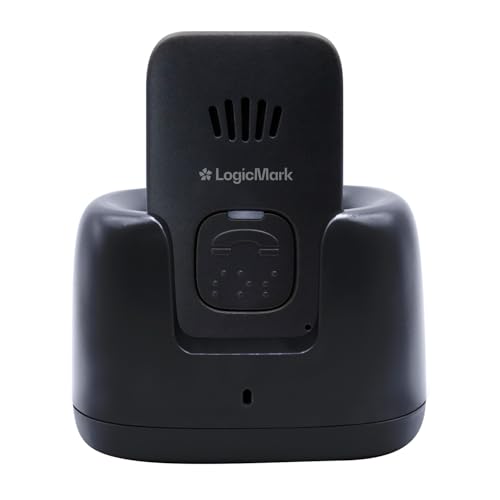
LogicMark Freedom Alert
LogicMark Freedom Alert
Form factor: two-way voice pendant with landline base station
Fall detection: none, the wearer presses the pendant button to call
Connection: standard landline through the base station
Range: 600 feet line of sight from the base, per the published specification sheet
The Freedom Alert is the long-running landline design in this category. A base station plugs into a standard landline, and the small two-way voice pendant lets the wearer speak directly through the pendant itself from anywhere in or around the home. The system can be programmed with up to four contacts, such as family, friends, or neighbors, and it can default to a 911 operator when the programmed contacts are unreachable. There are no monthly fees. The published coverage figure is 600 feet of line of sight from the base, and the pendant battery is a rechargeable lithium-ion cell that the distributor’s specification sheet rates at up to 6 months per charge. The box includes a lanyard, a wrist and wheelchair strap holder, a belt clip, and two rechargeable batteries.
This is the budget pick for a home with a working landline and a wearer who rarely needs protection beyond the house and yard. It gives up fall detection and away-from-home coverage in exchange for the longest battery life here and no ongoing service cost.
How to Choose a Medical Alert System
Begin with fall detection. Anyone who lives alone, has fallen before, or may be unable to press a button after a fall should put automatic fall detection at the top of the list, whether it is built in, as on the Guardian Alert 911 Plus and both SecuLife devices, or added to a monitored plan, as on the MGMini. Brands are candid that no fall sensor catches every fall, so the button still matters.
Next, decide who receives the alert. A monitored service such as Medical Guardian puts a trained agent on the line around the clock and can dispatch responders or phone family. Direct devices split into two camps: the Guardian Alert 911 Plus calls 911 itself, while SecuLife devices notify family and caregivers, who then decide how to respond. The Freedom Alert calls the contacts you program, in order.
Then match the connection to the home. Landline systems are simple and cheap to run but protect only within range of the base. Cellular GPS devices work anywhere with coverage, which is why they suit active seniors, at the cost of shorter battery life and, for monitored models, a required subscription. Finally, check the practical details: water resistance for shower wear, since many falls happen in the bathroom; battery life and recharge time; and whether the wearer will actually keep the device on, which is where the wristband earns its place.
Caregiver tools deserve a look as well. App-based systems such as the SecuLife line publish geo-fence zones that notify family when the wearer leaves a set area, plus location history that shows where the wearer has been. Monitored services offer their own caregiver portals and apps for checking device status. For a parent with memory loss, those location features can matter as much as the emergency button itself, and they are worth confirming on the product page before ordering, because the exact mix of app features differs by brand and by plan.
FAQ
Do medical alert systems always require a monthly subscription?
No. Monitored systems such as the MGMini require a subscription, as the listing states plainly. Direct-alert devices are different: the Guardian Alert 911 Plus and the Freedom Alert are both published with no monthly fees, because one calls 911 directly and the other dials contacts you program yourself.
How reliable is automatic fall detection?
Fall detection uses motion sensors to recognize a hard fall and place a call when the wearer does not respond. Every maker in this category notes that detection is not perfect and some falls are missed, which is why each device here also has a manual button. Treat fall detection as a safety net, not a guarantee.
Can a medical alert pendant be worn in the shower?
It depends on the model. The Guardian Alert 911 Plus carries an IPX5 water resistance rating, the MGMini is published as water-resistant for shower wear, and the SecuLife pendant is described as waterproof. Check the rating on the listing before relying on it, because a device left outside the bathroom cannot help after a fall in the tub.
What range does a landline medical alert system cover?
The Freedom Alert publishes a range of 600 feet line of sight between the pendant and its base station, which covers most houses and part of the yard. Walls and floors shorten real-world range, so a placement check during setup is wise. Cellular models are not tied to a base and work anywhere within network coverage.
Conclusion
For most families, the Medical Guardian MGMini is the strongest all-around choice, pairing a discreet GPS pendant with a staffed monitoring center and optional fall detection. Households that want fall detection with no monthly fees should look at the LogicMark Guardian Alert 911 Plus, while the SecuLife pendant and wristband serve families who prefer alerts sent straight to their own phones. The LogicMark Freedom Alert remains the sensible budget option for a landline home where simple, fee-free calling to family is enough. Whichever system you choose, consistent daily wear matters more than any single feature on the spec sheet.
D
Disdik Picks Editorial Team
We compare specs, materials and verified owner reviews before a product earns a spot. Rankings are never paid.
Affiliate disclosure. As an Amazon Associate we earn from qualifying purchases at no extra cost to you. Prices accurate as of the date shown.
Find the best razors for women for legs, underarms and sensitive skin. Compare five cartridge, disposable and shave-kit options and choose a smooth shave.
We compared the best comforters for every sleeper, from light all-season inserts to plush king-size picks, so you can find the right warmth for your bed.
We compared the best calculators for students, professionals, and home offices, covering scientific, graphing, financial, printing, and desktop models.













Write Your Review
No reviews yet. Be the first to share your experience!