Disdik Picks is reader-supported. When you buy through links on our site, we may earn a commission at no extra cost to you. As an Amazon Associate, we earn from qualifying purchases. Learn more ›
Best Callus Removers: Electric Files, Gels and Creams
Compare the best callus removers for feet, from electric rollers to fast gels and urea creams, with published specs and a clear pick for every routine.
Nov 19, 2026
Updated Nov 20, 2026
12 min read
1 views
Compare the best callus removers for feet, from electric rollers to fast gels and urea creams, with published specs and a clear pick for every routine.
⭐ Key Takeaways
Quick answer: Our top pick is Own Harmony Electric Callus Remover CR1700, with ProLinc Callus Eliminator as a strong alternative.
The quick answer: for most people, an electric roller is the easiest route to smoother heels, and the Amope Pedi Perfect leads this list with a diamond crystal roller, two speeds and a built-in safety stop. If you would rather soften thick skin first and buff it away second, the ProLinc Callus Eliminator gel is the salon formula built for that job, breaking down heavy buildup in three to five minutes per the maker. For daily upkeep, the Ebanel and Kerasal creams soften callused skin gradually with urea-based formulas. Every pick below is an electric device, a gel or a cream, and each one is described from published maker and listing information only. Manual foot files and pumice stones are covered in separate guides on this site, so they are left out here on purpose.
As an Amazon Associate, we earn from qualifying purchases.
Table of Contents
How callus removers work
What to look for before you buy
Amope Pedi Perfect Electric Callus Remover
Own Harmony Electric Callus Remover CR1700
ProLinc Callus Eliminator
Ebanel Urea Cream 40 Percent plus Salicylic Acid 2 Percent
Kerasal Intensive Foot Repair
Safety notes for gels, creams and electric rollers
Frequently asked questions
Conclusion
Product and ASIN Reference
How callus removers work
Calluses form where skin thickens under repeated pressure, most often on heels, the balls of the feet and the sides of the big toes. The products in this guide tackle that buildup in three different ways. Electric callus removers use a spinning mineral roller to abrade the hardened layer a little at a time, so progress is visible as you work and you can stop the moment the skin feels smooth. Callus remover gels use an alkaline formula, most often built on potassium hydroxide, to break down the bonds in dead, hardened skin over a few minutes, after which the softened layer can be wiped or gently buffed away. Callus creams take the slowest route: urea and salicylic acid soften and loosen the thickened layer gradually over days of regular application, which suits people who prefer a gentle routine with no tools at all.
None of these approaches removes living, healthy skin when used as directed, and none of them should be used on broken, cracked-open or irritated skin. The right choice depends on how thick the buildup is, how much time you want to spend, and whether you prefer a device, a fast gel treatment or a daily cream.
What to look for before you buy
Format. Electric rollers give immediate, controlled results and suit thick heels. Gels act fastest on heavy buildup but demand careful timing. Creams are the low-effort option for maintenance and mild to moderate thickening.
Roller grit and speeds. Coarse and extra coarse heads handle heavy calluses, while regular heads suit upkeep. Two speeds let you slow down near thinner skin at the edges of a callus.
Power source. Battery-powered devices that take AA cells are simple and travel well. Rechargeable models remove the cost of replacement cells and usually publish a charge time and a voltage range for the included charger.
Formula strength. On creams, the urea percentage is the headline figure: higher percentages target thicker, harder skin. Salicylic acid adds a second softening action. On gels, the contact time on the label matters more than anything else, because leaving an alkaline gel on too long can irritate healthy skin.
Safety guidance. Read the precautions before the first use. Amope, for example, publishes that its device is not suitable for people with diabetes or poor blood circulation, and gel makers direct users to apply the product only to callused skin and to keep it within the stated minutes.
Amope Pedi Perfect Electric Callus Remover
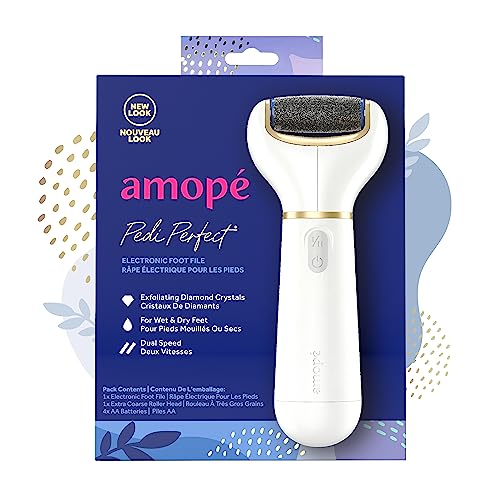
The Amope Pedi Perfect is the best-known electric option in this category, and it earns the premium spot here. Its Extra Coarse roller head is surfaced with diamond crystals and spins a full 360 degrees, so the head keeps working as you angle the device around the curve of a heel. A dual speed system lets you pick a gentler pace for thinner areas and a faster pace for heavy buildup. The maker also builds in an integrated safety stop that halts the roller when too much pressure is applied, which helps prevent over-filing in one spot. The housing is splashproof, and the maker directs users to work on dry, hard skin on the feet only. Power comes from four AA batteries, which are included in the box, so there is no cord and nothing to recharge between uses.
Specs
Type: Electric callus remover with a spinning roller head
Roller head: Extra Coarse, surfaced with diamond crystals, spins 360 degrees
Speeds: Dual speed system
Safety feature: Integrated safety stop for excess pressure
Water resistance: Splashproof housing
Power: Battery operated, 4 AA batteries included
Use: Feet only, on dry hard skin, per the maker
Tier: Premium
Amope publishes one important precaution: this device is not suitable for people with diabetes or those with poor blood circulation. Everyone else gets a simple, widely available tool with replaceable roller heads sold in several grits.
Own Harmony Electric Callus Remover CR1700
Top Pick
Own Harmony Electric Callus Remover CR1700
Model: CR1700 Midnight Platinum
Motor: Over 2,000 rotations per minute
Power: Built-in rechargeable battery
Charging: Full charge in about 2 hours, 110-240V charger included
The Own Harmony CR1700, sold in a Midnight Platinum finish, is the rechargeable alternative to the battery-powered Amope. Its motor is rated at over 2,000 rotations per minute, and the built-in battery refills in about two hours with the included charger, which accepts 110 to 240 volts and therefore travels well. The kit is generous for the tier: three refill rollers are included, one extra coarse and two regular, along with a cleaning brush for clearing skin dust from the head. Swapping between the extra coarse roller for heavy heels and a regular roller for upkeep means one device covers both the initial clean-up and the weekly maintenance that follows.
Because the battery is built in, there are no cells to buy, and the two-hour charge time published by the maker keeps the device ready with minimal planning. This is the pick for readers who know they will use an electric remover every week and want a kit that arrives complete.
ProLinc Callus Eliminator
Runner-Up
ProLinc Callus Eliminator
Form: Gel
Size: 4 fl oz
Action time: Breaks down calluses in 3 to 5 minutes, per the maker
ProLinc Callus Eliminator is the professional gel in this lineup, a formula long sold to salons and now widely available for home pedicures. The maker states that it breaks down calluses in three to five minutes: you apply the gel to the callused area only, wait within the stated window, and then wipe or gently buff the softened skin away. The formula is built on potassium hydroxide, with glycerin and propylene glycol in the blend, and it comes in a no-drip squeeze dispenser bottle that makes it easier to keep the gel on the callus and off the surrounding skin. That precision matters, because alkaline gels are strong by design and the label directions deserve close attention.
Choose the ProLinc gel when buildup is heavy and an electric roller alone would take many passes. Work in a ventilated spot, keep the gel on callused skin only, use gloves when applying, and rinse well afterward, following the label from beginning to end.
Ebanel Urea Cream 40 Percent plus Salicylic Acid 2 Percent
Ebanel Urea Cream 40 Percent plus Salicylic Acid 2 Percent
Ebanel pairs the highest urea level in this guide with a second softening ingredient. The cream carries 40 percent urea, the keratolytic level aimed at thick, hardened and heavily callused skin, plus 2 percent salicylic acid to help loosen the surface layer. Shea butter, coconut oil, jojoba oil, tea tree oil and aloe vera round out the formula so the treatment also conditions while it softens. The maker lists feet, heels, hands, elbows, nails and knees as suitable areas, which makes this jar useful well beyond heels. The single jar holds 4.6 fluid ounces, a generous size for a daily routine, and the cream is made in the USA in an FDA registered facility.
This is the strongest cream here, so it suits stubborn heel buildup that a milder lotion has not shifted. Apply it to clean, dry skin, give it time to absorb, and expect gradual softening over days rather than a single-session change.
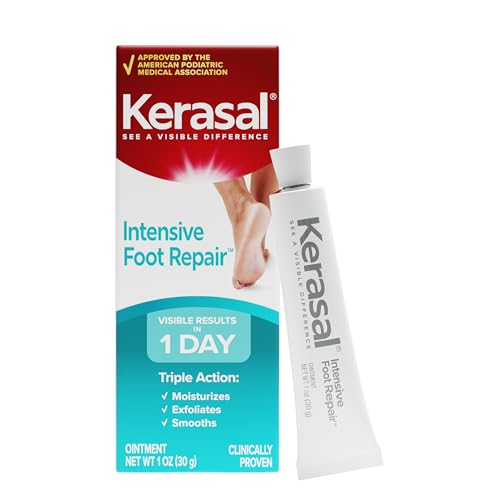
Kerasal Intensive Foot Repair is the budget pick and the gentlest formula in the group. The ointment combines 5 percent salicylic acid with 10 percent urea in a soft white petrolatum base with glycerin, so it exfoliates lightly while sealing in moisture. Kerasal describes visible results after one day of use, and the formula is approved by the American Podiatric Medical Association. The tube holds 1 ounce, or 30 milliliters, which suits a focused routine on heels and other dry patches rather than whole-foot application. Its published dimensions are 2 x 1.25 x 5.25 inches, small enough for a wash bag or a bedside drawer.
Pick Kerasal when the goal is softer, healthier-looking heels with a simple nightly application, or when you want a mild maintenance step between stronger gel or electric sessions.
Safety notes for gels, creams and electric rollers
Every product in this guide carries label directions, and those directions come first. Keep gels and creams off broken, cut or irritated skin, and keep alkaline gels on callused skin only, within the minutes the label allows. Wash hands after applying a gel or cream, and consider gloves for gel work. Use electric rollers on dry skin where the maker directs it, move the head steadily rather than holding it in one place, and let the safety stop do its job if your device has one. People with diabetes or poor circulation face higher foot-care risks: Amope publishes that its device is not suitable for this group, and checking with a clinician before using any callus remover is the prudent route. Keep all of these products out of reach of children, and stop using any product that leaves skin sore, red or raw.
Frequently asked questions
What is the difference between an electric callus remover and a callus remover gel?
An electric remover abrades hardened skin with a spinning mineral roller, so you control the result moment by moment and can stop as soon as the skin feels smooth. A gel works chemically: an alkaline formula softens and breaks down the callus over a few minutes, and the loosened skin is then wiped or gently buffed away. Electrics suit regular upkeep, while gels suit occasional heavy buildup.
How often can a callus remover gel or cream be used?
Follow the label of the product in your hand, because strengths differ widely. Creams such as the urea formulas in this guide are generally positioned for daily application on clean, dry skin. Strong gels are occasional treatments: apply only to callused skin, keep within the stated minutes, and give the skin a break between sessions rather than repeating the treatment on consecutive days.
Are electric callus removers safe for people with diabetes?
Maker guidance says to be careful here. Amope publishes that the Pedi Perfect is not suitable for people with diabetes or poor blood circulation, because reduced sensation makes it easier to over-file without noticing. Anyone with diabetes, poor circulation or numbness in the feet should check with a clinician before using an electric remover, a gel or a strong cream.
Do callus remover creams work on their own, without any filing?
Yes, within limits. Urea and salicylic acid creams soften and loosen the thickened layer gradually, and loose flakes lift away during normal washing and wear. Progress is slower than with a gel or an electric roller, and very thick buildup may still benefit from an occasional gentle buff after the cream has softened it, but for mild to moderate calluses a cream alone is a complete routine.
Conclusion
Match the format to the job. The Amope Pedi Perfect is the premium electric pick, with a diamond crystal roller, two speeds and a safety stop. The Own Harmony CR1700 covers the same ground in rechargeable form, with three rollers in the box. The ProLinc Callus Eliminator gel is the heavy-duty softener for thick buildup, the Ebanel cream brings the strongest urea formula for daily treatment, and Kerasal Intensive Foot Repair is the gentle budget ointment for nightly care. Whichever route you choose, follow the label, protect healthy skin, and keep up a light weekly routine so heavy calluses do not build back up.
Find the best razors for women for legs, underarms and sensitive skin. Compare five cartridge, disposable and shave-kit options and choose a smooth shave.
We compared the best comforters for every sleeper, from light all-season inserts to plush king-size picks, so you can find the right warmth for your bed.
We compared the best calculators for students, professionals, and home offices, covering scientific, graphing, financial, printing, and desktop models.


 Kerasal Intensive Foot Repair










Write Your Review
No reviews yet. Be the first to share your experience!