Disdik Picks is reader-supported. When you buy through links on our site, we may earn a commission at no extra cost to you. As an Amazon Associate, we earn from qualifying purchases. Learn more ›
Best Mouthwash Picks for Fresh Breath, Gums and Cavities
Compare the best mouthwash picks for fresh breath, cavity care and gum health, with fluoride, antiseptic and alcohol free rinses sized for daily use.
Nov 19, 2026
Updated Nov 20, 2026
10 min read
4 views
Compare the best mouthwash picks for fresh breath, cavity care and gum health, with fluoride, antiseptic and alcohol free rinses sized for daily use.
⭐ Key Takeaways
Quick answer: Our top pick is Listerine Cool Mint Antiseptic Mouthwash, with Crest Pro-Health Advanced Multi-Protection Mouthwash as a strong alternative.
The best mouthwash for most people is a fluoride rinse used once a day, because fluoride is the ingredient with the clearest published role in cavity prevention. If your main concern is gum health and plaque, an antiseptic rinse with essential oils is the stronger match. If your mouth is sensitive, dry, or sore, an alcohol free formula is usually the more comfortable choice. The five rinses below cover each of those jobs, and every pick is drawn from published label and listing information only.
As an Amazon Associate, we earn from qualifying purchases.
Colgate Peroxyl Antiseptic Mouthwash and Mouth Sore Rinse
Matching a Rinse to Your Situation
How to Use Mouthwash Well
Frequently Asked Questions
Conclusion
Product and ASIN Reference
How to Choose a Mouthwash
Mouthwash labels fall into three broad groups. Antiseptic and antigingivitis rinses carry active ingredients aimed at plaque and gum inflammation. Anticavity rinses carry fluoride, which helps rebuild weakened enamel and guard against decay. Cosmetic rinses mainly freshen breath and do the least therapeutic work. Reading the Drug Facts panel tells you which group a bottle belongs to, since the active ingredient and its stated purpose are printed there.
Alcohol content is the second decision. Classic antiseptic formulas often contain a meaningful share of alcohol, which some people find drying or harsh on sore tissue. Alcohol free formulas skip that burn and suit dry mouths, sensitive gums, and anyone avoiding alcohol for personal or medical reasons. Bottle size matters too: a large bottle near the sink supports a daily habit, while a mid size bottle suits a single user or a smaller bathroom.
1. ACT Anticavity Zero Alcohol Fluoride Mouthwash
ACT is the fluoride specialist in this roundup. The Anticavity Zero Alcohol formula carries sodium fluoride 0.05 percent, which the label describes as the maximum strength of fluoride available in rinse form without a prescription, at 0.02 percent w/v fluoride ion. It is a once-daily rinse, and the cap doubles as an accurate dosing cup so each pour lands at the measured amount the label calls for. The Mint flavor is alcohol free, and the inactive panel includes cetylpyridinium chloride alongside the fluoride. For anyone whose dentist keeps flagging early decay or soft spots in enamel, this is the most focused pick of the five.
Listerine Cool Mint is the classic antiseptic option, built on four essential oils: eucalyptol 0.092 percent, menthol 0.042 percent, methyl salicylate 0.060 percent, and thymol 0.064 percent. The label purpose is antiplaque and antigingivitis, and the rinse carries the American Dental Association seal of acceptance. Published brand material states the formula kills 99.9 percent of germs that cause bad breath, plaque, and gingivitis, and reduces plaque and gingivitis more than brushing and flossing alone. The 1.5 liter bottle is the largest in this roundup, and the formula does contain alcohol at 21.6 percent, which gives it the familiar intense tingle. Label directions call for a 30 second rinse with 20 mL, and the product is not for children under 12 years of age.
Crest Pro-Health Advanced aims at broad daily coverage in one bottle. Its active ingredient is sodium fluoride 0.02 percent, listed for cavity protection, and the formula also contains cetylpyridinium chloride, the antibacterial agent Crest highlights for fighting bad breath germs. The brand describes six benefits in one rinse: it helps prevent cavities, rebuilds weakened enamel, cleans teeth and gums, kills bad breath germs, and freshens breath, with breath protection the brand puts at 12 hours. This listing is a pack of two 1 liter bottles in Fresh Mint, and the formula is alcohol free, so it delivers that wide coverage without the burn of a classic antiseptic. It is a sensible middle pick for households that want one shared bottle to handle most jobs.
TheraBreath takes a different route from the antiseptic and fluoride formulas above. The Fresh Breath rinse is built around OXYD-8, the brand’s patented version of oxychlor compounds, and it is positioned purely as a breath treatment rather than a cavity or gum drug rinse. The formula is alcohol free, has no artificial dyes, and is certified kosher, vegan, and gluten free according to the brand. The ingredient panel lists purified water, PEG-40 hydrogenated castor oil, sodium bicarbonate, sodium benzoate, and essential oil of peppermint. This listing pairs two 16 fl oz bottles in the Invigorating Icy Mint flavor, model 14713. If lingering bad breath is the single problem you want solved and you prefer to avoid both alcohol and fluoride drug claims, this is the pick shaped for that job.
5. Colgate Peroxyl Antiseptic Mouthwash and Mouth Sore Rinse
5. Colgate Peroxyl Antiseptic Mouthwash and Mouth Sore Rinse
Brand: Colgate
Size: 16.9 fl oz (500 mL)
Active ingredient: Hydrogen peroxide 1.5 percent (w/v)
Purpose: Oral debriding agent and oral wound cleanser
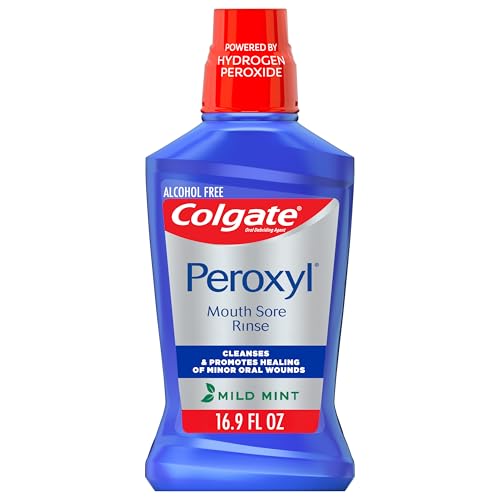
Colgate Peroxyl is the specialist for a sore mouth. Its active ingredient is hydrogen peroxide 1.5 percent, and the label purpose is oral debriding agent and oral wound cleanser. The oxygenating action helps lift debris away from minor oral wounds so the tissue can heal, and the brand positions it for canker sores, minor irritations, mouth burns, and mild gum inflammation after dental work, dentures, or orthodontic appliances. The formula is alcohol free and fluoride free, in a Mild Mint flavor. One caution from the label: do not use this product for more than 7 days unless a dentist or physician directs otherwise, so treat it as a short course rinse to keep on hand rather than a daily driver.
Matching a Rinse to Your Situation
Braces and other orthodontic work tilt the choice toward fluoride, since brackets and wires trap plaque and raise the risk of white spot lesions on enamel; a once-daily fluoride rinse like ACT reaches under wires where a brush struggles. Dentures and partials call for gentle daily care of the underlying gum tissue, and an alcohol free formula avoids stinging tender areas. Dry mouth, whether from medication or age, also points away from alcohol, which can leave the mouth feeling drier; an alcohol free rinse with a mild flavor is easier to use twice a day without discomfort.
Frequent canker sores or irritation after dental procedures point to a wound cleanser rather than a daily rinse, which is exactly the narrow role Peroxyl fills for a week at a time. Gum redness and bleeding during flossing point the other way, toward an antiseptic formula with an antigingivitis purpose on its Drug Facts panel, such as the essential oil blend in Listerine Cool Mint. Breath that fades by midday despite careful brushing suits a dedicated breath formula like TheraBreath, which targets odor compounds instead of masking them with a strong flavor alone. Reading your own situation against the label purpose keeps the choice simple.
How to Use Mouthwash Well
Mouthwash supports brushing and flossing; it does not replace them. Measure the dose the label states rather than free pouring, since fluoride and antiseptic directions are written around a specific amount, often 10 mL for fluoride rinses and 20 mL for antiseptic rinses. Swish for the full time on the label, commonly 30 seconds to one minute, then spit fully and avoid swallowing. With a fluoride rinse, hold off on eating, drinking, or rinsing with water right afterward so the fluoride keeps contact with enamel. Keep every bottle out of reach of young children, and follow any age limits printed on the panel, since several formulas here are labeled for adults and older children only.
Timing also matters. Many dentists suggest using a fluoride rinse at a different moment from brushing, such as after lunch or before bed, so teeth get a second fluoride exposure during the day. Antiseptic rinses are usually used morning and evening after brushing. Whatever schedule you choose, consistency beats intensity: a measured rinse used daily does more than a strong rinse used now and then.
Frequently Asked Questions
Which mouthwash is best for cavities?
A fluoride rinse is the clearest answer, and ACT Anticavity carries sodium fluoride 0.05 percent, the highest fluoride strength the label notes is available in a rinse without a prescription. Crest Pro-Health Advanced also carries fluoride at 0.02 percent for daily cavity protection.
Is alcohol free mouthwash as effective as regular mouthwash?
It depends on the job. Alcohol is a solvent and preservative in classic antiseptic formulas rather than the active ingredient itself, so alcohol free rinses with proven actives, such as fluoride or cetylpyridinium chloride, still do their labeled work. Alcohol free options also suit dry or sensitive mouths better.
Can mouthwash replace brushing and flossing?
No. Every label in this roundup frames rinsing as an addition to brushing and flossing, not a substitute. A rinse reaches surfaces a brush misses and delivers fluoride or antiseptic contact, but only mechanical cleaning removes plaque film from teeth and the gumline.
How long should each rinse last?
Follow the bottle. Listerine directs a 30 second rinse with 20 mL, fluoride rinses commonly direct one minute with 10 mL, and Peroxyl is a short course cleanser with a 7 day limit unless a dentist or physician says otherwise. Spit fully and do not swallow.
Conclusion
Pick by the job you need done. ACT Anticavity is the focused fluoride choice for cavity prone teeth. Listerine Cool Mint is the heavy duty antiseptic for plaque and gum concerns, in the biggest bottle here. Crest Pro-Health Advanced covers the widest ground in an alcohol free daily rinse. TheraBreath is the dedicated breath treatment with a dye free, alcohol free formula. Colgate Peroxyl belongs in the cabinet for sore spots and short healing courses. Match the active ingredient on the Drug Facts panel to your goal, measure each dose, and the daily habit will do the rest.
D
Disdik Picks Editorial Team
We compare specs, materials and verified owner reviews before a product earns a spot. Rankings are never paid.
Affiliate disclosure. As an Amazon Associate we earn from qualifying purchases at no extra cost to you. Prices accurate as of the date shown.
Find the best razors for women for legs, underarms and sensitive skin. Compare five cartridge, disposable and shave-kit options and choose a smooth shave.
We compared the best comforters for every sleeper, from light all-season inserts to plush king-size picks, so you can find the right warmth for your bed.
We compared the best calculators for students, professionals, and home offices, covering scientific, graphing, financial, printing, and desktop models.


 5. Colgate Peroxyl Antiseptic Mouthwash and Mouth Sore Rinse










Write Your Review
No reviews yet. Be the first to share your experience!