
Our Short List of 3
All 3 Picks at a Glance
| Product | Specs | Action |
|---|---|---|
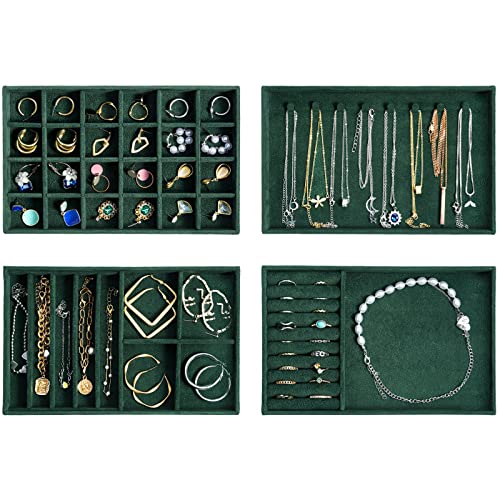 1. ProCase Stackable Jewelry Organizer Trays, 4 Layers | Check price on Amazon | |
 4. Katisyio Large Velvet Jewelry Tray, 2 Pack, Beige, 16 Grids | Check price on Amazon | |
 5. Vlando Valet Tray, Large, Brown | Check price on Amazon |
Key takeaways
- Compare five jewelry trays in velvet, leather, and stackable sets by size, compartments, and material, and find the right tray for your vanity or drawer.
A jewelry tray is the smallest piece of furniture a collection ever needs, and often the one that changes a morning routine the most. Without one, rings migrate to the edge of a sink, earrings scatter across a dresser, and necklaces tangle into knots that take longer to undo than the outfit took to choose. With one, every piece has a visible home: studs sit in their own small squares, rings rest in soft rolls, bracelets lie flat in open lanes, and the whole collection can be surveyed in a single glance. The tray does not hide jewelry the way a lidded box does, and that openness is the point. A tray is for the pieces worn often, the ones that should be easy to reach and easy to put back, and it turns a cluttered corner into a display that looks deliberate.
Choosing a tray well means thinking about the collection first and the tray second. A person with a dozen pairs of studs needs small grids. A person with chunky cuffs and long pendants needs open space and depth. A person with a shallow drawer needs low walls and a footprint that matches the drawer exactly. Material matters too: velvet protects delicate finishes and keeps metal from sliding, while leather wipes clean and suits a nightstand that also holds keys and a watch. The five trays below cover the main shapes of the category, from a four-layer stackable set that organizes a whole drawer to a single leather catchall for the pieces worn every day. Each one is judged on the same points: layout, material, size, how it fits a drawer or a vanity top, and how easily it adapts as a collection grows.
As an Amazon Associate, we earn from qualifying purchases.
Quick Answer
The ProCase stackable set is the best all-around jewelry tray system for a full collection, with four velvet layers, removable dividers, and fifty-one compartments that cover rings, studs, bracelets, and necklaces in one stack. The Oirlv velvet tray is the best large single tray for a dresser top, with a wide rectangular footprint, adjustable grids, and a soft lining that suits watches and statement pieces. The Fordonral four-piece set is the best budget choice for a standard drawer, with four compact trays that fit a common drawer size and a beige velvet finish that reads calm and neutral. The Katisyio two-pack is the best large-format pair for a deep drawer, with two wide trays and sixteen grids each for earrings, bracelets, and necklaces. The Vlando valet tray is the best single catchall for daily pieces, with a snap-corner leather design that holds a watch, rings, and keys in one open square.
Table of Contents
- Quick Answer
- Quick Comparison
- How to Choose a Jewelry Tray
- Jewelry Tray Materials Compared
- Sizing and Placement
- 1. ProCase Stackable Jewelry Organizer Trays, 4 Layers
- 2. Oirlv Velvet Stackable Jewelry Trays
- 3. Fordonral Set of 4 Stackable Jewelry Trays, Beige
- 4. Katisyio Large Velvet Jewelry Tray, 2 Pack, Beige, 16 Grids
- 5. Vlando Valet Tray, Large, Brown
- Care and Cleaning by Material
- Who Should Skip a Jewelry Tray
- Frequently Asked Questions
- Conclusion
- Product and ASIN Reference
Quick Comparison
| Product | Format | Compartments | Best For | Tier |
|---|---|---|---|---|
| ProCase Stackable Jewelry Organizer Trays, 4 Layers | Four stackable layers | 51 | A full collection in one drawer | Premium |
| Oirlv Velvet Stackable Jewelry Trays | Large single tray | Adjustable grids | Dresser-top display | Mid-range |
| Fordonral Set of 4 Stackable Jewelry Trays, Beige | Four compact trays | 41 | A standard drawer on a budget | Budget |
| Katisyio Large Velvet Jewelry Tray, 2 Pack | Two wide trays | 16 grids per tray | A deep drawer | Mid-range |
| Vlando Valet Tray, Large, Brown | Single leather catchall | 1 open compartment | Daily pieces and a watch | Budget |
How to Choose a Jewelry Tray
Start by counting what the tray has to hold, and sort the collection into shapes rather than brands or occasions. Rings need narrow rolls or small squares so they stand upright and stay separated. Stud earrings need small grids, because a single large compartment lets pairs drift apart and lose each other. Hoops and dangle earrings need more depth than studs, since a shallow grid can bend a hook or press a drop against the tray wall. Bracelets and bangles need long open lanes, and a tray that forces a rigid bangle into a small square will either leave it sticking up or push other pieces aside. Necklaces are the hardest shape of all: fine chains tangle when they share a compartment, so they need either individual hooks, separate lanes, or a tray with a dedicated necklace section that keeps each chain in its own channel. Counting by shape gives a clearer picture than counting by piece, because ten studs and ten necklaces need very different layouts.
Next, decide where the tray will live, because placement sets the size and the height. A drawer tray should be measured against the inside of the drawer, not the outside, and a tray that is a fraction too wide will not sit flat. Drawer depth matters as well: a stack of four trays needs a drawer tall enough to hold the stack plus room to lift the top layer off, while a single shallow tray suits a slim drawer that barely clears the frame. A vanity-top tray has the opposite constraint: it should be large enough to look intentional on the surface, with a footprint that anchors the corner of the dresser rather than looking lost beside a lamp or a mirror. A nightstand tray should be compact, since a nightstand already holds a lamp, a phone, and a glass of water, and a tray that crowds the surface will be pushed aside within a week.
Material is the third decision, and it shapes both protection and upkeep. Velvet is the standard lining for jewelry trays because it cushions metal and stones, keeps pieces from sliding when a drawer opens, and looks soft against gold and silver. Its trade-off is care: velvet attracts dust and lint, it shows marks from perfume and lotions, and it needs a gentle brush or a lint roller rather than a damp cloth. Faux leather and PU leather wipe clean in seconds, resist moisture from a bathroom counter, and hold their shape well, but they offer less cushioning than velvet and can feel slick under light pieces. Wood and MDF frames wrapped in velvet combine structure with softness, which is why most stackable sets use that construction: the rigid base keeps the tray from flexing when it is lifted, while the velvet interior protects the contents. Glass and mirror trays look elegant on a vanity, yet they show every fingerprint and every speck of dust, and they offer no grip, so pieces slide when the tray is moved.
Compartment design deserves a close look before buying, because a fixed layout can be a trap. Removable dividers are the most useful feature in a tray, since they let a grid become an open lane for a cuff or a watch, and let a ring roll section become a home for larger earrings. Fixed grids are fine for a collection that is mostly studs and small rings, but they waste space the moment a chunky bracelet arrives. Ring rolls are excellent for rings and useless for almost everything else, so a tray that is mostly rolls suits a ring-heavy collection and frustrates everyone else. A good set mixes layouts: one tray with grids for earrings, one with rolls for rings, one open tray for bracelets and watches, and one deeper tray for necklaces or sunglasses. That mix is why multi-piece sets are so popular, since a single tray rarely covers every shape a collection holds.
Finally, think about growth. A collection that adds a few pieces a year needs a tray that can expand, either by stacking another layer on top or by adding a matching tray beside the first. Stackable sets handle growth well, because a new layer slots onto the existing stack without needing a new footprint. Single large trays handle growth poorly, since the only way to add space is to buy a second tray and find a second spot for it. A tray that fits the collection today but has no room for tomorrow will be replaced within a year, so leaving one compartment empty on purpose is a reasonable plan rather than a waste of space.
Jewelry Tray Materials Compared
Velvet is the most common surface in jewelry trays, and for good reason. The short pile grips light pieces so they do not slide when a drawer is pulled open, and it cushions stones and plating against scratches that a hard surface would cause. Velvet also reads as luxurious: a deep green or soft grey velvet tray makes even everyday pieces look considered, and it photographs well on a dresser. The material does have limits. It absorbs moisture, so a tray that lives in a steamy bathroom will feel damp and may develop a musty smell over time. It collects dust and pet hair, and light-colored velvet shows makeup and lotion marks quickly. Cleaning is gentle work: a soft brush or a lint roller lifts surface dust, and a barely damp cloth handles small marks, but soaking velvet is a mistake that leaves water stains and a stiff pile.
Faux leather, often listed as PU leather, is the practical alternative. It wipes clean with a damp cloth, resists humidity better than velvet, and holds its shape under the weight of watches and heavier bracelets. A leather catchall tray is the right choice for a nightstand or an entryway, where the tray also collects keys, coins, and a phone, since those hard objects would snag and soil velvet. The trade-off is grip: smooth leather lets light earrings slide when the tray is bumped, and it offers less cushioning for delicate stones. Faux leather also varies in quality more than velvet does; a thin, stiff sheet creases and cracks over time, while a thicker, softer sheet with stitched edges holds up for years. When comparing leather trays, the edge finishing and the weight of the material tell more about longevity than the color does.
Wood and MDF sit underneath most velvet trays, even when the listing leads with the velvet. A rigid composite board base keeps a tray flat when it is lifted with one hand, prevents the corners from sagging under a stack, and gives the tray enough weight to stay put when a drawer slides open. Thin trays without a rigid base flex and tip, which spills small pieces across a drawer. The base also sets the tray height: a thicker base with a deeper wall holds bangles and watches upright, while a thin base suits flat pieces such as studs and rings. When a tray feels flimsy in the hand, the base is usually the reason, and a sturdier base is worth more than an extra compartment.
Glass, mirror, and ceramic trays belong to a different use case. They are display pieces first and organizers second, meant for a vanity top where the tray itself is part of the decor. A mirrored tray brightens a dark corner and makes a small collection look larger, while a ceramic tray adds weight and a finished feel. Neither offers the compartment layouts that a velvet drawer set does, and both need frequent wiping to stay presentable. They suit a small rotation of favorite pieces rather than a whole collection, and they pair well with a drawer set that holds the rest.
Sizing and Placement
Measure before ordering, and measure the inside of the drawer rather than the drawer front. A standard dresser drawer often has an interior close to thirteen inches wide and nine inches deep, though older furniture varies widely, and a tray that fits one drawer may not fit the drawer below it. Leave a small gap on at least one side so fingers can lift the tray out, and check the drawer height with the tray stacked: a four-layer set needs several inches of clearance, and a drawer that closes tightly over the top layer will press necklaces and bracelets against the frame. If the drawer is shallow, a single low tray or two thin trays side by side will serve better than a tall stack.
On a vanity top, the tray should relate to the other objects on the surface. A large tray beside a mirror and a perfume bottle creates a composed corner, while a small tray alone on a wide dresser looks temporary. Group the tray with one or two other items of similar height, such as a small vase or a candle, and keep the tray away from the edge where a sleeve can catch it. A tray that sits near the front edge of a dresser is easy to reach but easy to knock, while a tray set back against the wall is safer and still visible in a mirror.
For a nightstand, smaller is better. A single catchall tray holding a watch, a ring, and a pair of earrings does the job, and anything larger competes with the lamp and the phone charger for space. A square tray of around eight to ten inches across suits most nightstands, and a round tray can soften the corner of a square nightstand nicely. In a closet, trays belong inside a drawer or on a shelf at eye level, where the collection can be seen without bending down, and a stackable set keeps the shelf tidy while using vertical space that would otherwise go to waste.
Travel changes the requirements entirely. A tray meant for a suitcase should be shallow, lightweight, and able to sit inside a larger case without sliding, and a set of small trays that nest together travels better than one large rigid tray. For daily use at home, though, the best placement is the one that matches the routine: the tray should sit where jewelry is put on and taken off, because a tray in another room will be ignored no matter how beautiful it is.
1. ProCase Stackable Jewelry Organizer Trays, 4 Layers
The ProCase set is the most complete organizer in this group, and it earns the top spot by solving the whole problem at once rather than one part of it. Four velvet trays stack into a single column that fits a standard dresser drawer, and each layer has a different layout, so rings, studs, bracelets, and necklaces each get a layout shaped for them. The bottom layers hold the pieces worn less often, while the top layer holds the daily rotation, and lifting one layer off to reach the one below becomes a quick, practiced motion rather than a chore. For a collection that has outgrown a single tray and a jewelry box, this set is the natural next step, because it adds capacity without adding footprint.
The layout is the strongest part of the design. Across the four layers, the set offers fifty-one compartments, which sounds like a large number until a collection is spread out and the real need becomes clear: studs take one small square each, rings take one roll slot each, and a single pair of hoops can claim a whole section. The removable dividers are what make that count usable, since a grid can be opened into a wider lane for a cuff or a watch, and a section can be reshaped when a new piece arrives that does not match the old layout. The trays are sized for drawers rather than for display, with each tray measuring about nine and a half inches by six inches, so the stack sits neatly inside a drawer without sliding around when the drawer opens. That drawer-first sizing is a deliberate choice, and it means the set looks plain on a vanity top, where a larger, more decorative tray would look better, but it performs exactly as intended inside a drawer.
The velvet lining is soft and consistent across all four layers, with a deep green color that makes gold and silver stand out and hides dust better than a pale lining would. The pile is short enough that small studs do not sink into it, yet thick enough to cushion stones and keep metal from scratching. The trays themselves are built on a rigid base that keeps them flat when lifted, and the stack sits squarely without wobbling, which matters when the top tray is lifted off with one hand while the other hand holds a necklace. The walls are low, which suits a shallow drawer, though very tall pieces such as chunky bangles may sit proud of the rim and press against the layer above. That is a minor trade-off in a set designed for flat storage, and it is easily handled by placing tall pieces in the top layer.
In daily use, the set rewards a simple habit: put each piece back in its own compartment at the end of the day. Because the layout is visible at a glance, it is easy to see what is missing, and because each compartment is small, pieces do not migrate. The green velvet also makes the set easy to recognize inside a dark drawer, which sounds trivial until a morning routine depends on finding one pair of earrings in dim light. The set is not the right choice for someone who wants a display piece on a vanity, since the trays are designed to stack and hide rather than to show off, but for drawer organization it is the most capable option here. It suits a growing collection best, because a fourth layer that starts half empty becomes full within a year, and the set still leaves room to add a matching tray on top if the collection keeps growing.
2. Oirlv Velvet Stackable Jewelry Trays
The Oirlv tray takes the opposite approach from a multi-layer set: one large, wide tray that lays a whole collection out flat, so everything is visible at once. At nearly fourteen inches wide and nine and a half inches deep, it covers a generous area of a dresser top or a wide drawer, and its low walls keep the profile slim enough to slide into a drawer or sit under a mirror without dominating the surface. The tray is built around adjustable grids, with removable dividers that let a twelve-grid layout become a twenty-four-grid layout or open into wider lanes, and insert cards that can be used inside the tray or lifted out on their own. That flexibility is the reason to choose it over a fixed-layout tray, since the same tray can hold studs one month and watches the next.
The velvet surface is the tray’s defining feature. It is a soft, dense pile that cushions stones and keeps light pieces from sliding, and the flat structure means the tray stacks cleanly with a second tray if the collection grows. The inner lining is backed by wood, which gives the tray a firm, flat base that does not flex when lifted with one hand, and the edges are finished smoothly so the tray does not snag on drawer sides. The rectangular shape suits a dresser top, where it reads as a deliberate display surface, and it also suits a wide drawer, where it fills the space without leaving gaps that let pieces slide around. The tray is sold as a single unit rather than a set, which keeps the decision simple: one tray, one layout, one place.
In use, the Oirlv tray shines for pieces that deserve to be seen. A watch laid flat in a wide lane, a statement necklace coiled in an open section, and a row of rings in a grid all sit visibly together, which makes choosing an outfit faster and makes the collection feel curated rather than stored. The large footprint is also its main limitation: a small dresser or a narrow drawer cannot hold it, and a nightstand will feel crowded with a tray this wide. Measuring the intended surface before ordering is essential, since the tray needs a flat area of roughly fourteen by ten inches, and a surface that falls short by even an inch will leave the tray overhanging the edge. For a wide dresser or a deep drawer, though, the size is an advantage, because it turns unused surface into organized space.
The tray is best for someone with a medium to large collection who prefers display over stacking, and for someone who rearranges often, since the removable dividers and insert cards invite rethinking the layout. It is less suited to a small collection, where a large tray will look half empty, and to a shallow drawer, where the tray’s width may fit but its low walls may still leave tall pieces exposed. As a single purchase that covers a lot of ground, it is the most versatile large tray in this group, and it pairs well with a smaller catchall tray for daily pieces, leaving the Oirlv to hold the pieces that rotate through the week.
Specs
| Feature | Detail |
|---|---|
| Brand | Oirlv |
| Material | Velvet over a wood base |
| Size | About 13.8 x 9.5 x 1.2 inches |
| Layout | Adjustable grids, removable dividers |
| Insert cards | Included, usable inside or outside the tray |
| Closure | None, open-top design |
| Mounting | Tabletop or drawer |
| Best for | Dresser-top display of a medium collection |
3. Fordonral Set of 4 Stackable Jewelry Trays, Beige
The Fordonral set is the budget pick that does not feel like a compromise, because it copies the formula of the best stackable sets at a smaller scale and keeps the details that matter. Four trays in soft beige velvet stack into a column that fits a standard drawer, with forty-one compartments spread across layouts for earrings, rings, bracelets, and necklaces. Each tray measures about nine and a half inches by six inches, which matches the interior of a common dresser drawer closely, so the set fills the drawer without leaving a gap wide enough for a tray to shift. The beige color is calm and neutral, which suits a drawer that is opened in the morning light and a vanity where the trays might sit out during the day.
The construction is straightforward and solid: a sturdy MDF board base wrapped in soft velvet, with removable dividers that let the compartments be resized. The MDF base is the reason the trays feel stable when lifted, since a flexible tray would bend and spill small pieces, and it also gives the stack enough weight to stay in place when a drawer is pulled open quickly. The velvet pile is short and even, which protects plating and stones without swallowing small studs, and the beige tone makes it easy to spot a dark piece against the lining. The four trays are not identical, which is the point: one tray favors earrings with small grids, another favors rings, and the open sections handle bracelets and watches, so the set covers the main shapes of a collection without needing a fifth tray.
In daily use, the set behaves like a smaller version of the top pick, with the same habit-forming layout: each piece has a visible home, and a missing piece is obvious at a glance. The main difference is capacity and depth. Forty-one compartments is generous for a starter or medium collection, but a large collection will fill it quickly, and the one-inch tray height means tall bangles and chunky watches sit close to the rim. The set is also best used inside a drawer rather than on display, since the beige velvet and simple rectangular shape are tidy rather than decorative. For a first jewelry tray, or for a second drawer that holds overflow pieces, it is the right scale at the right tier, and it leaves room in the budget for a catchall tray on the nightstand.
The set suits someone organizing a drawer for the first time, someone furnishing a guest room or a rental, and anyone who wants a complete system without committing to a premium tier. It is less suited to a very large collection, where the compartments will fill within months, and to a vanity display, where a larger single tray would look more intentional. As a budget set, its strength is that it gets the fundamentals right: rigid bases, removable dividers, a drawer-friendly size, and a soft lining that protects the pieces it holds.
Specs
| Feature | Detail |
|---|---|
| Brand | Fordonral |
| Color | Beige |
| Material | Velvet over MDF board |
| Trays | 4 stackable trays |
| Compartments | 41 across all trays |
| Tray size | About 9.4 x 5.9 x 1 inches each |
| Dividers | Removable |
| Best for | A standard drawer on a budget |
4. Katisyio Large Velvet Jewelry Tray, 2 Pack, Beige, 16 Grids
The Katisyio two-pack is the large-format option for a deep drawer, and its appeal is simple: two wide trays, each with sixteen grids, that together cover a broad area without the height of a tall stack. Each tray measures about fourteen inches by nine and a half inches, which is close to the interior of a full-width dresser drawer, so a pair of them can fill a drawer side by side or stack one atop the other. The sixteen-grid layout is the middle ground between fine grids for studs and open space for bracelets: each grid is large enough for a pair of earrings, a ring, or a small bracelet, and the adjustable compartments let a grid be opened into a wider space for a cuff or a watch. The beige velvet interior is soft and even, and the trays sit flat without rocking, which matters when a drawer is opened and the trays need to stay put.
The two-pack format is more flexible than a single large tray, because the trays can be used together or apart. One tray can live in a dresser drawer while the other sits on a vanity top, or both can stack in a deep drawer with the daily pieces on top and the occasional pieces below. The trays are also easy to move: a single tray lifts out cleanly for cleaning or for carrying to a mirror, while a four-layer stack needs both hands and a steady grip. The depth of about an inch and a half gives the grids enough room for hoops and dangle earrings without pressing them flat, which is a real advantage over shallower trays that force earrings to lie sideways.
In use, the Katisyio pair suits a collection that is heavy on earrings and bracelets, since the sixteen-grid layout is generous for those shapes and less generous for necklaces, which need longer lanes. Fine chains can be coiled into a grid, but they will tangle if they share a grid with another chain, so necklaces are better kept in a separate tray or on a stand. The trays are also a good match for a shared drawer, since each person can claim one tray, and the identical layout makes it easy to tell whose is whose by position alone. The beige color is neutral enough to suit most bedrooms, and the velvet shows less dust than a darker lining would, though it will show makeup marks if the tray sits near a vanity where cosmetics are applied.
The pair is less suited to a small drawer, where a single wide tray will not fit at all, and to a collection that is mostly rings, since the grids are larger than a ring needs and the space could be used more efficiently by a ring-roll layout. For a deep drawer in a primary bedroom, though, it is the best fit in this group, because it uses the full width of the drawer, keeps the height low, and offers enough grids to organize a real collection without forcing every piece into a tiny square.
5. Vlando Valet Tray, Large, Brown
The Vlando valet tray is the simplest product in this group, and simplicity is its strength. It is a single open square of PU leather with snap-button corners, designed to hold the pieces worn every day: a watch, a ring or two, a pair of earrings, and perhaps a set of keys. There are no grids, no dividers, and no layers, which means there is nothing to configure and nothing to rearrange. The tray sits on a nightstand or a dresser, and at the end of the day the contents of a pocket and the jewelry from the day go into it in one motion. In the morning, everything is in one place, visible and easy to grab.
The leather construction sets it apart from the velvet trays. PU leather wipes clean with a damp cloth, which matters on a nightstand where the tray may also hold a phone, coins, or a glass of water, and it resists humidity far better than velvet in a bathroom or a bedroom with poor ventilation. The brown color is warm and neutral, and the glossy finish gives the tray a finished look that suits a nightstand beside a lamp or a dresser beside a mirror. The snap corners are a thoughtful detail: they hold the tray’s shape when it is in use, and they unsnap to lay the tray flat for travel or storage, which makes it the most portable option here. The tray is light, at well under half a pound, so it can be carried from a bedroom to a bathroom without effort.
In daily use, the valet tray rewards a different habit than a compartmented set. Instead of sorting each piece into its own square, the routine is to empty pockets and remove jewelry into one open space, and to trust that the tray’s raised edges will keep everything contained. That works well for a small daily rotation, and it works poorly for a large collection, since a dozen pieces in one open compartment will tangle and scratch each other. Fine chains should not live in a valet tray alongside keys, and delicate earrings can be scratched by a watch clasp if they share the space. The tray is best for the pieces that are sturdy and worn often, and for the small hard objects that otherwise scatter across a nightstand.
The valet tray is the right choice for someone who wants a single, beautiful catchall rather than an organizer, for a nightstand that needs tidying, and for a traveler who wants a tray that packs flat. It is the wrong choice for a full collection, for fine necklaces, and for anyone who needs compartments to keep pairs together. As a companion to a drawer set, though, it is ideal: the drawer set holds the collection, and the valet tray holds today.
Care and Cleaning by Material
Velvet trays need gentle, dry cleaning most of the time. A soft brush or a lint roller lifts dust, pet hair, and lint from the pile, and a weekly pass keeps the lining looking fresh. For a small mark, a cloth barely dampened with water can be pressed lightly against the spot, but the velvet should never be soaked, since water leaves rings and stiffens the pile as it dries. Perfume, lotion, and makeup should be kept away from the lining, because they stain velvet and are hard to remove once they set. If a tray lives in a humid bathroom, moving it to a bedroom drawer will extend its life noticeably, since velvet absorbs moisture from steamy air and can develop a musty smell over time. A tray that smells musty should be aired out in a dry room for a day, with the jewelry removed, before it is used again.
Leather and faux leather trays are far easier to maintain. A damp cloth wipes away dust, fingerprints, and water marks in seconds, and a dry cloth afterwards restores the finish. Harsh cleaners and solvents should be avoided, since they can strip the surface coating and leave the material dull or sticky. A leather tray that is used daily on a nightstand benefits from a quick wipe once a week, and a tray that holds keys should be checked for scratches on the interior, since a sharp key edge can mark the surface over time. If a snap corner loosens, pressing it firmly back into place usually restores the hold, and a tray that will not stay snapped should be laid flat for travel rather than forced.
Wood and MDF bases need little care beyond keeping them dry. A tray that gets wet should be dried promptly, since moisture can swell the edges of a composite board and lift the velvet lining. Dust on the outside of a tray can be wiped with a dry cloth, and the underside should be checked occasionally for wear, since a tray that slides in and out of a drawer can scuff the drawer surface over time. A small piece of felt on the bottom corners will protect both the tray and the drawer, and it costs almost nothing to add.
Who Should Skip a Jewelry Tray
A jewelry tray is not the right storage for every collection, and a few situations call for a different solution. A collection kept mostly for investment or heirloom pieces belongs in a lidded box or a safe, where the pieces are protected from dust, light, and curious hands, rather than on an open tray where they are visible and exposed. A household with small children or pets should also think carefully, since an open tray on a low dresser is within reach of little hands and paws, and a lidded box or a high drawer is safer for both the jewelry and the child. A traveler who moves often may prefer a zippered case, since an open tray offers no protection in a suitcase and no security in a hotel room.
A very small collection may not need a tray at all. Three or four pieces worn daily can live on a small dish or a single hook, and a full tray set will look empty and take up space that a lamp or a book could use. Similarly, a collection of mostly fine necklaces needs a stand or a hanging organizer more than a tray, since chains tangle in flat compartments no matter how carefully they are coiled. If the main problem is necklaces, a tray will not solve it, and the money is better spent on hooks or a dedicated necklace holder. Finally, a person who never puts jewelry back in the same place will not benefit from a tray, since the system only works when the habit supports it. A tray organizes a routine; it does not create one.
Frequently Asked Questions
How many compartments does a jewelry tray need?
A medium collection needs roughly thirty to fifty compartments across the whole system, with a mix of small grids for studs, rolls for rings, and open lanes for bracelets. A small daily rotation needs far fewer, and a single open tray may be enough. Count the collection by shape before choosing, since ten studs need ten small squares while ten bracelets need two or three long lanes.
Can a jewelry tray go inside a drawer?
Yes, and a drawer is the best home for most trays, since it protects the jewelry from dust and keeps the collection out of sight. Measure the inside of the drawer before ordering, leave a small gap on one side so the tray can be lifted out, and check that the drawer is tall enough for a stack if the set has multiple layers.
Is velvet or leather better for a jewelry tray?
Velvet protects delicate finishes better and keeps light pieces from sliding, which makes it the better lining for earrings, rings, and stones. Leather wipes clean easily and resists humidity, which makes it the better choice for a nightstand tray that also holds keys, coins, and a watch. Many collectors use both: velvet trays in a drawer for the collection, and a leather catchall on the nightstand for daily pieces.
How do I stop necklaces from tangling in a tray?
Give each necklace its own lane or its own grid, and never coil two chains into the same compartment. Threading a chain through a straw or a small tube keeps it straight in a drawer, and a tray with a dedicated necklace section or a separate hook stand works better than a flat grid for long pendants. If necklaces are the largest part of the collection, a hanging organizer will serve better than any tray.
Conclusion
A jewelry tray earns its place by making a collection visible, reachable, and easy to put back, and the right tray is the one that matches the shapes in the collection and the space where it will live. The ProCase four-layer set is the best all-around system for a full collection in a drawer, with fifty-one compartments and removable dividers that adapt as the collection grows. The Oirlv large tray is the best single display tray for a dresser top, with adjustable grids and a wide footprint that lays a medium collection out flat. The Fordonral four-piece set is the best budget choice for a standard drawer, with a drawer-friendly size and a calm beige velvet finish. The Katisyio two-pack is the best large-format pair for a deep drawer, with two wide trays and sixteen grids each. The Vlando valet tray is the best single catchall for daily pieces on a nightstand, with a leather design that wipes clean and folds flat for travel. Measure the drawer or the surface first, sort the collection by shape, and choose the tray that fits both. A tray that fits will be used every day, and a tray that is used every day keeps a collection in order without any effort at all.
Product and ASIN Reference
| Product | ASIN |
|---|---|
| ProCase Stackable Jewelry Organizer Trays, 4 Layers, Green | B0B7J5T2P1 |
| Oirlv Velvet Stackable Jewelry Trays | B074QBQWBV |
| Fordonral Set of 4 Stackable Jewelry Trays, Beige | B0BZRYJV46 |
| Katisyio Large Velvet Jewelry Tray, 2 Pack, Beige, 16 Grids | B0FBG28PJH |
| Vlando Valet Tray, Large, Brown | B0FK53NW9L |
More from Amazon
Programs that pair well with the guide above. Offers and eligibility are set by Amazon and may change.
Set up recurring deliveries of everyday items on eligible products. Terms and savings are set by Amazon.
Explore Subscribe & SaveCollect the home and kitchen items you want in one registry that guests can shop from.
Create a wedding registryFree shipping on eligible items, Prime Video and more. Eligible new members can start with a free trial.
Start a Prime free trialAudiobooks and podcasts to listen to on the go. Eligible new members can start with a free trial.
Try Audible freeAs an Amazon Associate we earn from qualifying purchases.










Write Your Review
No reviews yet. Be the first to share your experience!